Contents: VSA system ⇊ Functioning of the ABS system ⇊ Traction Control System (TCS) ⇊ Lateral Skid Control System ⇊ Driving ⇊ Disabling the traction control…⇊ VSA system indicator light ⇊ Models with 4-wheel drive (4WD) ⇊
VSA system
Controls the operation of the ABS and TCS systems, eliminates lateral skidding and manages the vehicle's acceleration mode.
Functioning of the ABS system
The ABS system prevents the road wheels from locking during sudden braking or on slippery roads, maintaining steering wheel control.
Traction Control System (TCS)
Eliminates wheel slippage on slippery roads, thereby maintaining traction and steering control.
Lateral Skid Control System
Allows you to maintain the vehicle's directional stability by eliminating lateral skidding of the road wheels during sharp turns on a slippery road. The traction control system and the side skid control system are automatically activated after the engine is started.
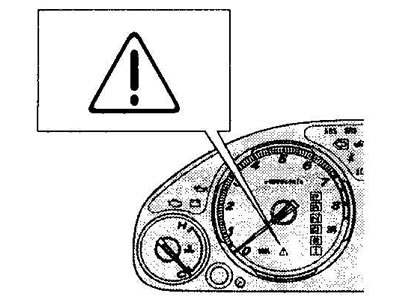
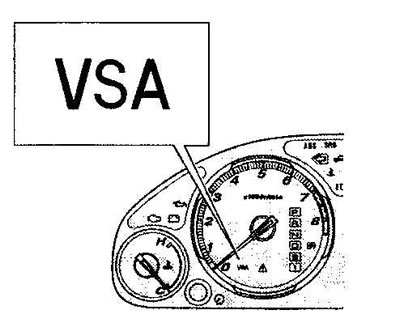
While the TCS or VSA system is operating, the VSA indicator on the instrument cluster will flash.
In normal operation, the VSA indicator comes on when the ignition key is turned to position "II" and goes out after a few seconds.
Models 2001-2004
Models since 2005
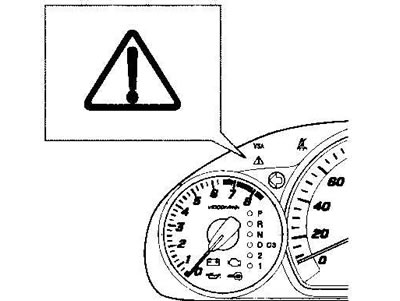
Warning. The system is faulty in the following cases:
- While driving, the VSA indicator light and warning lamp come on.
- The indicator does not light after turning the ignition key to position "II" or does not go out after a few seconds after starting the engine.
In this case, for safety reasons, it is not recommended to continue driving.
Note: When starting the engine, a characteristic noise may be heard from the engine compartment. This is not a malfunction, at this moment the system is being checked for operability.
Driving
Even with the VSA system, please follow safe driving practices.
- Slow down before turning.
- In winter, fit winter tires or snow chains to your wheels.
Disabling the traction control system and the side skid control system
When the VSA system is switched off, the TCS traction control system and the side skid control system are switched off automatically.
Models 2001-2004
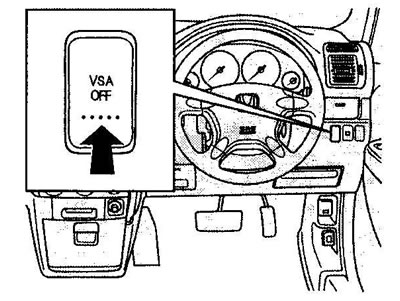
Models since 2005
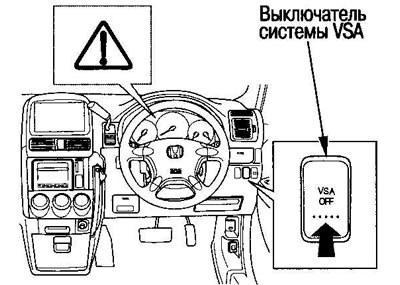
Reference.
- When the TCS traction control system and the side skid control system are in operation, they cannot be switched off.
- For the VSA system to function properly, all tires must be the same (size, brand, degree of wear, tread pattern, etc.).
VSA system indicator light
Models 2001-2004
Models since 2005
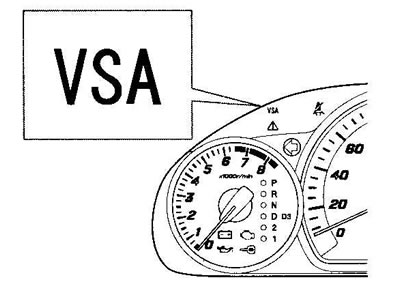
This lamp is located on the instrument panel and lights up when there is a malfunction in the VSA system. After turning the ignition key to position "II", the lamp lights up for a few seconds and goes out after the engine starts. This is a normal condition. It is also normal for the light to come on while driving for a few seconds and then go out.
Warning! The system is faulty in the following cases:
- The lamp is on while driving.
- The lamp does not light after turning the ignition key to position "II" or does not go out after starting the engine.
It is necessary to undergo diagnostics at a service station; for safety reasons, it is not recommended to continue driving.
Models with 4-wheel drive (4WD)
4WD vehicles have an advantage over 2WD vehicles on sandy, snowy, mountainous and slippery roads. 4WD vehicles are not designed for off-road driving. Please follow these guidelines when driving.
Avoid long trips on sandy roads and mud. Don't drive on water. The brake action is slightly different compared to 2WD models, keep a safe distance on slippery roads from vehicles driving in front.
Note: If the oil temperature rises too high while driving in 4WD mode, the system may change the mode to 2WD. After a while, when the oil temperature drops, the 4WD mode will be turned on again.
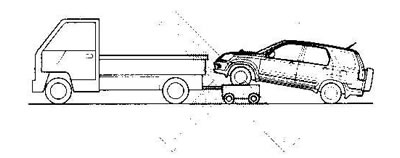
Attention! The vehicle must be equipped with tires of the same size, the same type, and the same tread pattern. Using tires of different sizes, with different tread patterns, or worn tires will have a negative effect on the transmission. Under no circumstances should the vehicle be towed with only the front or only the rear wheels raised, otherwise the gearbox may be seriously damaged.