
CAUTIONS: Before replacing any radiator/heater hoses, always disconnect the ground cable from the battery or the fan motor wiring connector. Under certain circumstances, the fan may run even with the ignition off!
Inspect the condition of the radiator and heater hoses periodically, such as in early spring or early fall when you perform other maintenance. Make sure the engine and cooling system are cold. Visually inspect the hoses for cracks, kinks, or damage, and replace if necessary. Run your hand along the length of the hose. If you notice weak or bulging areas when squeezing the walls of the hose, replace the hose.
Watch out for small coolant hoses near the engine block, carburetor or throttle body. Honda recommends checking the hoses every 50,000 kilometers or 36 months.
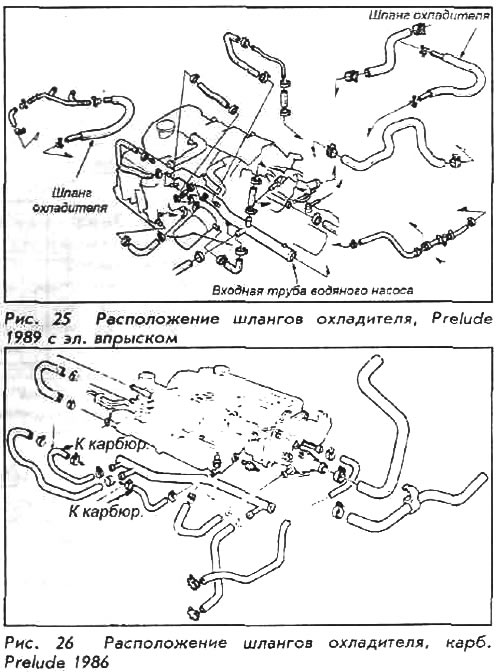
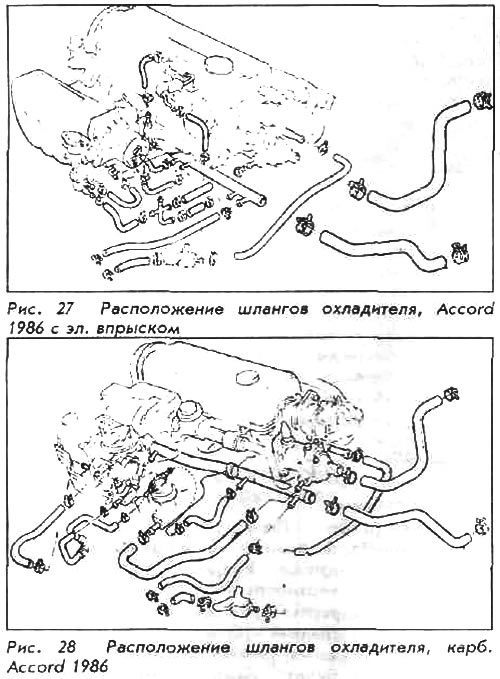
Replacement
Replacing the hoses requires draining the cooling system. This unpleasant job requires getting under the car and draining the slippery, smelly, chemically-marked antifreeze. Stock up on a large drain pan or bucket and rags.
CAUTION: Always drain the coolant into a sealed container. It can be reused as long as it is not dirty or too old.
1. Drain the cooling system. Always do this when the engine is cold. You can drain the fluid from Honda engines and radiators by opening the drain plug at the base of the radiator. If the coolant is drained this way, do not forget to close the drain plug before adding antifreeze.
Alternative method:
- a. Remove the radiator cap.
- b. Place a drain pan under where the lowest radiator hose attaches to the radiator. Loosen the clamp on the hose and slide it back out of the way.
- c. Gently twist the hose clamp on the pipe. Do not over-tighten or you will damage the radiator pipe. Once the hose is loose, be prepared for a stream of fluid.
- d. Remove the end of the hose from the radiator and direct it into the drain pan. Once draining is complete, continue replacing the damaged hose.
2. Loosen the clamps on the damaged hose with a screwdriver and either remove them or move them toward the center of the hose.
3. Loosen the hose clamps at both ends using a suitable tool or twist them by hand.
4. Remove the hose.
5. Install the new hose. A small amount of soapy water or glass cleaner applied to the hose will make installation easier.
Radiator hoses must be installed without loops and, after installation, be in the same position as when removed.
6. Slide the hose clamps back into place and tighten them. When tightening the clamps, squeeze them just enough to make a tight seal, but not so tight that you cause internal damage to the hose.
7. Reinstall the lowest radiator hose and secure the clamp.
8. Fill the cooling system. Honda strongly recommends that the coolant mixture consist of antifreeze and water in a 50/50 ratio. This mixture has the best properties against freezing and boiling of the liquid during year-round operation.
In cold weather, it is best to use a 50/50 mixture of antifreeze and water. If the mixture contains 40% water or less, engine cooling will be impaired. Do not use additional rust inhibitors or other similar products. The cooling system may be damaged by incompatible fluids.
9. When adding coolant to the radiator and/or coolant reservoir, be especially careful to prevent drips from coming into contact with the fuse and relay group under the hood. If a leak does occur, wipe up the spill immediately.
10. Replace and tighten the radiator cap. Start the engine and visually inspect for leaks. Warm the engine up completely and continue checking for signs of leaks. Small leaks may not be noticeable until the system has reached full internal pressure. Leaks at the ends of the hoses are mostly caused by loose clamps. Large leaks may require removing the hose again. To do this, YOU MUST WAIT UNTIL THE ENGINE HAS COOLED DOWN. NEVER OPEN A HOT RADIATOR! After all leaks have been repaired, check the coolant level in the radiator (with the engine cooled down) and top up if necessary.