
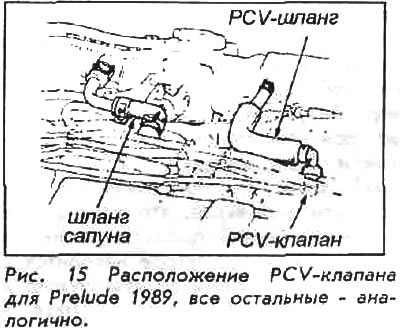
The PCV system captures these gases and returns them to the engine for afterburning. Located in the valve housing, the PCV valve directs the flow to the engine. If the check rod in the valve is closed, excess pressure can build up in the engine. If left open, too much gas can build up in the engine, causing a rich mixture, black exhaust, and generally poor engine performance.
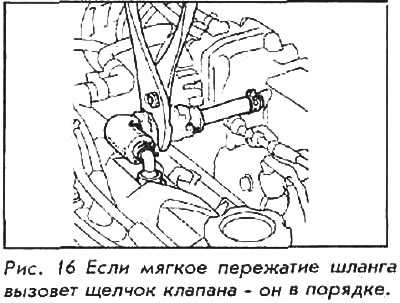
The valve should be checked for proper operation every 50,000 km or whenever emission related problems exist. If the valve is functioning properly, it does not need to be replaced.
Check the hoses for cracks, leaks, or blockages. With the engine warm and idling, use your fingers or pliers to gently pinch the hose connected to the valve. The valve should click when the hose is pinched.
If no clicking sound is heard, check the rubber seal near the valve for cracks or damage. If it is OK, replace the valve.
Removal and installation
To remove the valve, disconnect the hose and pull the sealing ring off the valve. Install a new valve and connect the hose. It is not recommended to attempt to clean the valve; it always needs to be replaced.
Install the new valve tightly onto the sealing ring. Connect the hose securely.
For more information on servicing emission control components, please contact Chapter 4 of the manual.