
Contents: Fluid Recommendations ⇊ Checking the level ⇊ Draining and filling ⇊ Flushing and cleaning the system ⇊
Fluid Recommendations
Use a quality ethylene glycol-based engine coolant, especially recommended for use in vehicles that have aluminum engine components that come into contact with the coolant. Note that some coolants, although labeled for use in such vehicles, may not actually provide effective corrosion protection; if necessary, consult a professional.
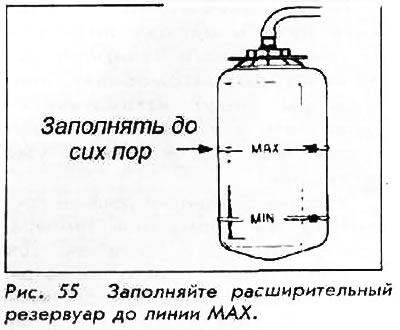
It is best to buy a top quality product that is known to work effectively under these conditions. Always mix coolant with the prescribed amount of clean water when adding coolant. Never add either just water or just coolant. Mix coolant 50/50 in the required amount. Check the chart on the antifreeze box and stick to the proportions recommended for the lowest expected temperatures.
Checking the level
CAUTION: Keep hands and clothing away from the radiator fan. On some vehicles, the fans may automatically run for 15 minutes after the engine has been turned off!
The coolant level should be checked with the engine at normal operating temperature. To check the level, simply look to see if the coolant reaches the FULL line on the reservoir. On newer vehicles with the reservoir located behind the front splash guard, remove the reservoir cap and pull out the plastic dipstick. Wipe it off and check the coolant level as you would check the oil level. The radiator cap should only be removed to clean or drain the system.
Add coolant to the additional reservoir if the level is low and be sure to mix it with clean water. Never add cold water or coolant to a hot engine as this may result in damage to the engine and cooling system. If any coolant mixture accidentally comes into contact with a painted surface, immediately rinse it with plenty of clean water. Coolant damages paint.
CAUTION: The cooling system is under pressure when hot. Removing the radiator cap when the engine is warm or overheated may result in fluid spilling or splashing, possibly causing serious burns! Allow the system to cool for several hours before removing the radiator cap or hose.
Draining and filling
The coolant change intervals are shown in the table at the end of the chapter. Perform this service only when the engine is cold; cooling overnight is the best way to prevent burns.
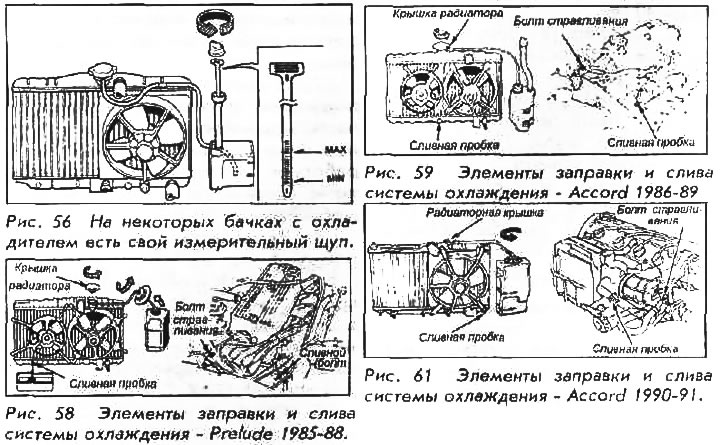
1. Remove the radiator cap. Just turn it, do not press it.
2. Place a drain pan under the radiator. Loosen the drain plug at the bottom of the radiator and drain the coolant. Honda engines are also equipped with a drain bolt, but it may be difficult to access. The drain bolt is located either under the exhaust manifold or above the oil filter; in any case, loosening it almost always requires working from underneath the engine. Additional method: disconnect the lowest radiator hose from the radiator.
CAUTION: Always drain the coolant into a sealed container. The coolant can be reused if it is not contaminated or too old (several years).
3. Drain the coolant from the reservoir tank by squeezing and disconnecting the hose. If the reservoir is located behind the shield, use a mechanical siphon or suction tool to draw out the liquid.
4. Mix a solution of 50% ethylene glycol (designed for use on aluminum engines) and 50% clean water. Use a stronger solution as directed on the antifreeze container if your climate requires it. Tighten the drain bolt(s) and double check it(them). Reinstall the lower radiator hose if it was disconnected.
5. Loosen the cooling system bleed screw on top of the thermostat housing. Fill the radiator with coolant mixture. When the coolant flows steadily from the bleed port, without air bubbles, close the screw and fill the radiator with coolant to the base of the filler neck.
6. To release air trapped in other parts of the cooling system, leave the radiator cap open and set the heater control to the "HOT" (hot) mode. Start the engine and allow it to warm up to normal operating temperature; this means that the temperature sensor is within the normal range and the radiator fan has turned on at least twice already.
7. Once the engine is warm, check the level until it stabilizes; fill the coolant reservoir to the "Full" mark and make sure the radiator cap is properly tightened.
Fresh antifreeze has a cleaning effect on the passages. If the coolant has not been replaced on schedule, the new coolant may displace sludge deposits from the system. If there is an extreme change in color, the system will need a second drain.
Flushing and cleaning the system
1. Remove the thermostat from the engine (see procedures "Thermostat, removal and installation").
2. Using a hose with water, direct water into the hole in the thermostat housing, allowing the water to clean the engine, heater and radiator. Flush the system until the water flowing out of the radiator is clear.
3. After cleaning, repeat the removal procedure in reverse order. Fill the cooling system with new antifreeze.