
Contents: ABS control unit ⇊ Self-diagnosis function ⇊ Function of the on-board diagnostic…⇊ ABS modulator ⇊ Wheel sensor ⇊ Electronic Brakeforce Distribution…⇊ EBD regulator ⇊
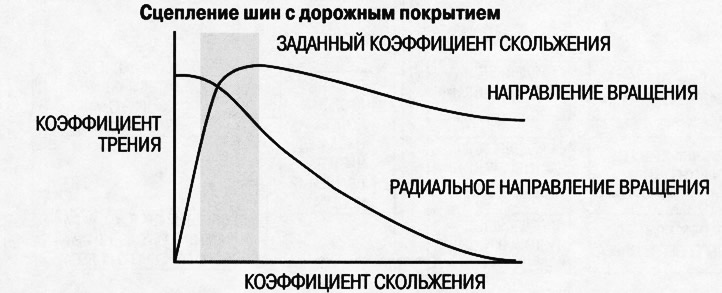
When you press the brake pedal while driving, the wheels may lock before the car stops. If the front wheels lock, the car's maneuverability is reduced; if the rear wheels lock, the car's stability is reduced. In both cases, a dangerous situation is created. The ABS system precisely controls the degree of wheel slip and ensures maximum tire traction on the road surface, thereby helping to maintain the car's maneuverability and stability.
The ABS system calculates the wheel slip rate based on vehicle speed and wheel rotation speed, and then distributes the brake fluid pressure to achieve the specified slip rate.
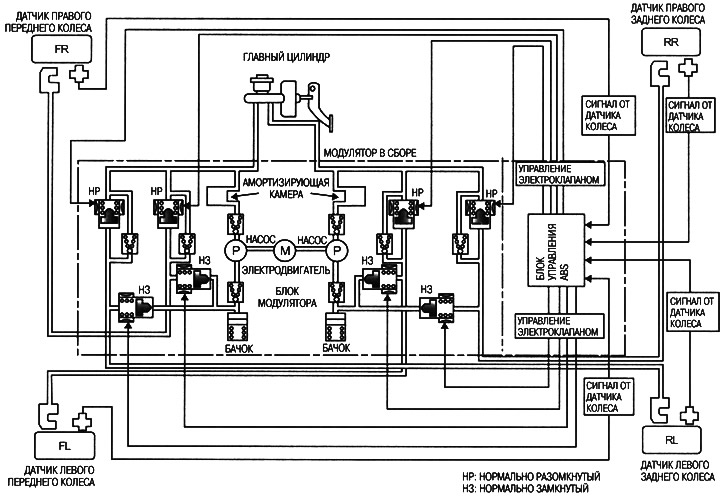
ABS control unit
The ABS control unit determines the wheel speed based on the signals received from the wheel sensors, then calculates the vehicle speed based on the wheel speed. The control unit determines the vehicle speed during deceleration based on the deceleration intensity.
The ABS control unit calculates the degree of slippage of each wheel and, if it is high, sends a control signal to the modulator solenoid valve.
The pressure regulator operates in three modes: pressure reduction, pressure maintenance and pressure increase.
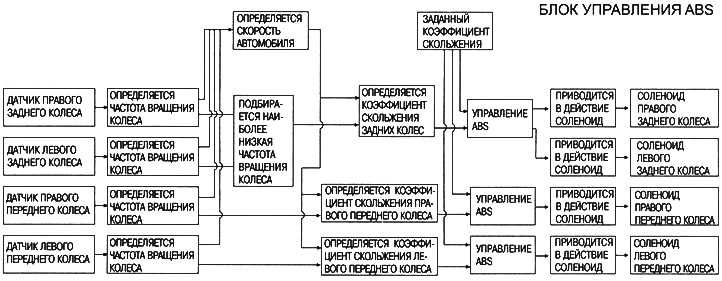
Self-diagnosis function
The ABS control unit has a main central processing unit (CPU) and a sub-CPU, which check each other when a malfunction occurs. The CPUs check the system circuit.
When the central processor detects a malfunction, the ABS control unit turns on the ABS and/or brake system indicator and stops the system.
Self-diagnosis can be divided into the following four categories:
- 1. Primary diagnostics
- 2. Without ABS control
- 3. With ABS control
- 4. When a warning signal is issued
Function of the on-board diagnostic system
The ABS system can be diagnosed using the Honda PGM Tester. The ALB Checker cannot be used with this system. Use the Honda PGM Tester when bleeding and checking the signals from the wheel sensors. For specific instructions, see the Honda PGM Tester owner's manual.
ABS modulator
The ABS modulator consists of an inlet solenoid valve, an outlet solenoid valve, a reservoir, a pump electric motor, and a shock-absorbing chamber. The modulator directly reduces the fluid pressure in the caliper. This is a circulation-type modulator, since the brake fluid circulates through the caliper, reservoir, and master cylinder.
The hydraulic regulator operates in three modes: pressure increase, pressure maintenance and pressure reduction.
The hydraulic circuit is an independent four-channel type, one channel for each wheel.
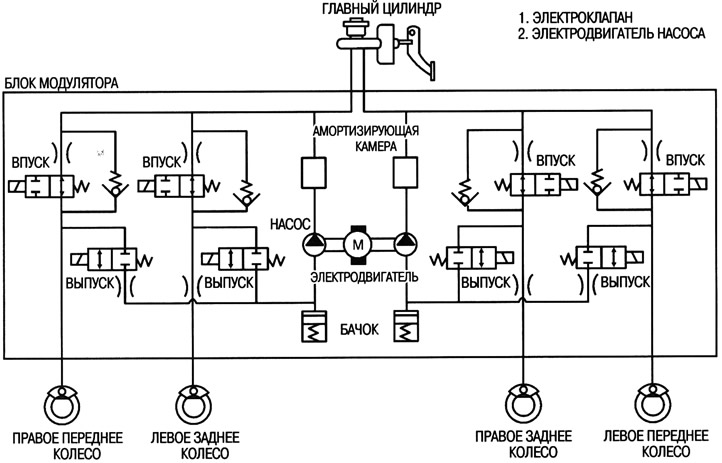
- Boost mode: Inlet valve open, outlet valve closed. Fluid from the master cylinder is pumped to the caliper.
- Pressure holding mode: 1g Inlet valve closed, outlet valve closed. The fluid is held in the caliper by the inlet and outlet valve.
- Pressure reduction mode: Inlet valve is closed, outlet valve is open. Fluid from the caliper flows through the outlet valve into the reservoir.
- Electric motor operating mode: When switching to pressure reduction mode, the pump motor operates.
After the ABS system has finished operating, the pump motor does not operate.
The fluid from the reservoir is pumped by a pump through the shock-absorbing chamber into the master cylinder.
Wheel sensor
Wheel sensors are magnetic, contactless type. When the toothed gear rotates near the magnetic coil of the wheel sensor, alternating current is generated. The frequency of the alternating current changes depending on the wheel speed. The ABS control unit determines the frequency signal from the wheel sensor and thus determines the wheel speed (figure on the right).
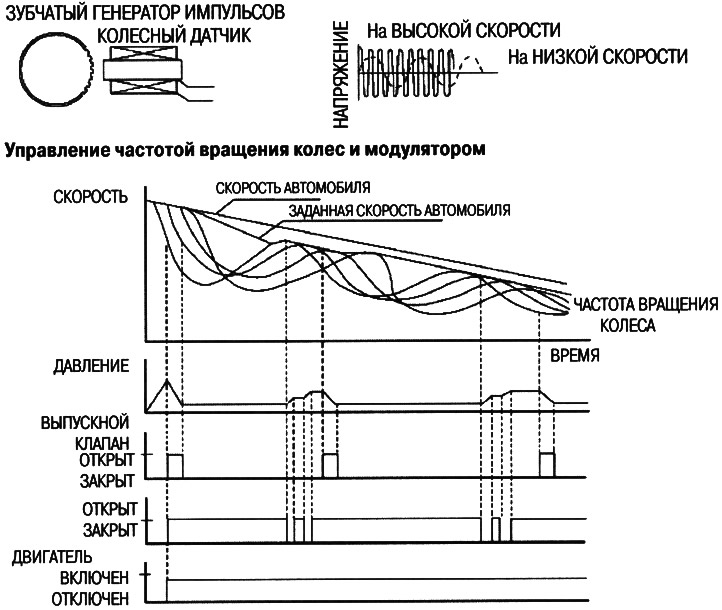
When the wheel speed drops sharply below the vehicle speed, the outlet valve instantly opens and reduces the fluid pressure in the caliper. At this point, the pump's electric motor turns on. When the wheel speed is restored, the inlet valve instantly opens and increases the fluid pressure in the caliper.
Electronic Brakeforce Distribution (EBD)
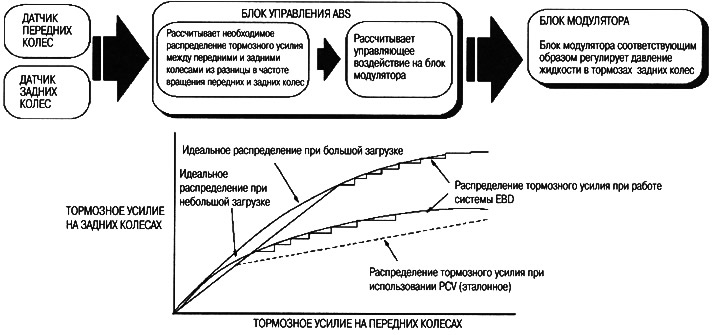
The ABS control unit appropriately adjusts the distribution of braking force between the front and rear wheels depending on the load by changing the load-bearing capacity or by slowing down and using braking force when braking.
The ABS control unit calculates the required distribution of braking force between the front and rear wheels from the difference in the rotation speed of the front and rear wheels and sends a control signal to the modulator unit. The modulator unit adjusts the braking force on the rear wheels accordingly (diagram).
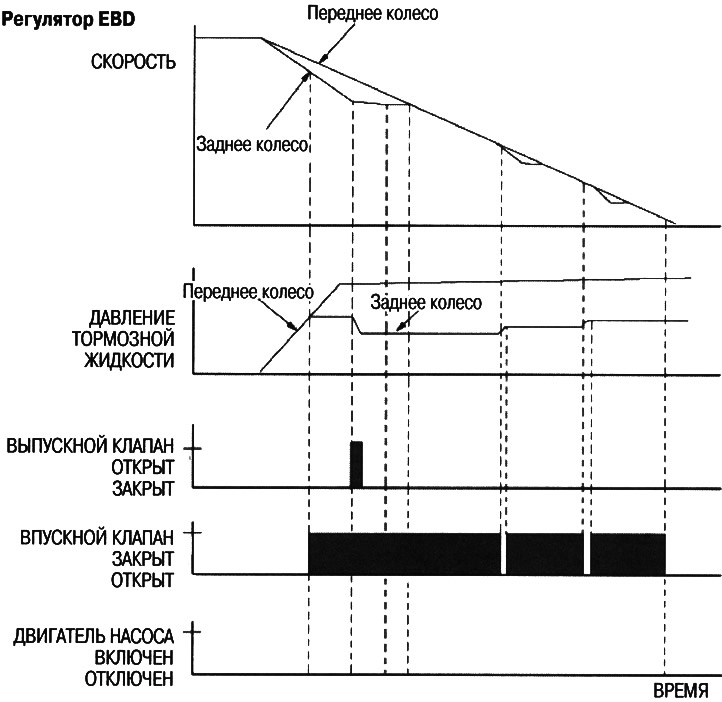
EBD regulator
When braking with a deceleration exceeding a certain value, the inlet valve closes and maintains the brake fluid pressure when the rear wheel speed drops below the front wheel speed. When the rear wheel speed drops further, the outlet valve immediately opens and reduces the brake fluid pressure. When the wheel speed recovers, the inlet valve immediately opens and increases the brake fluid pressure (diagram).
When performing these operations, the pump motor does not work.
[The text can be found on the website «www.hondabook.ru»]