
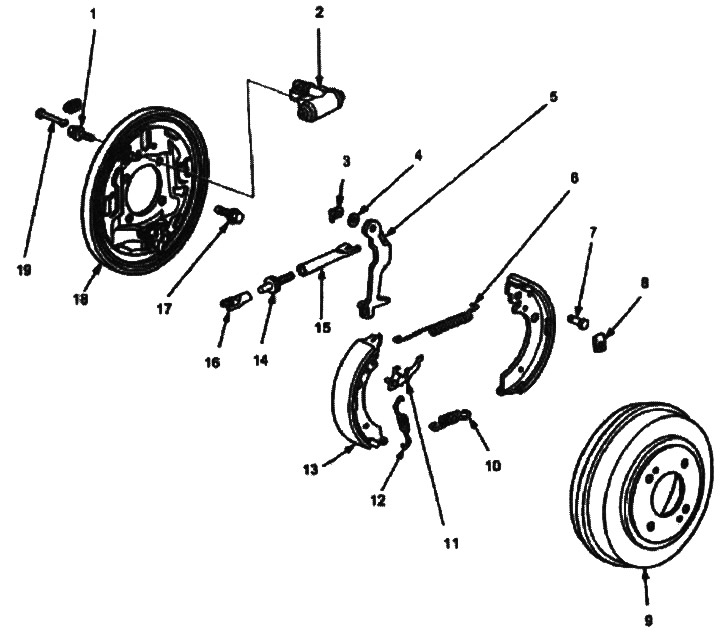
1. 9 Nm (0.9 kgf/m)
2. SLAVE CYLINDER. Check for leakage. Disassembly / Inspection (see below)
3. CLAMP. Replace
4. WAVE WASHER
5. PARKING BRAKE LEVER Has marks on the left and right.
6. UPPER RETURN SPRING, Check for looseness and damage
7. AXIS
8. LOCKER SPRING. Securely fasten to tension pin
9. BRAKE DRUM. Checking (see below)
10. LOWER RETURN SPRING. Check for looseness and damage
11. LEVER
12. SPRING Check for looseness and damage
13. BRAKE SHOE. Checking (see below). If reusing the pads, mark them and install them in the same position
14. ADJUSTER BOLT. Check ratchet teeth for wear and damage
15. EARRING A
16. EARRING B
17.10 mm bolt, 64 Nm (6.5 kgf/m)
18. SUPPORT DISC. Has marks on the left and right.
19. TENSION PIN
Warning! Frequent inhalation of dust from brake pad surfaces, regardless of the material composition, may pose a health hazard.
- Do not inhale dust.
- Do not clean brake surfaces with compressed air or a brush. Use a vacuum cleaner.
Note:
- Dirty brake linings or drums will increase braking distance.
- Before jacking up the rear of the vehicle, place chocks under the front wheels.
- 1. Raise the rear of the vehicle and support it securely on safety stands.
- 2. Release the parking brake and remove the brake drum from the rear wheel.
The article is based on information from the website HONDABOOK