
Note. If the noise level increases due to the balance shaft drive belt, the first step is always to adjust its tension. This procedure can be done without removing the timing belt covers. The tension force of the belt in question is adjusted using the timing belt tensioner.
Removal
1. Bring the piston of the right cylinder to the TDC position of the end of the compression stroke (see Section Bringing the piston of the first cylinder to the top dead center (TDC) position). Disconnect the negative cable from the battery.
Warning! If the car stereo system is equipped with a security code, make sure you have the correct combination to activate the audio system before disconnecting the battery!
2. Remove the steering pump drive belt. Disconnect the pump from the support bracket (see Chapter Suspension and steering) and move it to the side.
3. Remove the generator with brackets from the timing belt cover (see Chapter Engine electrical equipment).
4. Jack up the vehicle and place it on supports. Remove the crankcase guard (see Chapter Body) and the cover in the left wheel arch.
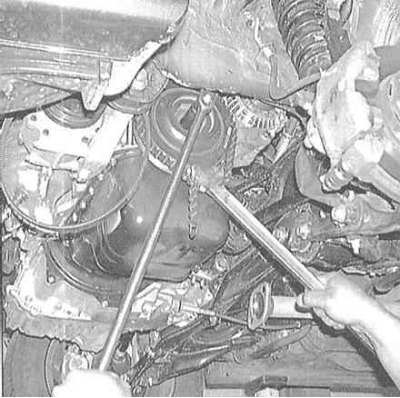
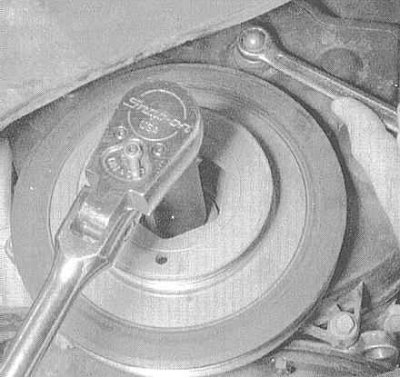
5. Hold the crankshaft pulley from turning with a chain wrench and loosen its mounting bolt. Remove the pulley, using a puller if necessary.
6. Support the power unit with a jack, placing a wooden block between the head of the latter and the oil pan to distribute the load. Remove the left support cushion of the power unit with its bracket (see Section Checking the condition and replacing the powertrain suspension supports).
7. Remove the engine oil dipstick and its guide tube from the engine block.
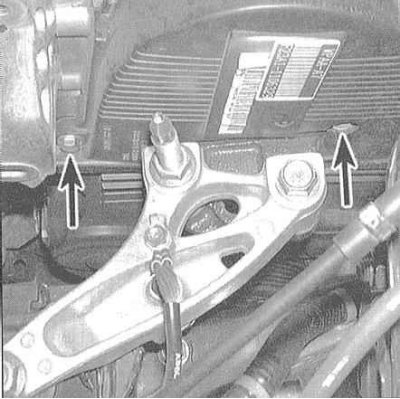
8. Unscrew the bolts securing the timing belt covers to the block. Make a diagram for yourself explaining the order of the arrangement of fasteners of different lengths, which during assembly must be screwed strictly into the previous holes.
 |
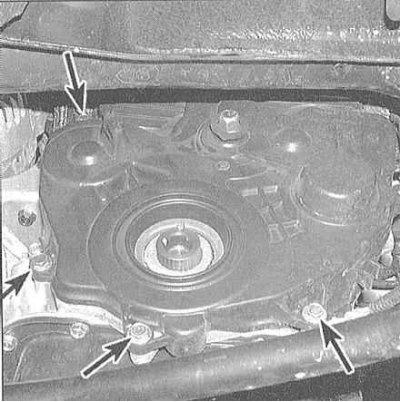 |
9. Remove the upper and lower timing belt covers.
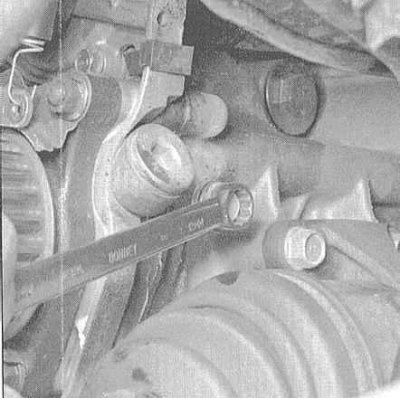
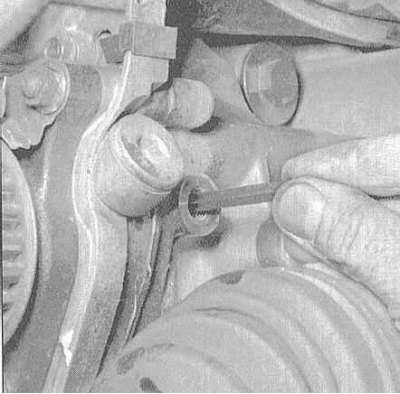
10. Insert a bolt or a 6 x100 mm rod wrench into the special hole in the rear wall of the engine block (the hole is plugged with a bolt, which must first be unscrewed), which will block the rear balance shaft from turning during the process of removing the drive belt.
Caution! The bolt/key should not be inserted into the hole deeper than 74 mm (mark accordingly)!
 |
 |
Note: For detailed information on removing the balance shaft, see Section Removal and checking the condition of the balance shafts (4-cylinder engines).
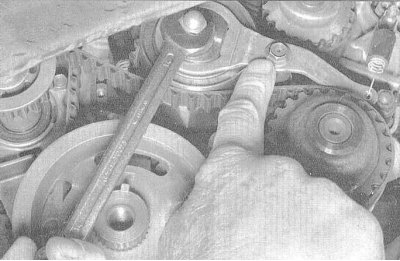
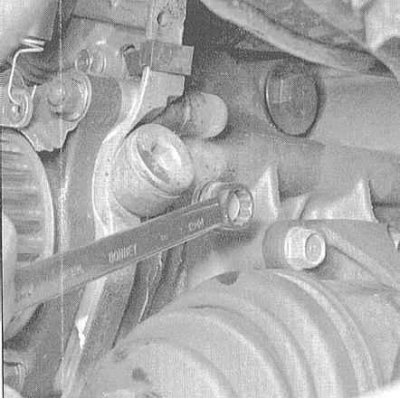
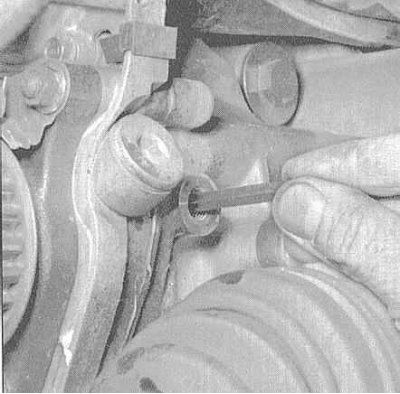
11. Temporarily screw one of the timing belt cover mounting bolts into the hole in the left side of the timing belt tensioner lever, tighten the bolt to lock the adjuster while loosening the tensioner nut. Loosen the tensioner nut and press its roller away from the balance shaft drive belt, thereby loosening the tension of the latter. Remove the belt.
Note: If the belt is not to be replaced, mark its original direction of rotation, which must be observed during installation.
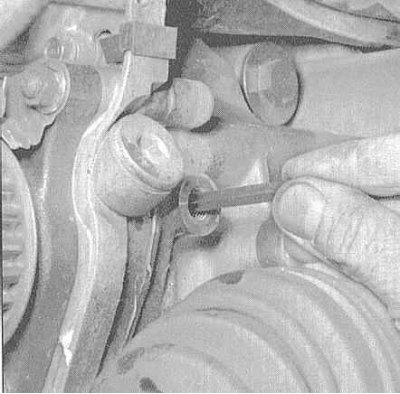
12. If the balance shaft gears (front and rear) are damaged, remove their mounting bolts. The rear shaft is already locked by inserting a suitable bolt/rod into the access hole from the rear of the engine block; the front shaft can be secured by inserting a suitable screwdriver into the service hole in its end (directly under the gear). Also remove the crankshaft gear.
Note: The rear balance shaft is equipped with a set of gears, the position of which must be clearly marked before removal to avoid errors during assembly.
Examination
Carefully inspect the drive belt and balance shaft gears for signs of wear, cracks and other mechanical damage. Replace defective components.
Installation
1. Assess the condition of the front crankshaft oil seal and replace it if necessary (see Section Replacing the front crankshaft oil seal). Place the toothed wheel on the front crankshaft journal, making sure that the seat key on the journal is aligned with the keyway in the wheel hub.
2. Before installing the balance shaft drive belt and its gears, make sure that the timing belt is installed correctly (see Section Removal, condition check and installation of the timing belt and timing drive gears). Also make sure that the piston of the first cylinder remains in the TDC position at the end of its compression stroke (see Section Bringing the piston of the first cylinder to the top dead center (TDC) position). Both balance shafts and the oil pump must be in their proper positions, with the rear shaft locked by inserting a bolt/wrench into the access hole. Move the drive belt tensioner and secure it in its new position, following the procedure described in paragraph 11.
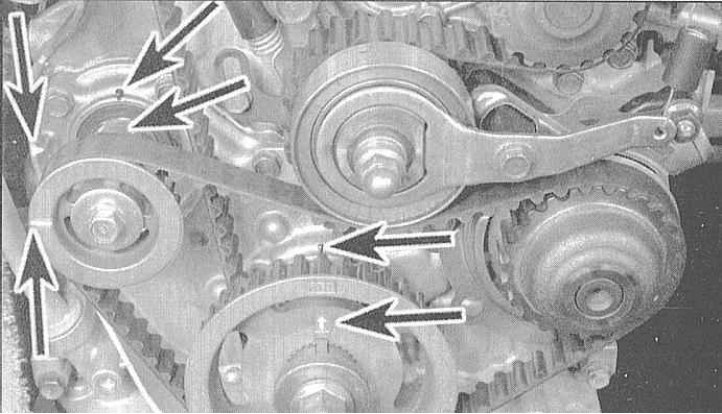
3. If removed, install your gears on the balance shafts. Make sure that both sets of installation marks on the front balance shaft are correctly aligned. Correct installation of the rear balance shaft is automatically guaranteed due to the presence of a guide pin (or bolt) that enters a special service hole. Put the drive belt on the gears.
4. Check again that the alignment marks are correctly positioned, then screw in the gear mounting bolts and tighten them to the required torque.
5. Now you can proceed to adjusting the belt tension. Make sure that the tensioner adjusting nut is loosened, then turn the crankshaft so that the camshaft gear rotates approximately three teeth - this should completely remove the slack from both belts. Tighten the tensioner nut to the required force.
Note: To check that the belt is properly tensioned, press firmly with your thumb near the camshaft sprocket - the belt should be tight on both sides of the sprocket.
It is possible to adjust the tension of the timing belt and the balance shaft drive belt without removing the timing belt covers. However, it is still wiser to remove the covers in order to be able to check the correct alignment of the timing marks.
6. If only the balance shaft drive belt was removed/replaced, remove the bolt used to secure the adjuster. Replace the timing belt covers and tighten the mounting bolts to the required torque. Make sure that the edges of the sealing gaskets do not protrude from under the ribs at the joints of the front covers.
 |
 |
7. When installing the crankshaft pulley, do not forget to lubricate the threads and the lower surface of the head of the bolt that secures it. Screw in the bolt and tighten it to the required torque.
[The original is located on the website: Hondabook.ru]