
Contents: Electrolyte ⇊ Checking the density of the…⇊ Power cables ⇊ Charging the battery ⇊ Replacement ⇊
The battery condition is checked by external inspection. If traces of electrolyte leakage or visible damage to the battery case are detected, it should be replaced immediately.
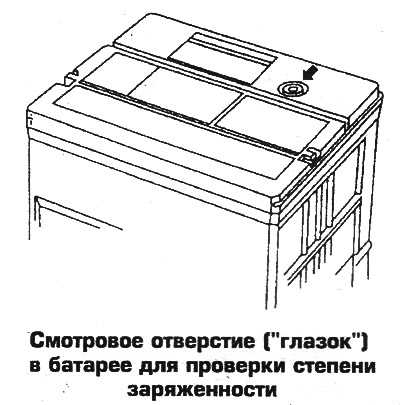
In maintenance-free batteries, check the battery charge level through a special inspection hole (photo). The eye also indicates the electrolyte level. Check the condition of the terminals and poles for corrosion. Clean corroded terminals, wipe with a soda solution and rinse with water.
Electrolyte
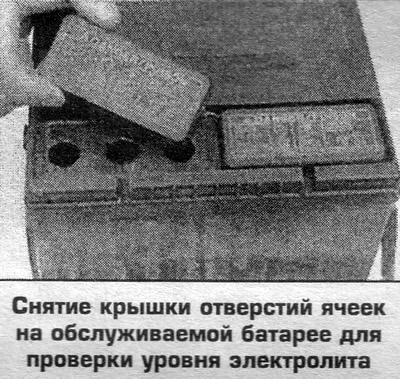
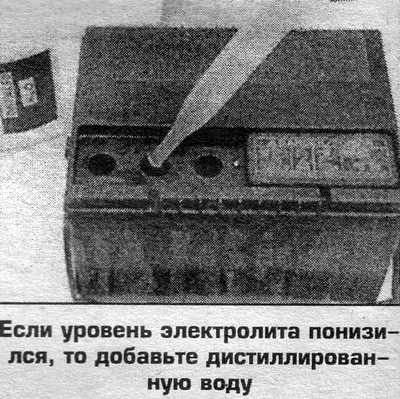
The electrolyte level in a serviced battery is checked at least monthly. If driving hard or in hot weather, the level should be checked more often. The electrolyte level should reach the split ring (with the plug turned out), or match the mark (on a transparent body).
Maintenance-free batteries have a special "eye" for this purpose. The method for checking with the "eye" is described in the instructions supplied with the battery or is marked on the battery case. As a rule, a green color of the eye indicates a normal state of charge and a normal electrolyte level. A dark color of the eye indicates that the electrolyte level is normal, but the battery is undercharged, and a light color of the eye indicates that the electrolyte level has dropped and the battery needs to be replaced.
 |
 |
Checking the density of the electrolyte
The density of the electrolyte is checked using a peephole built into the battery housing.
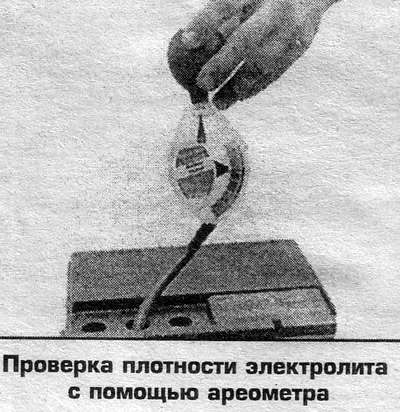
The method for checking the density of the electrolyte using a "peephole" is described in the instructions supplied with the battery or printed on the battery case. The most accurate density readings are obtained by measuring with a hydrometer (photo).
 |
 |
Power cables
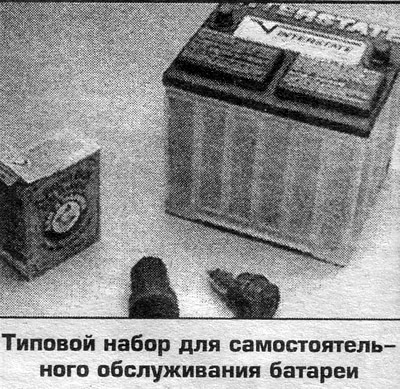
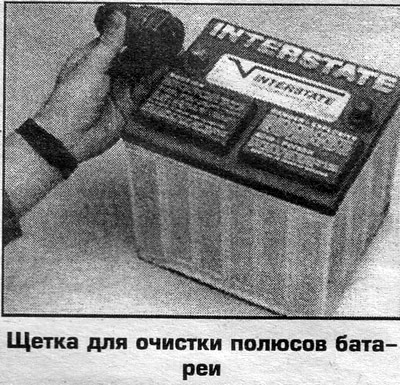
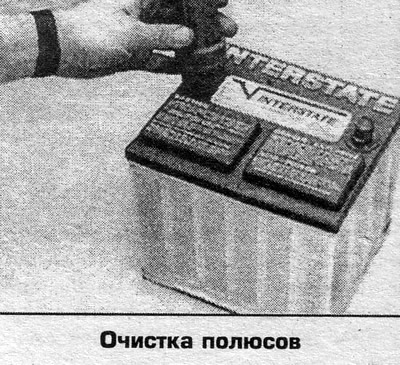
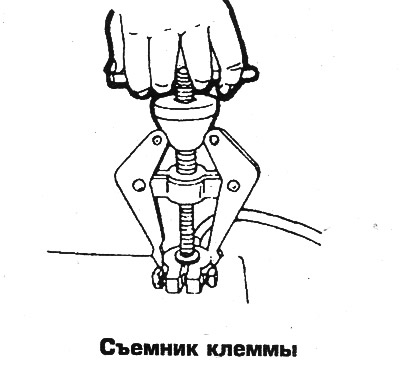
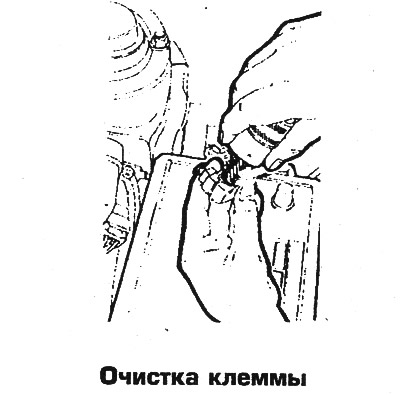
Periodically check the condition of the battery cables and clean the terminals from deposits. Replace the cable with damaged insulation, selecting one according to length and cross-section.
 |
 |
 |
 |
Charging the battery
It is recommended to charge the battery with a low current, which is approximately 10% of the battery capacity; the battery charging procedure is specified in the manufacturer's instructions.
Replacement
The new battery must exactly match the one being replaced in terms of capacity and output. After a long period of vehicle operation, it is permissible to install a new battery with a slightly larger capacity.