
Cleaning
1. A thorough cleaning of the cylinder head and valve train components followed by a detailed inspection of their condition will help determine the approximate scope of the upcoming restoration work.
Note: Severe engine overheating may result in deformation of the cylinder head and disruption of the flatness of its mating surfaces.
2. Scrape off all traces of old gasket material and sealant from the mating surfaces of the cylinder head, intake manifold and exhaust manifold - try not to damage the surfaces. The work will be significantly facilitated by using a special softener, which should be pre-soaked into the adhering deposits.
3. Remove all traces of scale from the walls of the water channels.
4. Using a stiff wire brush, thoroughly clean all accessible cavities and openings. If the channels are heavily contaminated, head cleaning should be entrusted to specialists.
5. "Run" each of the bolt holes with a tap of the appropriate size, removing corrosion products and traces of old sealant from the threads and restoring damaged threads. If you have access to a source of compressed air, blow out the holes, removing chips and small debris from them.
Caution! When using compressed air, do not forget to wear safety glasses!
6. Use a wire brush to clean the threads of the intake manifold and exhaust manifold mounting studs.
7. Wash the head with solvent and dry it thoroughly. Using compressed air will significantly reduce the drying time and will guarantee the quality of cleaning of hard-to-reach cavities and holes.
Note: Various types of carbon deposit removers, which make the cleaning process much easier, can be purchased at many car accessory stores. Remember that these types of products are usually chemically aggressive and should be used with appropriate precautions - strictly follow the manufacturer's instructions, usually on the container label.
8. Wash the rocker arms of the valve drive with solvent, then dry them thoroughly. Using compressed air will greatly facilitate the procedure (remember to wear protective glasses).
Note: On VTEC equipped models, be sure to secure the intake rocker arms with rubber bands.
9. Wash in solvent and thoroughly dry the valve springs, their plates and split lock crackers. Try not to mix up the components.
10. Scrape off the bulk of the deposits that have formed on the valve surfaces, then use a wire attachment on an electric drill to finally clean the surfaces of the valve stems and plates - make sure that the valves are not mixed up.
11. Remove and thoroughly clean the hydraulic lifters/valve clearance adjusters (VTEC). Store the removed components in an organized manner.
Note: The oil spray jet(s) should be removed and thoroughly cleaned at this stage. On 4-cylinder engines, the jets are located on top of the head, on V6 engines, in the cylinder block (under the head).
Checking the status
Note: Before deciding whether to machine the cylinder head, perform a thorough inspection of its condition. After carefully studying the material presented in this subsection, make a list of components requiring special attention.
Cylinder head
1. Carefully check the cylinder head for signs of coolant leaks, cracks and other damage. A cracked head must be replaced. If you are not sure of the condition of the head, send it to a car service workshop for inspection. If repair is not possible, replace the defective head.
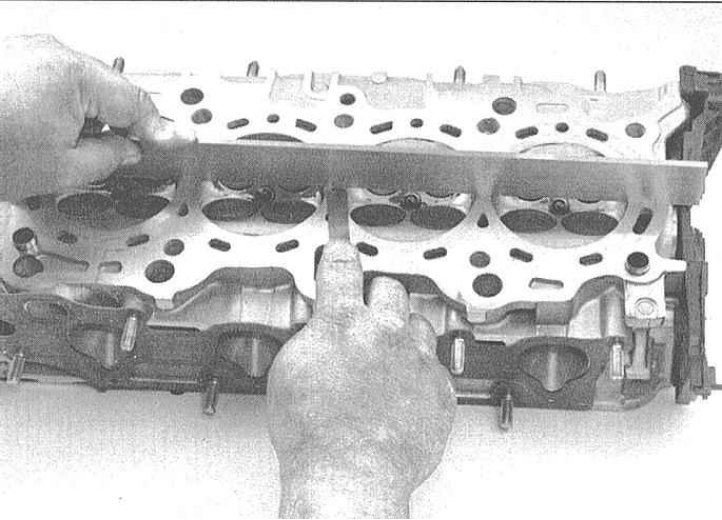
2. Using a flatness gauge and a blade-type feeler gauge, check the mating surface of the head for signs of deformation. If the non-flatness exceeds the value permitted by the standards (see Specifications), the head must be sent to a mechanical workshop for turning.
3. Check the condition of the valve seats in each combustion chamber. If cavities, cracks, or burn marks are detected, the head should be subjected to special restorative repairs, the implementation of which is beyond the qualifications of the average amateur mechanic and should be entrusted to car service specialists.
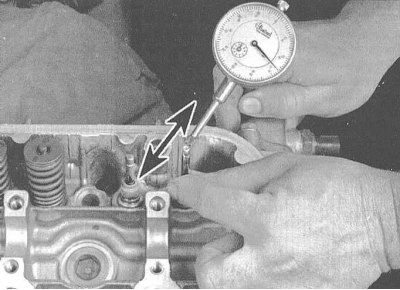
4. Using a DTI gauge, measure the valve stem play in the valve guides. The valve should be lifted off the seat by approximately 1.6 mm. The total valve lateral runout should then be divided by two to determine the valve guide clearance. Compare the results with the Specifications. If there is any doubt about the condition of the components, have them checked by a qualified service technician.
Valves
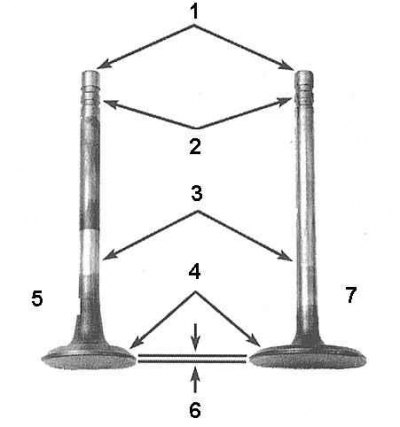
1. Carefully inspect the working surfaces of the valves for signs of uneven wear, deformations, cracks, cavities and burn marks. Assess the degree of operation of the valve stems. Check for cracks in the necks of the stems. Check the valves for bending of the stems by rotating them. Make sure there are no cavities and signs of excessive wear of the ends. If any of the listed defects are detected, the valves must be delivered to a car service workshop for restoration.
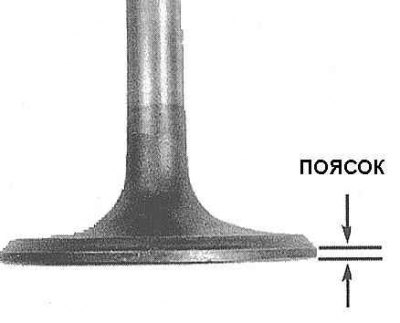
2. Measure the width of the cylindrical part (belt) of the valve disc for each valve. If the width of the belt is less than the value specified in the Specifications, replace the valve.
Valve components
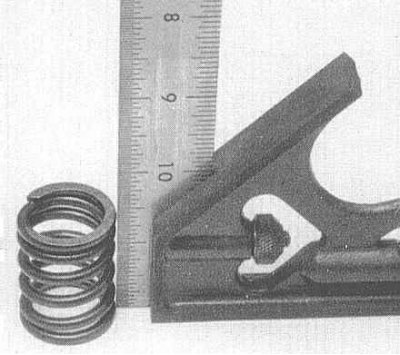
1. Assess the degree of wear of the end parts of each of the valve springs, check the springs for cavities. By installing each of the springs vertically on a flat surface, check the strictness of their end face. Springs with a violation of the end face, as well as sagging, are subject to replacement.
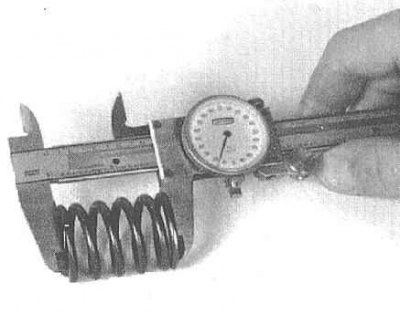
2. Measure the free length of the valve springs, compare the measurement results with the requirements of the Specifications. If the spring is shorter than the lower permissible limit, it is sagged and must be replaced. Also check the forces developed by the springs for compliance with the regulatory requirements (it is better to entrust this work to specialists of the car service workshop). If you are not sure of the condition of the springs, it is better to replace them.
3. Check the spring plates and split lock crackers for cracks and signs of wear. Any parts in questionable condition should be replaced with new ones to avoid future defects.
4. Replace all identified defective components.
5. If the valve components are significantly worn, which is quite likely for an engine requiring major repairs, assemble the valve assemblies, install them in their proper places in the head and proceed to perform the valve maintenance procedures (see Section Valve maintenance).