
Note. A new or reconditioned cylinder head can always be ordered from a car service workshop or from the warehouse of the car manufacturer's branded service center. Due to the need to use some special tools during disassembly and inspection of the head, the authors of this Guide believe that it will be easier and cheaper for an amateur mechanic to purchase a replacement head than to get involved in a rather complicated restoration repair of a worn-out one.
Immediately after removing the head, remove the oil spray jet(s) from the engine block, clean it(them) and place it(them) in a separate plastic bag.
1. Disassembling the cylinder head requires preliminary removal of the valve train (intake and exhaust valves with associated components). It is assumed that the rocker arms and camshaft(s) have already been removed from the head.
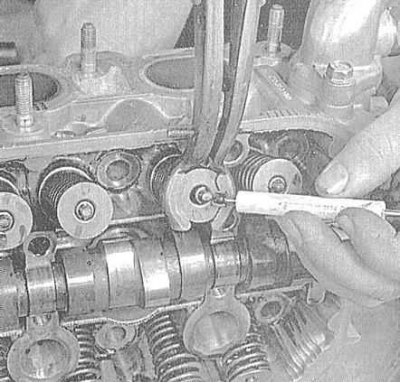
2. Using a special tool, compress the springs of the first valve and remove the split lock crackers of the plate from the groove on the rod. Carefully release the tool and remove the spring plate, springs and their seat (depending on the configuration) from the valve.
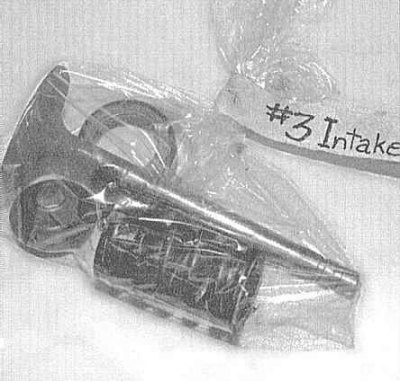
3. Place the removed valve assembly components in a clearly numbered separate plastic bag.
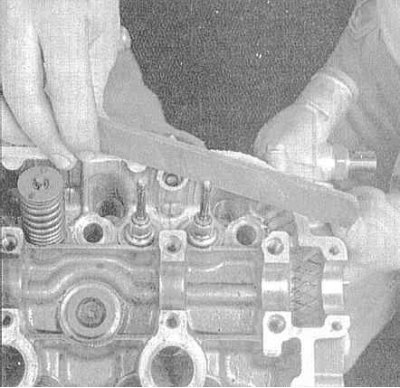
4. Next, remove the valve from the cylinder head and remove the oil deflector cap from the guide sleeve. If the valve gets stuck in the guide sleeve, push it back into the head and use a whetstone or a fine-tooth file to carefully clean the edges of the groove for installing the crackers.
5. Proceed in a similar manner to remove the remaining valve assemblies. Place the removed components of each valve in a separate bag equipped with a corresponding label - during assembly, each part must be installed strictly in its original place.
6. Once all valve train components have been removed and stored in an organized manner, you can begin the cleaning and inspection procedures for the head (if doing a full engine rebuild, complete the disassembly first).