
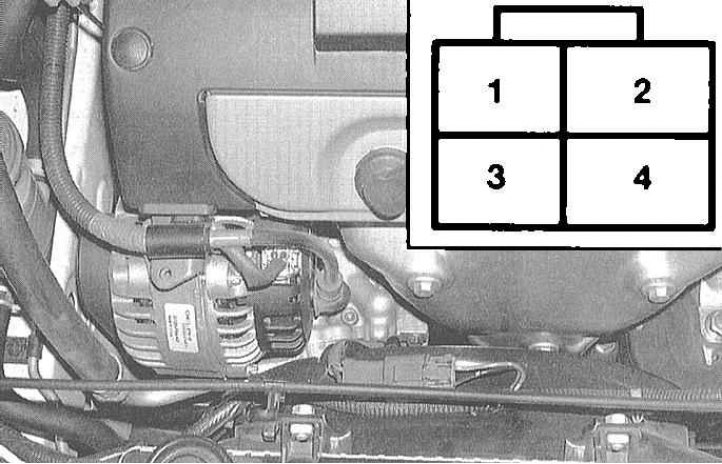
1. Remember that malfunctions of the charging system are not necessarily associated with generator failures.
Always perform the following basic checks first:
- a) Check the condition of the battery wires where they are connected to the battery terminals. Check the reliability of the terminal clamps;
- b) Check the battery status (see Section Checking the battery status and replacing it). If necessary, recharge the latter or replace it with a new one;
- c) Check the condition of the wiring and electrical connections of the generator and voltage regulator;
- d) Check the condition and tension of the alternator drive belt (see Chapter Settings and ongoing maintenance). Replace if necessary;
- e) Check the generator mounting bolts for tightness;
- f) Start the engine and evaluate the intensity of the background noise emitted by the generator;
- g) If equipped, check the condition of the fuse links in the fuse box in the engine compartment of the vehicle (see Chapter On-board electrical equipment).If any of the inserts fail, investigate and eliminate the causes of the overload;
- h) Check the proper functioning of the charge indicator lamp in the engine instrument panel. With the ignition on and the engine not running, the lamp should light. If not, disconnect the 4-pin connector from the back of the alternator and ground terminal #3 (V6 engines) or #4 (4-cylinder engines). If the lamp still does not light, check the condition of fuse #6 15 A, as well as the filament of the lamp itself. Make any necessary replacements;
- i) Check the contents of the on-board processor memory unit for the presence of electrical load monitoring (ELD) system fault codes stored in it (see Chapter Engine management).
2. With the ignition off, use a voltmeter to measure the voltage produced by the battery on the rear side of the generator with all electrical consumers disconnected (heater fan, radio, cigarette lighter, cooling system fan, etc.). The measurement result should be about 12.5 V, or slightly higher if the engine has been running for the last hour.
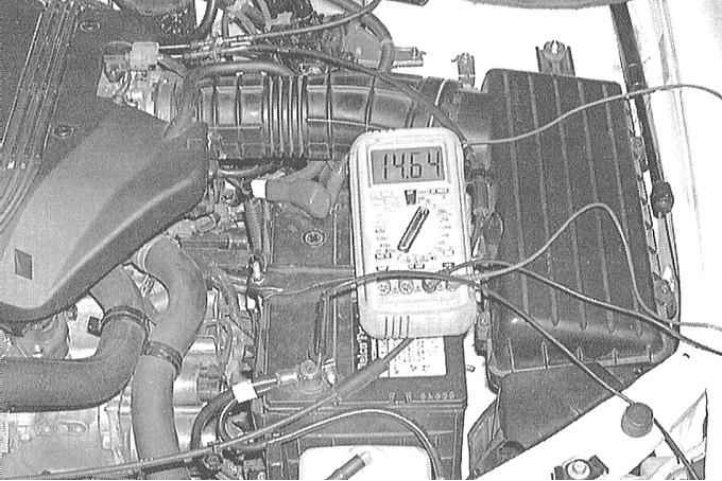
3. Start the engine and repeat the measurement. At a crankshaft speed of 1500 rpm, the voltage should be 13.8÷14.8 V.
4. Turn on the high beam headlights, run the A/C fan at maximum speed, turn on the rear window heater and radio. If the charging system is functioning normally, the voltage should drop briefly, then return to the normal operating level of about 13.5 V. If the voltage drops below 13 V, then the system is not functioning properly.
5. Reduce engine speed to idle - the charging voltage should not fall below 13 V. Pressing the foot brake should not lead to a further decrease in voltage (below 13 V).
Note: Some low power generators may allow the output voltage to drop below 13V for a short period of time, but should then recover quickly.
6. Switch off all electrical consumers, increase engine speed to 1600 rpm and read the voltmeter again. Now the voltage should not rise above 15 V (minor deviations are permissible, inversely related to the ambient temperature).
7. If the voltmeter registers values different from the specified ones, the generator assembly with the voltage regulator should be replaced.