
Contents: Removal ⇊ Installation ⇊
Note: A failed brake master cylinder must be replaced. Manufacturers do not recommend attempting to perform a refurbishment of the brake master cylinder.
Removal
1. The brake master cylinder is located in the engine compartment of the vehicle and is attached to the brake booster assembly.
2. Pump out as much liquid as possible from the master cylinder reservoir (use a syringe or rubber bulb).
3. Place rags under the fittings and have caps or plastic bags available to plug the open ends of the brake lines to prevent dirt from entering the system.
Warning! Brake fluid is an aggressive chemical compound and when in contact with body panels it destroys the paintwork. Before starting the procedure, cover the fenders and front panel of the car with special covers or just old blankets.
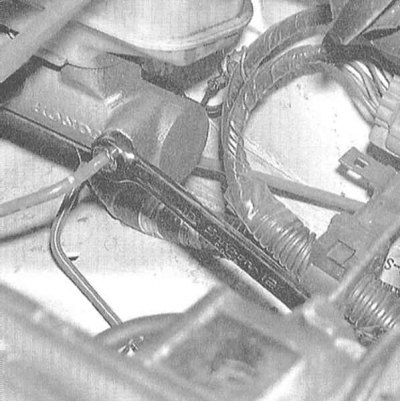
4. Loosen the nuts of the union assemblies connecting the brake lines to the master cylinder. To avoid rounding the splines of the nuts, loosen them using a special open-end wrench with a slotted head. Pulling slightly outward, separate the brake lines from the unions of the master cylinder. Immediately plug the open ends of the tubes.
5. Remove the front suspension strut spacer bar.
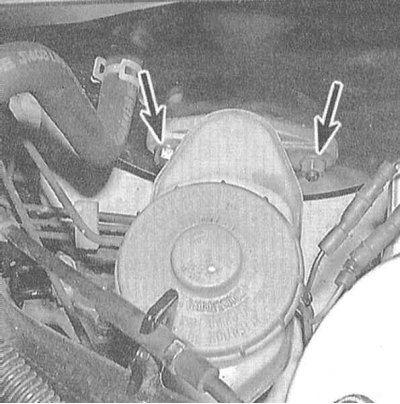
6. Disconnect the brake fluid level switch wiring connector from the master cylinder reservoir housing, then loosen the two retaining nuts and separate the master cylinder from the brake booster assembly. Remove the cylinder from its retaining studs and lift it out of the engine compartment (be careful not to spill hydraulic fluid filling the cylinder on painted body panels).
Installation
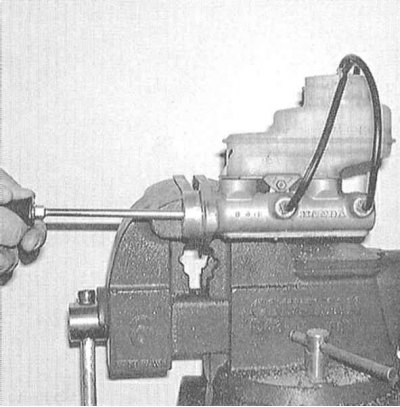
1. Before installation, the new brake master cylinder must be bled on a workbench. For convenience, clamp the cylinder mounting flange in a vice with soft jaws. Then you will have to simultaneously manipulate the piston in the cylinder and observe the flow of brake fluid pushed out through the outlet nipple.
Connect a pair of tubes from a special bleeding kit (ask in car accessory stores) to the master cylinder outlet fittings.
2. Fill the reservoir with fresh brake fluid of the required grade (see Chapter Settings and ongoing maintenance).
3. Slowly push the pistons into the cylinder (it is easiest to use a large Phillips-head screwdriver). Air should begin to escape from the pressure chambers into the reservoir. It is important that the ends of both tubes are completely immersed in the brake fluid in the reservoir to eliminate the possibility of it being sucked back into the cylinder when the pistons are released.
4. Continue pumping until the liquid being pushed out through the tubes is completely free of air bubbles.
5. Disconnect the tubes one by one, immediately sealing the open ends of the fittings. Close the master cylinder reservoir with a lid.
6. Place the brake master cylinder onto the studs on the brake booster assembly and tighten the mounting nuts by hand only for now.
7. Screw the brake line nipples into the cylinder. Since the cylinder is not yet firmly secured, its position can be adjusted slightly to make it easier to screw in the nipples - try not to strip the threads.
8. Tighten the brake master cylinder mounting nuts to the required torque, then tighten the nipple connections securely.
9. Install the front suspension strut spacer bar in place and tighten its fasteners to the required torque.
10. Fill the brake master cylinder reservoir with fresh brake fluid and bleed the hydraulic system (see Section Bleeding the brake system). To bleed the brake master cylinder on a car (if you did not do it on a workbench), you will need the help of an assistant who will manipulate the foot brake pedal. Ask the assistant to press the pedal several times, then fix it in the lower position. Loosen the union nut, releasing the mixture of air and brake fluid from the cylinder. Repeat the procedure until the ejected fluid is completely free of air bubbles. Acting in a similar manner, bleed the second union.
Note: Keep a clean rag handy to immediately remove any traces of brake fluid that gets on painted body surfaces.
11. Before operating the vehicle, make sure that the brakes are functioning properly.
[Full text available on the portal: HondaBook.ru]