
Examination
1. Depress the foot brake pedal and check that the brake lights in the rear combination lamp assemblies operate properly.
2. If the brake lights do not work, check the condition of the corresponding fuse (see Chapter On-board electrical equipment). Also check the condition of the brake light bulb filaments in both rear combination lamps, as well as the high-level brake light bulb.
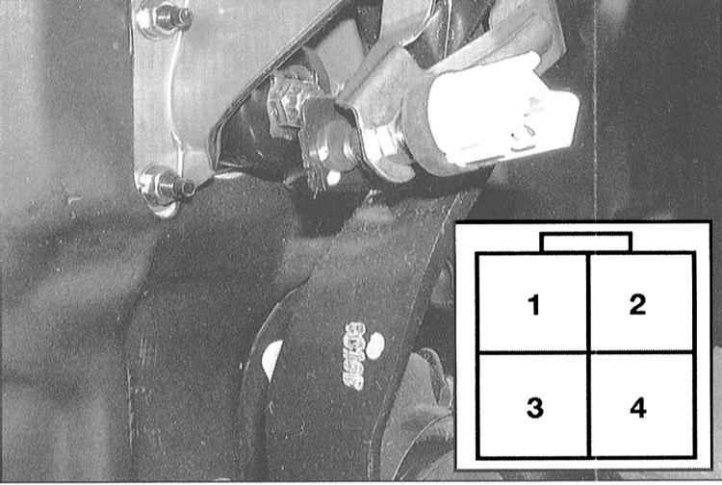
3. If the bulbs and fuse are OK, locate the switch sensor mounted on the top of the foot brake pedal.
4. Disconnect the electrical connector of the sensor switch.
5. Check the conductivity between terminals 2 and 3 of the connector. When the foot brake pedal is depressed, there should be conductivity; when released, there should not.
6. Also check the conductivity between terminals 1 and 4 - here the opposite picture should take place, i.e. when the pedal is pressed there should be no conductivity, and vice versa.
7. If the check results are negative, replace the sensor switch.
Replacement
1. Disconnect the electrical wiring from the sensor switch.
2. Loosen the lock nut on the pedal side of the switch sensor, then unscrew the switch sensor from its support bracket.
3. Installation is carried out in reverse order.
Adjustment
1. Loosen the lock nut of the sensor-switch and unscrew the latter so that its plunger rests against the foot brake pedal.
2. Loosen the pushrod lock nut and, by turning the latter with pliers, adjust the pedal height properly (see Specifications).
Note: The measurement should be taken from the pedal pad to the floor panel (not to the carpet!).
3. Retighten the lock nut securely.
4. Screw the switch sensor into the bracket until its plunger is fully recessed (the threaded end rests against the pedal lever pad), then back it out 1/2 turn and tighten the lock nut securely.
5. Press the foot brake pedal by hand and measure its free travel. Compare the measurement result with the requirements of the Specifications. Make sure that the brake lights operate properly when the brake pedal is depressed.