
Warning: Carburetor cleaner is a highly corrosive liquid; protect your eyes when working with aerosols and liquids, and when using compressed air. If the cleaner gets on painted surfaces, remove it immediately!
Efficient carburetor operation depends greatly on careful cleaning and inspection during overhaul, as dirt, glue, water or varnish in or on carburetor parts will often result in poor performance.
Carefully disassemble the carburetor, referring frequently to the instructions and illustrations provided in the repair kit. Keep all like parts separate during disassembly and cleaning to avoid accidental substitution during reassembly.
When the carburetor is disassembled, wash all parts (except diaphragms, choke electrical assemblies, pump plunger and any other plastic, fibrous or rubber parts) with carburetor solvent or spray. Do not leave parts in solvent longer than necessary. Excessive cleaning can remove the special coating from the float and choke, making them unusable. Allow parts to air dry or blow them with compressed air.
Blow out all passages and jets with compressed air and make sure there are no blockages. Never use wires or similar tools to clean jets or fuel and air passages. Clean all jets and valves separately to avoid accidental replacement.
Check all parts for wear or damage. Check especially the following:
1. Check the float valve shut-off needle and seat. If worn, replace the entire assembly.
2. Check the float pivot pin for wear and the float(s) themselves for dents or bends. Replace the float if fuel has leaked into it.
3. Check the walls of the throttle shafts for wear or non-cylindricality. Damage or wear to the throttle lever, shafts or walls often requires replacement of the throttle. These parts must be fully compatible with each other; wear can cause air leakage which will affect starting and idle.
The throttle shafts and bushings are not included in the repair kit. If they are worn out, the entire carburetor must be replaced.
4. Inspect the idle mixture adjustment needles for scoring or grooves. If any, the needle must be replaced, as it will be impossible to obtain a satisfactory idle speed.
5. Check the accelerator pump check valves. Replace the valve if necessary.
6. Inspect the tank for warping of surfaces.
7. Carefully inspect valves and seats for wear and damage, replacing as necessary.
8. After the carburetor is assembled, check the choke valve for freedom of movement.
After cleaning and checking all components, reassemble the carburetor using new parts and always referring to the instructions provided in the repair kit. When reassembling, make sure that all screws and jets are tight (but not overtightened). Tighten all screws gradually, alternately. Do not tighten the needle valves where they are seated; this will result in uneven discharge. Make sure the float level is adjusted.
Accord
For each specific Accord carburetor, there are separate float and gasket kits with detailed instructions for their use. These procedures can be performed with the carburetor installed on the engine, saving a lot of time and trouble.
Prelude
The following procedure is used to disassemble each carburetor. When repairing, inspect each component for wear. Clean each passage thoroughly and replace worn parts as necessary.
1. Remove and separate the carburetors.
2. Remove the vacuum chamber; remove the vacuum piston and spring.
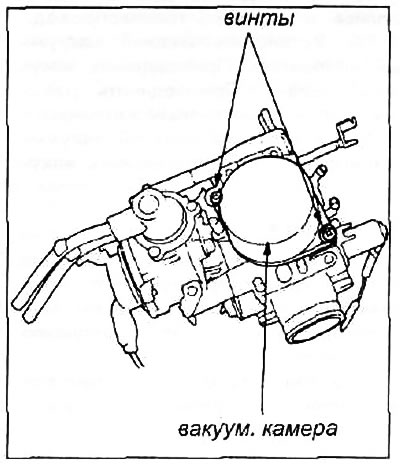
3. Inspect the piston and needle for wear or damage, replacing parts as necessary.
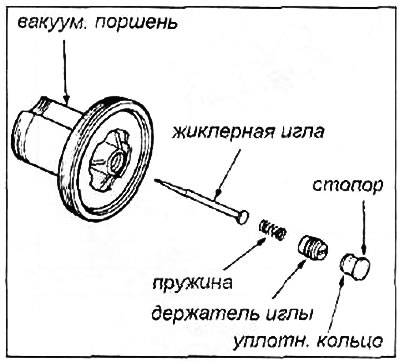
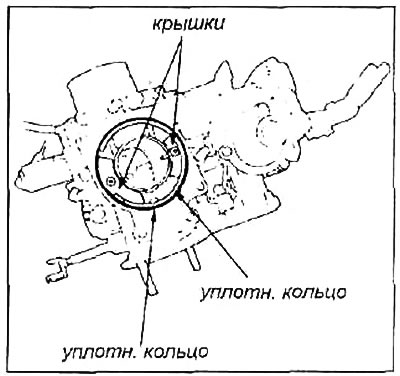
4. Remove the sealing rings.
5. Remove the two screws, plate, jet caps and gasket from the carburetor. This will expose the air passages.
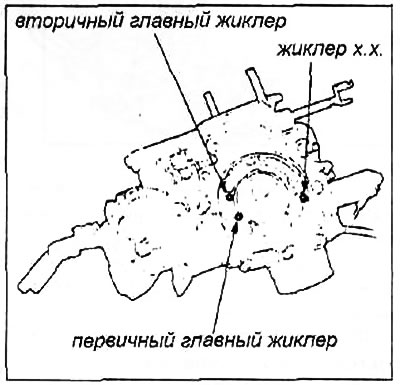
6. Remove the primary and secondary main air jets and the idle air jet. Do not mix up the jets; label and isolate each one as you remove it.
7. Remove the accelerator pump cover, spring, and diaphragm from the left carburetor.
8. Inspect the diaphragm and spring for cracks or damage, replacing parts as necessary.
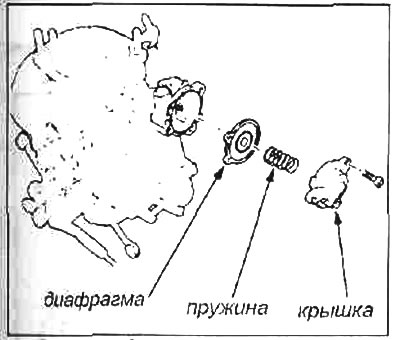
9. Remove the 3 screws, economizer valve cover, spring and diaphragm. Inspect the diaphragm and spring for damage.
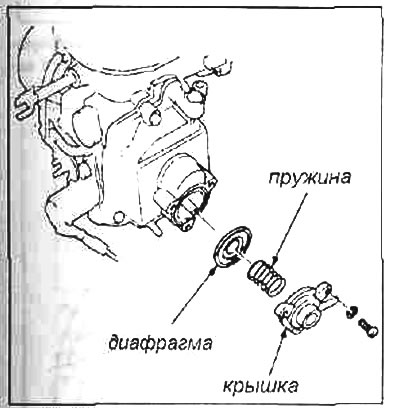
10. Remove the air ventilation cut-off electromagnetic valve in the right carburetor.
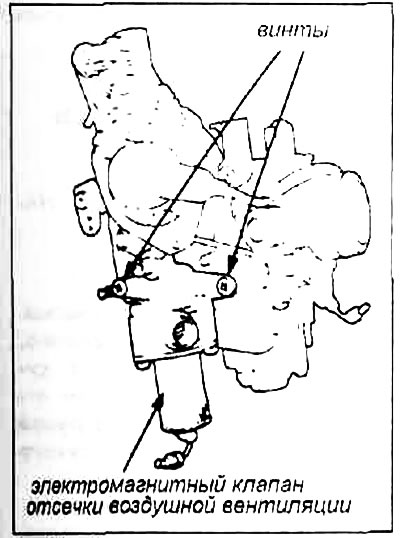
11. Remove the fuel shut-off valve.
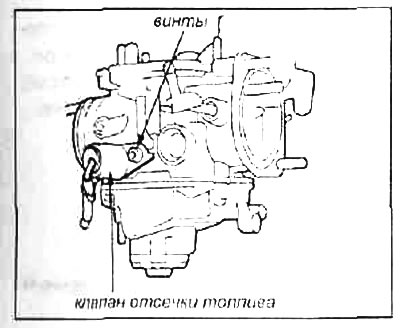
12. 11 Remove the float chamber.
13. Remove the float lever pin, float and float valve.
14. Remove the secondary main jet and needle jet holder.
15. Remove the primary main jet; this is a press fit with an O-ring seal.
16. Remove the economizer valve jet.
17. Remove the needle jet, the primary idle jet (located below the primary main jet) and the economizer valve tip located below the economizer valve jet.
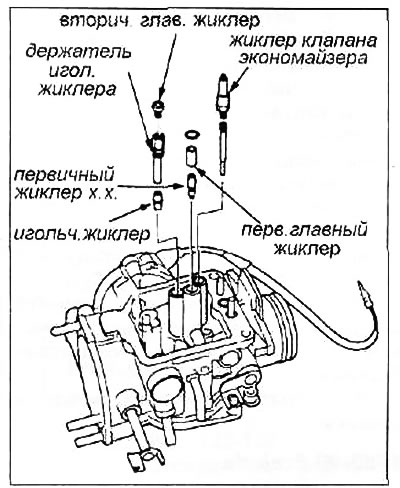
18. Clean all channels with cleaner; if possible, blow it out with compressed air.
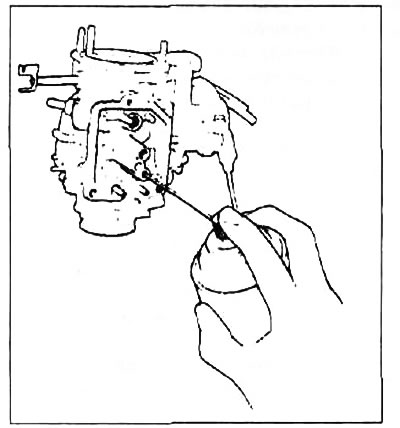
To install:
19. Install each jet in the correct position. Use new O-rings and/or filter where necessary.
20. Install the float valve, float and lever pin. Set the float level.
21. Install the fuel shut-off solenoid valve.
22. Install the air ventilation cut-off electromagnetic valve on the right carburetor.
23. Install the economizer valve diaphragm, spring and cover.
24. Install the accelerator pump diaphragm, spring and cover.
25. Install the primary and secondary main air jets and the idle air jet.
26. Install the jet caps and plate. Use new gaskets.
27. Install the sealing rings.
28. Install the vacuum piston and needle jet.
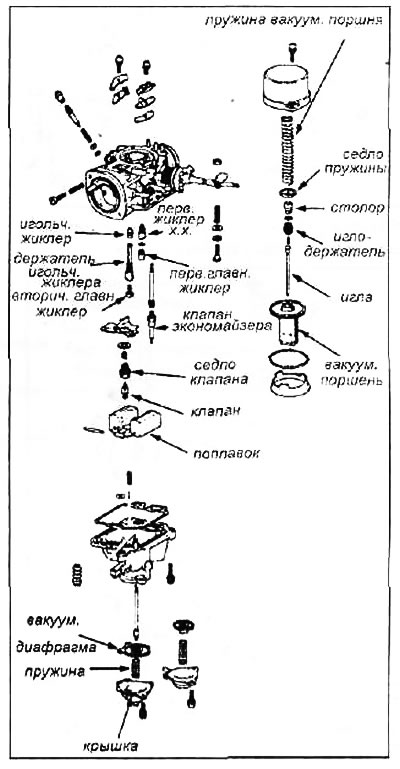
29. Install the vacuum chamber.
30. Connect the left and right carburetors. Install the carburetor assembly.