
Precautions when using rollers:
- Checking and testing using a chassis dynamometer is not possible.
- Avoid abruptly pressing the accelerator, brake pedal or turning the steering wheel abruptly. This may cause the car to roll and create an emergency situation.
- The maximum speed during testing must not exceed 50 km/h.
- The continuous operating time should not exceed three minutes.
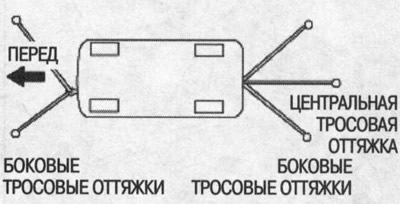
- Secure the vehicle securely with side and central tie-down cables. The rollers should be positioned under the rear wheels.
Warning!
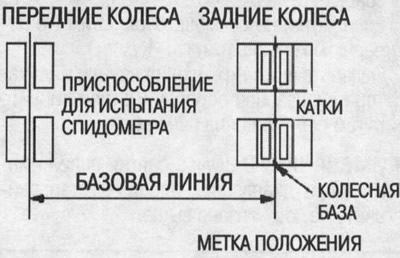
- Place the rollers parallel to the roller of each speedometer test fixture.
- If the front and rear wheels are not positioned correctly on the speedometer tester and rollers, the vehicle may roll away and cause an emergency situation.
- The side and center guy ropes must be properly tensioned. If the guy ropes are left slack, the desired holding efficiency will not be achieved.
- When securing the side and central cable ties, make sure that they do not touch the bumper or other parts of the car body.
- Attach guy ropes only in the locations indicated.
- The speedometer testing device can be operated at a speed of no more than 50 km/h and for no longer than three minutes.

Test procedures
1. Position the rollers according to the wheelbase and track width of the vehicle.
Note: Align the position mark with the baseline.
2. Place the vehicle with the front wheels on the speedometer test fixtures and the rear wheels on the rollers. Align the wheel centers with the speedometer test fixtures and rollers.
3. To prevent the vehicle from rolling off the rollers, securely tie the vehicle to the towing hook and rear bracket.
4. Start the engine, shift into 3rd gear (manual transmission) or into position D (CVT/Honda Multi Matic), gradually accelerate the vehicle and measure the vehicle speed.
5. After measuring, gradually slow down with the brake pedal and stop the car.