
- Use only genuine Honda aluminum wheel weights. Non-genuine weights may cause corrosion and damage to aluminum wheels.
- Remove the center cap from the inside of aluminum wheels after removing the wheels.
- Before installing the brake disc, clean the contact surfaces on the front wheel hub and on the brake disc.
- Before installing the wheel, clean the contact surfaces on the brake disc and on the wheel.
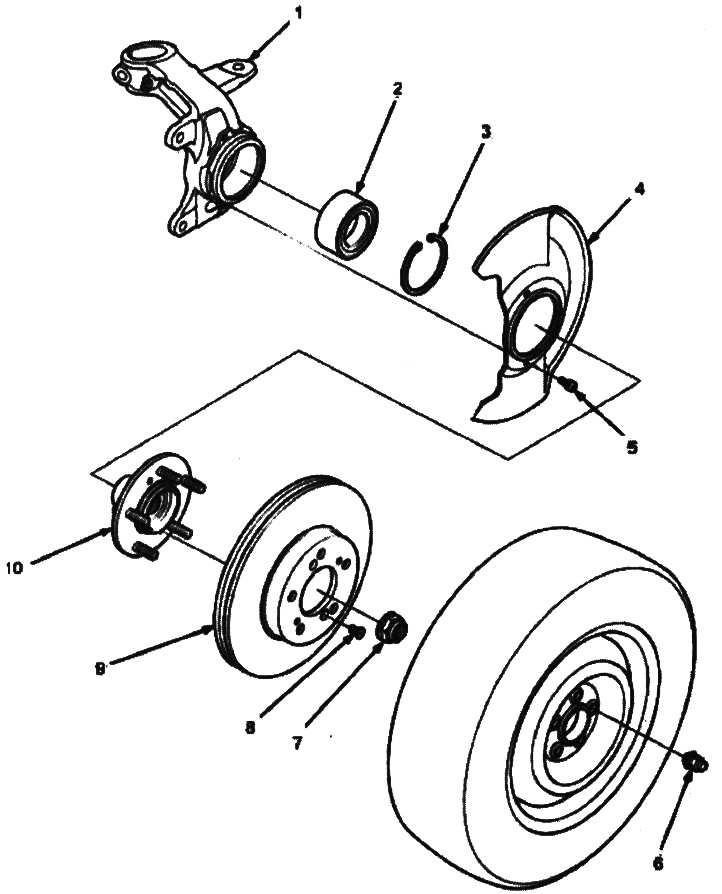
1. STEERING KNUCKLE
2. WHEEL BEARING. Replace
3. RING CLAMP
4. MUD GUARD
5. SCREW, 5x0.8 mm, 5.9 Nm (0.6 kgf/m)
6. WHEEL NUT, 12x1.5 mm, 108 Nm (11.0 kgf/m)
7. HALF NUT, 22x1.5 mm, 181 Nm (18.5 kgf/m). Replace.
Before tightening the axle nut, apply engine oil to the seating surface of the nut.
After tightening, use a drift to tap the nut shoulder onto the axle shaft.
8. 6mm BRAKE DISC FIXING SCREW, 9.8 Nm (1.0 kgf/m)
9. BRAKE DISC. Check for wear and rust.
10. FRONT WHEEL HUB. Check for damage and cracks.
1. Loosen the wheel nuts slightly.
2. Raise the front of the vehicle and securely support it on the safety stands at the designated points.
3. Loosen the wheel nuts and remove the wheel.
4. Bend back the locking tab on the axle shaft nut, then unscrew the nut.
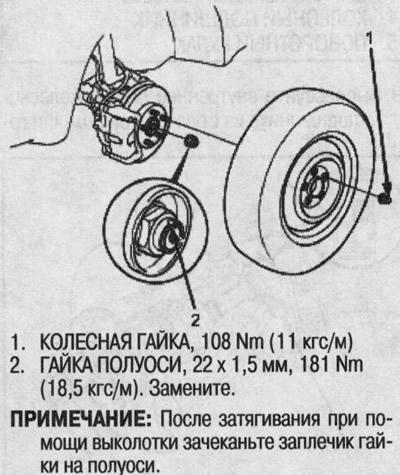
5. Unscrew the brake hose mounting bolts.
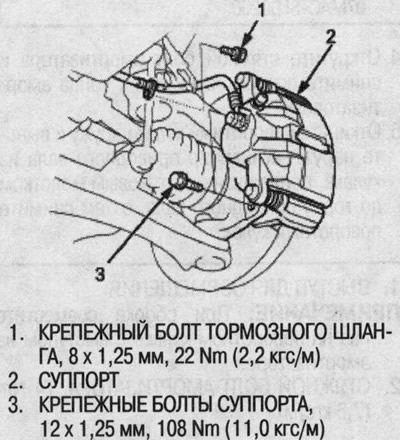
6. Loosen the caliper mounting bolts and hang the caliper assembly on the side. To avoid accidentally damaging the caliper assembly or the brake hose, tie the caliper to the bottom with a wire.
7. Remove the 6mm brake disc mounting screws.
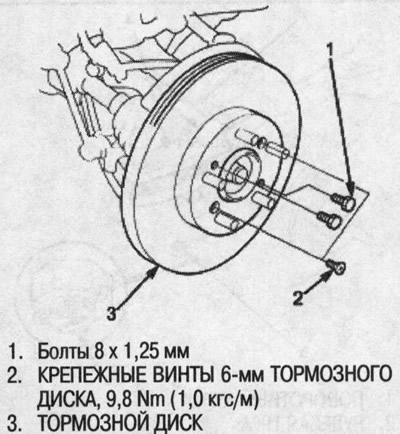
8. Screw two 8x1.25mm bolts into the disc to separate it from the hub. To avoid excessive warping of the disc, screw the bolts two turns at a time.
9. Remove the brake disc from the steering knuckle.
10. Check the front wheel hub for damage and cracks.
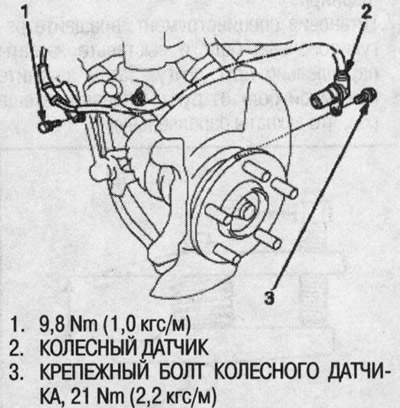
11. Remove the wheel sensor from the steering knuckle. Do not disconnect the wheel sensor connector (on models with ABS).
12. Wipe off any dirt or grease from the ball joint.
13. Remove the cotter pin from the lever and unscrew the nut.
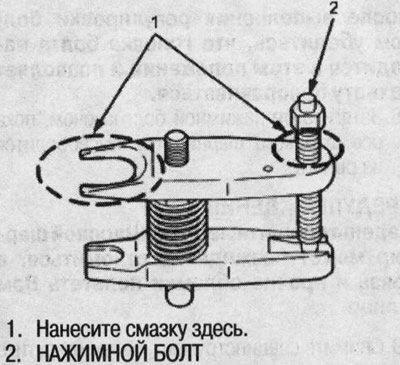
14. Apply grease to the special tool in the areas indicated. This will facilitate the installation of the special tool and prevent damage to the threads of the pressure bolts.
15. Loosen the 12mm nut on the tie rod end ball joint. To avoid damaging the threaded tie rod end, make sure the nut is flush with the end of the ball joint pin.
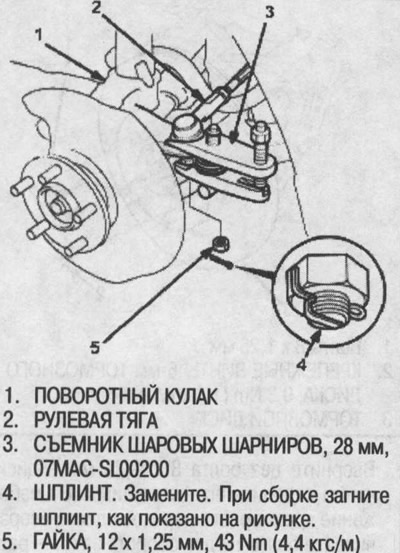
16. Install the special tool as shown in the figure. Insert the claws carefully to avoid damaging the ball joint boot. Adjust the distance between the claws by turning the pressure bolt. If necessary, apply wetting liquid to loosen the ball joint.
17. After installing the special tool, rotate the adjusting bolt and align the jaws parallel to each other. Then tighten the pressure bolt by hand and check again that the jaws are parallel.
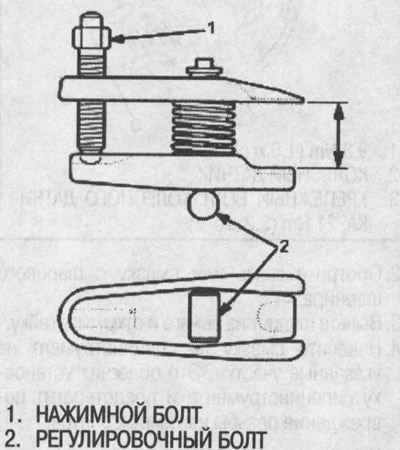
After making the adjustment with the bolt, make sure the bolt head is in this position and allows the grip to rotate.
18. Tighten the pressure bolt with a wrench until the ball joint axle is released from the lever.
Warning! Wear safety glasses. The ball joint may break off unexpectedly, sending dirt and other debris flying into your face.
19. Remove the special tool, then unscrew the nut from the ball joint end and remove the ball joint from the control arm. Check the ball joint boot and replace it if damaged.
20. Unscrew the 8mm self-locking nut and separate the stabilizer link from the lower arm.
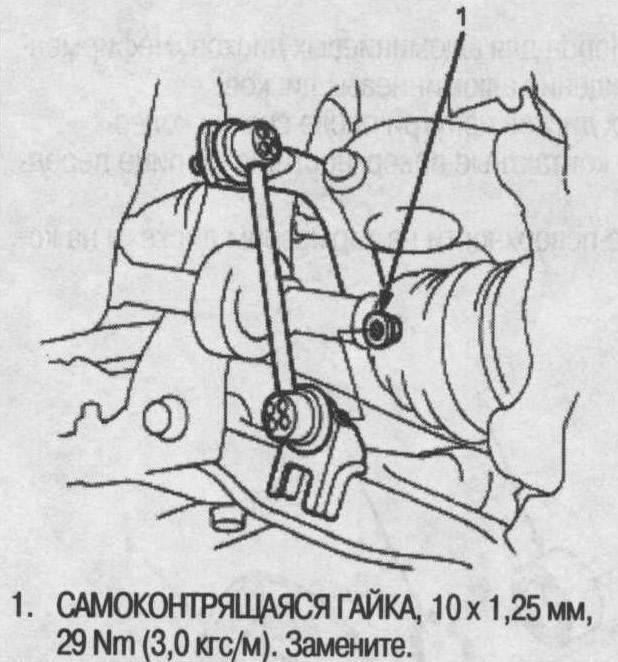
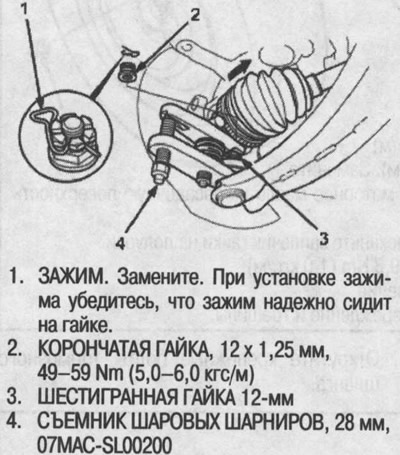
21. Remove the clamp from the lower arm ball joint crown nut and unscrew the nut.
22. Install a 12mm hex nut onto the ball joint. Make sure the hex nut is flush with the end of the ball joint pin, otherwise the ball joint puller may damage the threaded portion of the ball joint pin.
23. Using a special tool (see below) separate the ball joint and steering knuckle. If necessary, apply wetting fluid to loosen the ball joint.
24. Loosen the shock absorber clamp bolt and remove the steering knuckle from the end of the shock absorber.
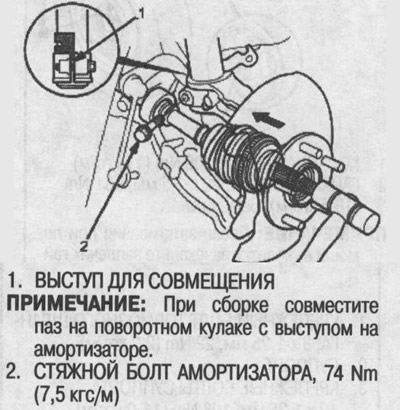
25. Tilt the steering knuckle outward and remove the outer joint of the drive shaft from the knuckle by tapping the end of the drive shaft with a plastic hammer, then remove the steering knuckle.
26. Separate the hub from the steering knuckle using a bearing separator and a hydraulic press.
Warning!
- Do not deform the mudguard.
- Hold the hub while separating it to prevent it from falling.
- To avoid damaging the special tool, make sure that the thread is fully screwed in before pressing out.
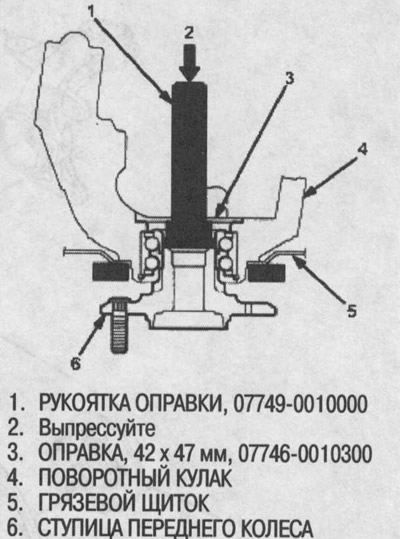
27. Remove the circlip and mudguard from the steering knuckle.
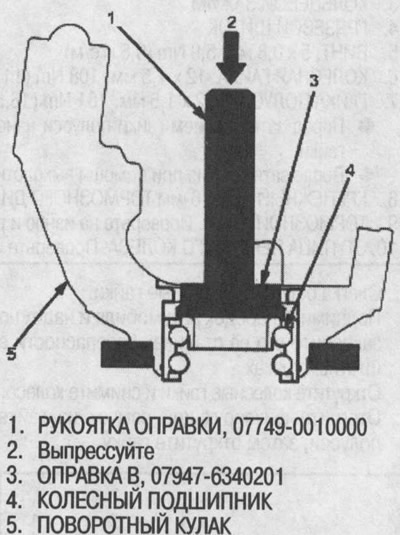
28. Using a special tool, press out the wheel bearing from the steering knuckle.
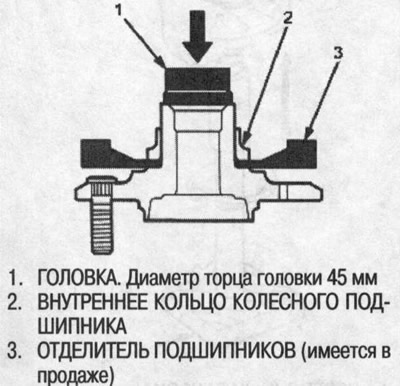
29. Press the inner race of the wheel bearing out of the hub using a head of suitable diameter and a bearing separator.
30. Before assembly, thoroughly wash the steering knuckle and hub in a special solvent.
31. Press the new wheel bearing into the steering knuckle using the old bearing, disc, special tool and press. Install the wheel bearing on the steering knuckle with the sealing cuff (metal color) inward. Do not damage the sealing cuff sleeve.
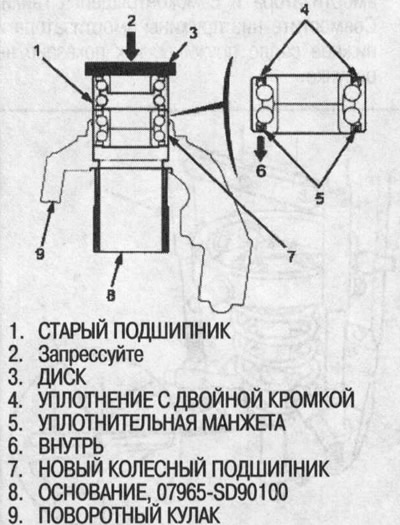
32. Securely insert the ring clamp into the groove of the steering knuckle.
33. Install the mudguard and tighten the screws.
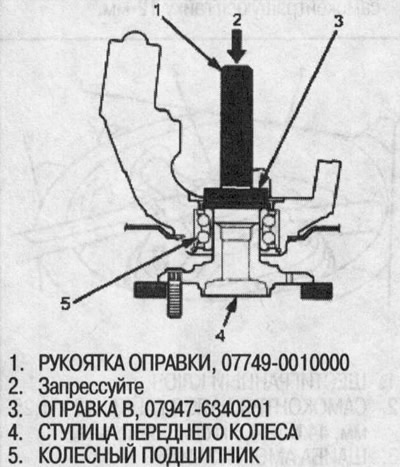
34. Using a special tool, press the hub into the steering knuckle. Do not deform the mudguard.
35. Install the steering knuckle in the reverse order of removal, paying particular attention to the following:
- When installing the steering knuckle, do not damage the ball joint boots.
- Tighten all fasteners to the required torque.
- Tighten the castle nuts to the lower tolerance limit, then tighten just enough to align the slot with the cotter pin hole. Do not do this by loosening the nut.
- After tightening, install new cotter pins onto the castle nuts.
- When installing the wheel sensor, avoid twisting the sensor wire.
- Before installing the brake disc, clean the contact surfaces on the front wheel hub and on the brake disc.
- Before tightening the axle nut, apply engine oil to the seating surface of the nut. After tightening, use a drift to punch the axle nut shoulder onto the drive shaft.
- Before installing the wheel, clean the contact surfaces on the brake disc and the wheel.
- Check the front wheel alignment angles and adjust if necessary (see above).
(Original published on this resource: HONDABOOK)