HondaBook.ru
Auto companies Volkswagen Auto companies Ford Auto companies Lada Auto companies Skoda Auto companies BMW Auto companies Mazda Auto companies Peugeot
English Русский
Български
Беларускі
Український
Српски
Hrvatski
Română
Polski
Slovenský
Magyar
Bookmark Contacts Sitemap   


Accord Civic Fit / Jazz CR-V HR-V Others Articles
CR-V 1 (1995-2001, petrol) CR-V 2 (2002-2006, petrol)

Support — removal and installation (Honda CR-V 1)

  • Main
  • Honda CR-V
  • 1 (1995-2001, petrol)
  • Chassis and running gear
  • Brake system
  • Support — removal and installation
0
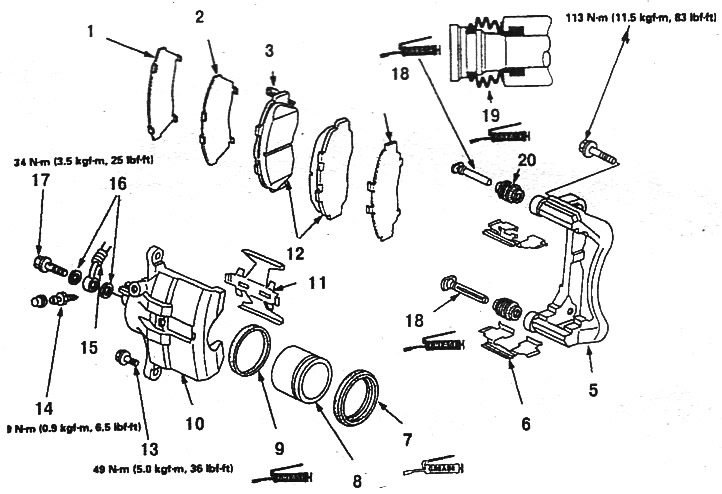
Brake caliper (CR-V): 1. Inner lining B; 2. Inner…

Brake caliper (CR-V): 1. Inner lining B; 2. Inner lining A; 3. Wear indicator; 4, 13. Bolts; 5. Bracket; 6. Staples; 7, 19. Cover; 8. Piston; 9. Piston seal; 10. Support; 11. Spring; 12. Pads; 14. Bleeding nipple; 15. Hose; 16. Gaskets; 17. Bolt; 18. Finger


1. Drain some of the liquid from the tank.

2. Raise the car and remove the wheel.

3. Loosen the bolts and remove the caliper from the disc.

4. Remove the brake shoe linings and shoes.

5. If the caliper is removed for replacement or repair, disconnect the brake hose and plug it.

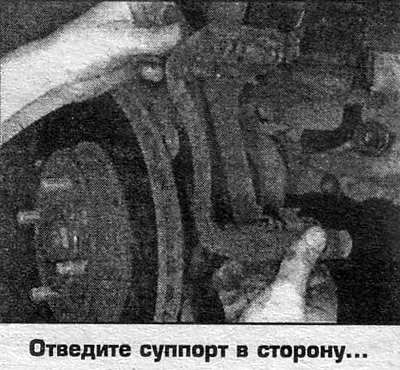
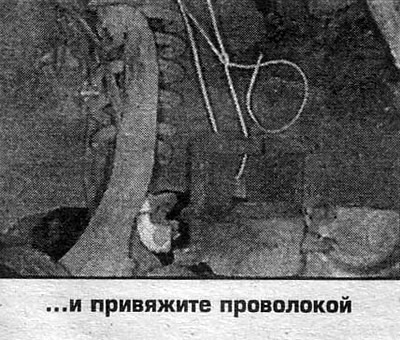
6. Remove the caliper with the bracket. If the caliper is removed to access other parts or to replace the pads, tie the caliper with wire, preventing the caliper from sagging on the hose.

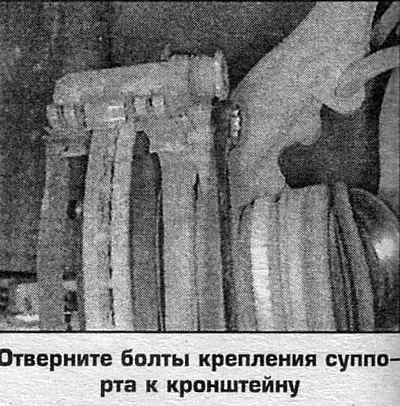
7. Remove the caliper from the bracket by unscrewing the bolts.

8. Install the caliper in reverse order. First, press the pistons into the caliper cylinders. When installing the caliper, make sure that the caliper pin bolts and rubber parts do not touch the lugs on the steering knuckle. When finished, press the brake pedal 3-4 times so that the pedal travel does not exceed 50 mm.

Disassembly


Some vehicles are equipped with 2-cylinder calipers, the disassembly procedure for which is no different from that discussed below for a 1-cylinder caliper.


1. Remove the caliper.

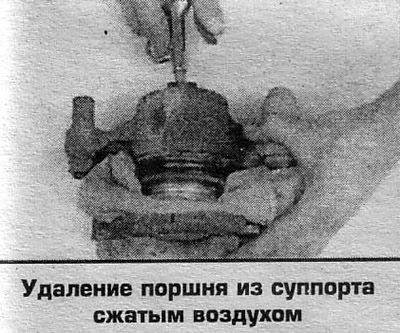
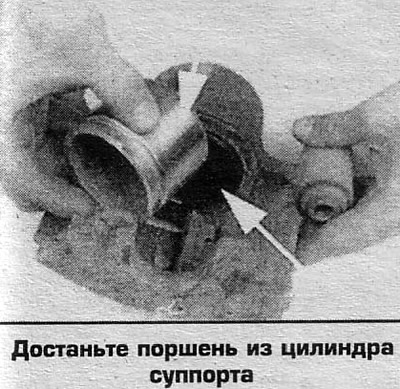
2. Remove the piston either with compressed air or by unscrewing it from the caliper cylinder (photo).

3. Inspect the piston. If there is damage, corrosion or wear, replace the piston.

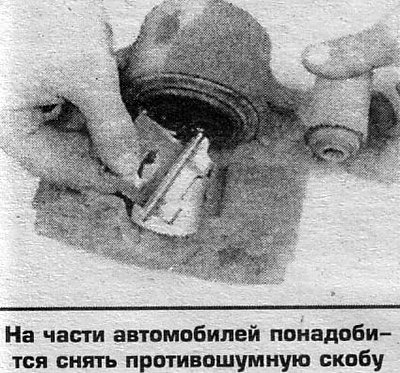
4. Remove the anti-noise springs (if provided).

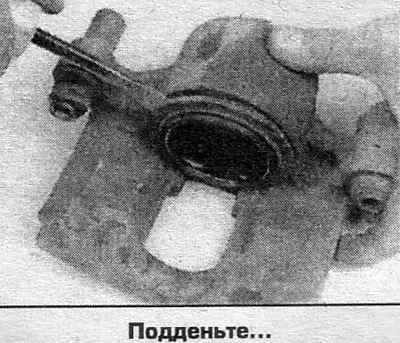
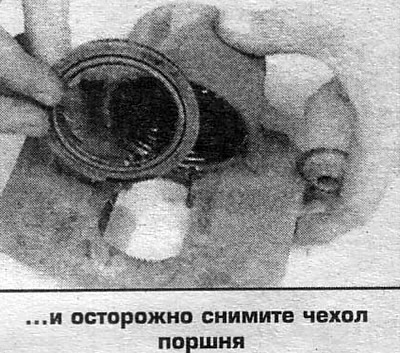
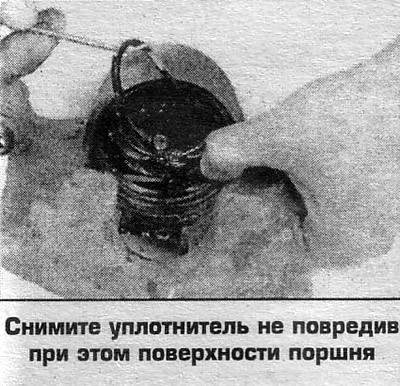
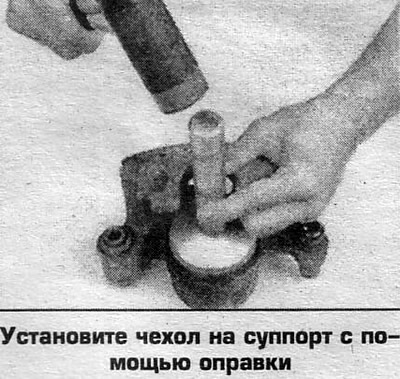
5. Remove the seals from the grooves in the caliper and remove the covers.

6. Unscrew the bleed nipple.

7. Check the condition of the cylinder surface and the caliper threads for wear and damage. Traces of light corrosion of the piston and cylinder are removed by sanding with a soft cloth and polishing paste. Replace damaged seals and covers.

8. Wash all parts with rectified alcohol and dry with compressed air.
8. Wash all parts with rectified alcohol and dry…

8. Wash all parts with rectified alcohol and dry…

8. Wash all parts with rectified alcohol and dry…

8. Wash all parts with rectified alcohol and dry…

8. Wash all parts with rectified alcohol and dry…

8. Wash all parts with rectified alcohol and dry…


Full version on the source website HondaBook.ru
This article is available at: russian, bulgarian, belarusian, ukrainian, serbian, croatian, romanian, polish, slovak, hungarian
This information has been verified: Emil Safonov
Share with friends:
◀ Previous
CR-V 1: Brake system
Next ▶

Rear disc brake pads
Front disc brake pads
Bleeding the brake system
Brake Hydraulic Hoses and Lines — Removal and Installation
Metering valve (rear brake pressure regulator)
Brake disc — removal and installation
Drum brakes — removal and installation
Drum brake shoes — removal and installation
Wheel cylinders of drum brakes — removal and installation
Parking brake parts
See also other articles from Honda manuals:
Gearbox support — inspection and replacement Honda Civic 3 and 4 (1983-1991)
Removal the front brake pad support Honda Fit 1 (2001-2008)
Lifting and support points Honda HR-V 1 (1998-2006, petrol)
Link in different formats to this article
Comments and feedback from visitors
No comments yet


How much will 44 + 22 ?


CR-V 2 (2002-2006, petrol) 
  • General information
  • User manual
  • Technical data
  • Maintenance
  • Power unit
  • Engine repair
  • Lubrication system
  • Cooling system
  • Exhaust system
  • Fuel system
  • Engine management
  • Engine electrical equipment
  • Transmission
  • Clutch
  • Manual gearbox
  • Automatic gearbox
  • Rear differential
  • Drive shafts
  • Chassis and running gear
  • Steering
  • Front suspension
  • Rear suspension
  • Brake system
  • Body and interior
  • Exterior (external elements)
  • Interior (internal elements)
  • Doors, locks and windows
CR-V 1 (1995-2001, petrol) 
  • General information
  • Maintenance
  • Tips for car owner
  • Power unit
  • Engine repair
  • Engine overhaul
  • Cooling and lubrication system
  • Engine electrical equipment
  • Control system
  • Fuel system
  • Transmission
  • Clutch and drive shafts
  • Car gearbox
  • Chassis and running gear
  • Front suspension
  • Rear suspension
  • Steering
  • Brake system
  • Body and interior
  • Body service
  • Exterior (external elements)
  • Interior (internal elements)
  • Electrical equipment
  • Equipment and devices
  • Electrical circuits
HondaBook.ru © 2018–2026 • Mobile version • Sitemap: EN BG BY UA RS HR RO PL SK HU • Feedback • Driver Information • Search system • Bookmark
Accord 3 (1985-1989) • Accord 6 (1997-2002) • Civic 3 and 4 (1983-1991) • Civic 5 and 6 (1991-2000) • Civic 6 (1995-2000) • Civic 7 (2000-2005) • Civic 8 (2005-2011) • Fit 1 (2001-2008) • CR-V 1 (1995-2001) • CR-V 2 (2002-2006) • HR-V 1 (1998-2006) • Avancier 1 (1999-2003) •
 
This website uses cookies to ensure proper functioning. By clicking "OK," you agree.