
Contents: Information about diagnostic devices ⇊ General description of the OBD system ⇊ Information sensors ⇊ Executive devices ⇊ Reading fault codes ⇊ Clearing ECM/PCM memory ⇊ List of OBD-II diagnostic trouble…⇊
Information about diagnostic devices
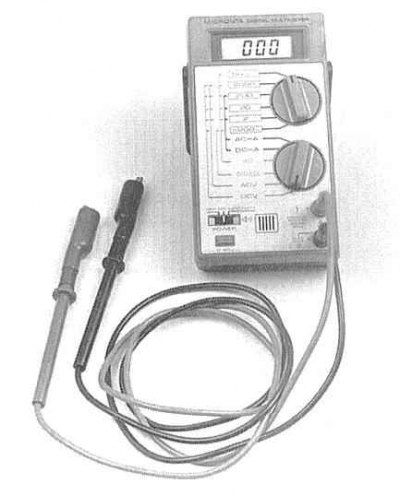
The proper functioning of injection system components and exhaust gas toxicity reduction systems is checked using a universal digital meter (multimeter). Using a digital meter is preferable for several reasons. Firstly, it is quite difficult (sometimes impossible) to determine the reading result with an accuracy of hundredths and thousandths using analog devices, while such accuracy is of particular importance when examining circuits that include electronic components. The second, no less important, reason is the fact that the internal circuit of the digital multimeter has a fairly high impedance (the internal resistance of the device is 10 million Ohms). Since the voltmeter is connected to the circuit being tested in parallel, the lower the parasitic current that passes through the device itself, the higher the measurement accuracy. This factor is not significant when measuring relatively high voltage values (9÷12 V), but it becomes decisive when diagnosing elements that emit low-voltage signals, such as, for example, an oxygen sensor, where we are talking about measuring fractions of a volt.
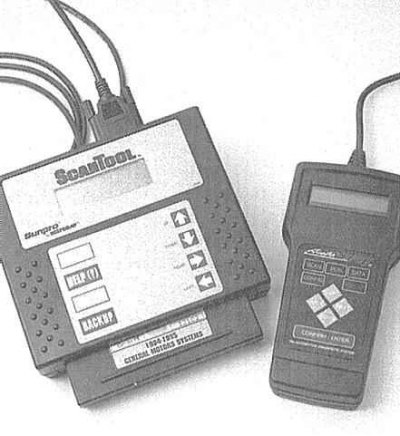
The most convenient device for diagnosing engine management systems of modern car models are hand-held scanner-type readers. First-generation scanners are used to read OBD-I system fault codes. Before use, the reader should be checked for compliance with the model and year of manufacture of the vehicle being tested. Some scanners are multifunctional, due to the ability to change the cartridge depending on the model of the vehicle being diagnosed (Ford, GM, Chrysler, etc.), others are tied to the requirements of regional authorities and are intended for use in certain areas of the world (Europe, Asia, USA, etc.).
With the introduction of the second generation of on-board diagnostics (OBD-II) systems that meet the latest environmental protection legislation, readers of a special design have begun to be manufactured. Some manufacturers have started producing scanners designed for use by amateur mechanics at home - ask in car accessory stores. In principle, the fault codes stored in the self-diagnostic system memory can be read using a jumper wire installed between specific terminals of the 16-pin diagnostic connector.
General description of the OBD system
The OBD system includes several diagnostic devices that monitor individual parameters of the toxicity reduction systems and record detected failures in the on-board processor memory in the form of individual fault codes. The system also checks sensors and actuators, monitors vehicle operating cycles, and provides the ability to freeze parameters and clear the memory block.
All models described in this Manual are equipped with a second-generation on-board diagnostics system (OBD-II). The main element of the system is the on-board processor, more often called the electronic control module (ECM) or the powertrain control module (PCM). The PCM is the brain of the engine management system. Initial data is received by the module from various information sensors and other electronic components (switches, relays, etc.). Based on the analysis of the data received from the information sensors and in accordance with the basic parameters stored in the processor memory, the PCM generates commands to operate various control relays and actuators, thereby adjusting the operating parameters of the engine and ensuring maximum efficiency with minimum fuel consumption. Reading the OBD-II processor memory data is performed using a special scanner connected to the 16-pin diagnostic database connector (DLC), located under the instrument panel on the driver's side of the car.
Note: In principle, reading of fault codes stored in the self-diagnostic system memory can be performed using a jumper wire installed between specific terminals of the 16-pin diagnostic connector.
Special extended warranty coverage applies to engine management/emission control system components. Do not attempt to diagnose PCM failures or replace system components until these coverage periods have expired - contact an authorized Honda service center.
Information sensors
Oxygen sensors (l-probes) - The sensor generates a signal, the amplitude of which depends on the difference in oxygen content (O2) in the engine exhaust gases and the outside air.
Crankshaft position sensor (CPS) - The sensor informs the PCM about the position of the crankshaft and engine speed. This information is used by the processor when determining the fuel injection moments and setting the ignition timing.
Piston Position Sensor (CYP) - Based on the analysis of signals received from the sensor, the RCM calculates the position of the piston of the first cylinder and uses this information to determine the timing and sequence of fuel injection into the engine combustion chambers.
TDC sensor - The signals generated by the sensor are used by the PCM to determine the ignition timing settings at the moment of engine start.
Engine Coolant Temperature (ECT) Sensor - Based on the information received from the sensor, the ECM/PCM makes the necessary adjustments to the air-fuel mixture composition and ignition timing, and also monitors the operation of the EGR system.
Intake Air Temperature (IAT) Sensor - The PCM uses the information received from the IAT sensor to make fuel flow adjustments, set the ignition timing and control the operation of the EGR system.
Throttle Position Sensor (TPS) - The sensor is located on the throttle body and is connected to the throttle shaft. Based on the amplitude of the signal generated by the TPS, the PCM determines the throttle opening angle (controlled by the driver using the gas pedal) and adjusts the fuel supply to the combustion chamber intake ports accordingly. Sensor failure or loosening of its fastening leads to injection interruptions and instability of idle speed.
Absolute pressure sensor in the pipeline (MAP) - The sensor monitors variations in the vacuum depth in the intake manifold associated with changes in crankshaft speed and engine load and converts the information received into an amplitude signal. The PCM uses the information supplied by the MAP and IAT sensors for fine adjustments to fuel delivery.
Barometric pressure sensor - The sensor generates an amplitude signal proportional to changes in atmospheric pressure, which is used by the PCM to determine the duration of fuel injection moments. The sensor is built into the PCM module and is not subject to individual maintenance.
Knock sensor - The sensor reacts to changes in the vibration level associated with detonations in the engine. Based on the information received from the sensor, the PCM makes the appropriate adjustment of the ignition advance angle.
Vehicle Speed Sensor (VSS) - As its name suggests, the sensor informs the processor about the current speed of the vehicle.
EGR valve opening value sensor - The sensor notifies the PCM of the amount of displacement of the EGR valve plunger. The received information is then used by the processor to control the operation of the exhaust gas recirculation system.
Fuel tank pressure sensor - The sensor is a component of the fuel vapor trapping system (EVAP) and is used to monitor the pressure of gasoline vapors in the tank. Based on the information received from the sensor, the PCM issues commands to operate the electromagnetic valves for purging the system.
Power Steering Pressure Switch (PSP) - Based on the information received from the PSP switch sensor, the PCM increases the idle speed by activating the IAC sensor in order to compensate for the increasing loads on the engine associated with the operation of the power steering during maneuvers.
Transmission sensors - In addition to the data received from the VSS, the PCM also receives information from sensors located inside or connected to the transmission. These sensors include: (a) the secondary (main) shaft speed sensor and (b) the intermediate shaft speed sensor.
Air Conditioner Clutch Control Switch Sensor - When power is supplied from the battery to the electromagnetic valve of the K/V compressor, the corresponding information signal is sent to the PCM, which evaluates it as evidence of an increase in the load on the engine and adjusts its idle speed accordingly.
Executive devices
PGM-FI Main Relay (Fuel Pump Relay) - The PCM activates the fuel pump relay when the ignition key is turned to the START or RUN position. When the ignition is turned on, the relay is activated to increase the pressure in the fuel system. More detailed information on the main relay is provided in Chapter Power and exhaust systems.
Fuel injection injectors - The PCM ensures individual activation of each injector in accordance with the established ignition sequence. In addition, the module controls the duration of the injector opening, determined by the width of the control pulse, measured in milliseconds and determining the amount of fuel injected into the cylinder. More detailed information on the operating principle of the injection system, replacement and maintenance of injectors is given in Chapter Power and exhaust systems.
Ignition Control Module (ICM) - The module controls the operation of the ignition coil, determining the required basic advance based on the commands generated by the PCM. All vehicle models discussed in this Manual use an ICM built into the ignition distributor, for more details see Chapter Engine electrical equipment.
Idle Air Control Valve (IAC) - The IAC valve controls the amount of air bypassed around the throttle valve when the latter is closed or in the idle position. The PCM controls the opening of the valve and the formation of the resulting air flow.
Carbon adsorber purge solenoid valve - The valve is an integral part of the fuel vapor trapping system (EVAP) and, when triggered by the PCM, releases the fuel vapors accumulated in the adsorber into the intake manifold for the purpose of burning them during normal engine operation.
Carbon adsorber purge control solenoid - The solenoid is used by the PCM when checking the OBD-II system for proper operation of the EVAP system.
Reading fault codes
1. When a fault is detected that is repeated in two trips, the PCM issues a command to turn on the "Check Engine" warning lamp, also called the failure indicator, built into the instrument cluster. The lamp will remain on until the memory of the self-diagnostic system is cleared of the codes of detected faults. Reading fault codes in the OBD-II system can be done in two different ways. The first method requires short-circuiting terminals No.8 and 13 of the 16-pin database connector (DLC) with a jumper wire. In the second case, reading is done using a special scanner, the interface of which allows it to be connected to the 16-pin DLC connector of the OBD-II system. Below is a detailed description of the method for reading codes using a jumper wire. If necessary, the procedure can be entrusted to car service specialists.
2. Without starting the engine, turn on the ignition - the "Check Engine" indicator lamp should light, otherwise it should be replaced. After checking the lamp's condition, turn off the ignition again.
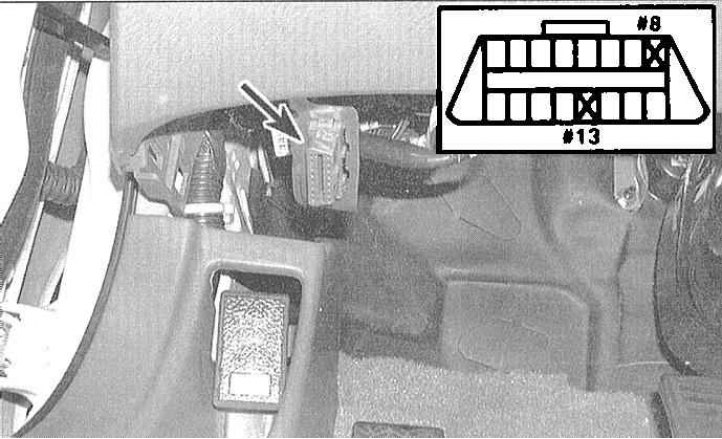
3. Locate the 16-pin DLC diagnostic connector on the left under the instrument panel and use a jumper wire to replace its terminals No.8 and No.13.
Note: Be careful not to damage the terminals.
4. Turn on the ignition by turning the key to the ON position. If the processor memory contains codes of faults that have occurred, they will begin to be sequentially displayed by the "Check Engine" indicator lamp on the vehicle's instrument panel. The first digit of the two-digit code is displayed by long flashes of the lamp, the second by short flashes (for example, one long flash followed by six short flashes corresponds to code 16).
Note: If more than one code is stored in the control module memory, they will be displayed one after the other, then after a pause, the display of codes will be repeated. If the system memory is clear, the indicator lamp will not turn on.
Clearing ECM/PCM memory
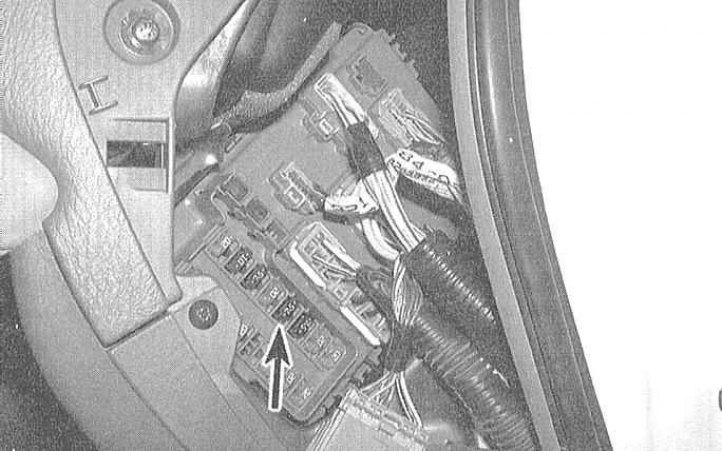
1. When a fault code is entered into the PCM memory, the "Check Engine" indicator lamp lights up on the vehicle's instrument panel. The code remains recorded in the module's memory until the power supply is disconnected. To clear the module's memory, turn off the ignition and remove fuse No.13 (BACK-UP) 7.5 A from the mounting block located on the right side of the engine compartment for 10-15 seconds (see Chapter On-board electrical equipment). If necessary, the procedure for clearing the OBD system memory can be entrusted to car service specialists.
Note: Do not clear the OBD memory by disconnecting the negative battery cable, as this will erase the engine settings and cause instability of the engine speed during the first time after the initial start.
2. Make sure that the system memory is cleared before installing new emission control components on the engine. If the fault memory is not cleared before starting the system after replacing a failed information sensor, the PCM will enter a new fault code into it. Clearing the memory allows the processor to reconfigure to new parameters. In this case, some instability of the engine speed may occur in the first 50-20 minutes after the initial start of the engine.
List of OBD-II diagnostic trouble codes
| Code number (number of flashes of the control lamp) | Possible reason for refusal |
| P0107 (3) | MAP sensor low input |
| P0108 (3) | MAP sensor high input |
| P0112 (10) | IAT Sensor Input Low |
| P0113 (10) | IAT Sensor High Input |
| P0116 (86) | ECT sensor/engine efficiency issues |
| P0117 (6) | ECT sensor low input |
| P0118 (6) | ECT sensor high input |
| P0122 (7) | TPS Sensor Low Input |
| P0123 (7) | TPS Sensor High Input |
| P0131 (1) | Low Voltage Primary Heated Lambda Probe Circuit (Oxygen Sensor 1) |
| P0132 (1) | Primary Heated Lambda Probe Circuit High Voltage (Oxygen Sensor 1) |
| P0133 (61) | Slow response of the primary heated lambda probe (oxygen sensor 1) |
| P0135 (41) | Malfunction in the primary λ-probe circuit (oxygen sensor 1) |
| P0137 (63) | Low Voltage Secondary Heated Lambda Probe Circuit (Oxygen Sensor 2) |
| P0138 (63) | Secondary Heated Lambda Probe Circuit High Voltage (Oxygen Sensor 2) |
| P0139 (63) | Slow response of secondary heated lambda probe (oxygen sensor 2) |
| P0141 (65) | Malfunction in the secondary λ-probe heater circuit (oxygen sensor 2) |
| P0171 (45) | Over-lean mixture |
| P0172 (45) | Over-enrichment of the mixture |
| P0300 (71) | Random misfires |
| P0301 (71) | Misfire in cylinder #1 |
| P0302 (72) | Misfire in cylinder #2 |
| P0303 (73) | Misfire in cylinder #3 |
| P0304 (74) | Misfire in cylinder #4 |
| P0305 (75) | Misfire in cylinder #5 (V6 models) |
| P0306 (76) | Misfire in cylinder #6 (V6 models) |
| P0325 (23) | Malfunction in the knock sensor circuit (4-cylinder models) |
| P0335 (4) | Malfunction in the CKP sensor circuit |
| P0336 (4) | SCR sensor |
| P0401 (80) | EGR flow too low detected |
| P0420 (67) | Insufficient efficiency of the catalytic converter |
| P0452 (91) | Fuel Tank Pressure Sensor Low Input (EVAP System) |
| P0453 (91) | Fuel Tank Pressure Sensor High Input (EVAP System) |
| P0500 (17) | Malfunction in the VSS circuit (4-cylinder models with manual transmission) |
| P0505 (14) | Malfunction in IAC sensor circuit |
| P0715 (70) | AT malfunction |
| P0720 (70) | AT malfunction |
| P0725 (70) | AT malfunction |
| P0730 (70) | AT malfunction |
| P0740 (70) | AT malfunction |
| P0753 (70) | AT malfunction |
| P0758 (70) | AT malfunction |
| P0763 (70) | AT malfunction |
| P1106 (13) | Barometric sensor |
| P1107 (13) | Barometric sensor input low |
| P1108 (13) | Barometric sensor high input |
| P1121 (7) | TPS Sensor Low Input |
| P1122 (7) | TPS Sensor High Input |
| P1128 (5) | Absolute line pressure is lower than expected (MAP sensor input low) |
| P1129 (5) | Absolute line pressure is higher than expected (MAP sensor input high) |
| P1149 (61) | Primary λ-probe failure (4-cylinder models) |
| P1162 (48) | Malfunction in the primary λ-probe circuit (4-cylinder models) |
| P1163 (61) | Primary λ probe response too slow (4-cylinder models) |
| P1164(61) | Primary λ-probe failure (4-cylinder models) |
| P1165 (61) | Primary λ-probe failure (4-cylinder models) |
| P1166 (41) | Primary λ-probe failure (4-cylinder models) |
| P1167 (41) | Malfunction in the primary lambda probe heater circuit (4-cylinder models) |
| R1253 (21) | VTEC system malfunction (4-cylinder models) |
| R1257 (22) | VTEC system malfunction (4-cylinder models) |
| R1258 (22) | VTEC system malfunction (4-cylinder models) |
| R1259 (22) | Malfunction of the VTEC system |
| R1297 (20) | ELD Input Low |
| R1298 (20) | ELD Input High |
| R1359 (8) | TDC sensor disconnected |
| R1361 (8) | TDC sensor readings are unstable |
| R1362 (8) | No signal from TDC sensor |
| R1366 (58) | TDC-2 Sensor Instability (V6 Models) |
| R1367 (58) | No signal from TDC sensor (V6 models) |
| R1381 (9) | CYP Sensor Instability (4-Cylinder Models) |
| R1381 (9) | No signal from CYP sensor (4-cylinder models) |
| R1456 (90) | There are fuel vapor leaks in the gas tank (EVAP) |
| R1457 (90) | There are fuel vapor leaks in the charcoal canister (EVAP) |
| R1491 (12) | EGR valve opening degree is insufficient |
| R1498 (12) | EGR valve opening sensor gives too high signal |
| R1519 (14) | Malfunction in IAC valve circuit |
| P1607 (-) | Internal PCM circuit failure |
| P1705 (-) | AT malfunction |
| P1706 (-) | AT malfunction |
| R1738 (-) | AT malfunction |
| R1739 (-) | AT malfunction |
| R1753 (-) | AT malfunction |
| R1768 (-) | AT malfunction |
| R1773 (-) | AT malfunction |
| R1791 (-) | AT malfunction |
Article source on the website www.hondabook.ru