
Contents: General information ⇊ Checking the status of components ⇊ VTEC Lock-Up Control Solenoid Valve ⇊ Rocker arms ⇊ Valve clearance correctors ⇊ Synchronizing assemblies ⇊
General information
The VTEC system was developed by Honda specialists to provide dynamic control of valve timing and valve opening. Engines equipped with this system are marked with the VTEC inscription molded on the cylinder head cover. All V6 engines used to equip the models of cars under consideration are equipped with the VTEC system.
The difference between engines equipped with the VTEC system and the basic version consists solely in the principle of valve timing control and the design features of the valve mechanism.
The onboard processor of the engine management system of VTEC-equipped models is capable of adjusting the moments of operation and the degree of opening of the intake valves by using camshaft cams of different sizes and shapes. Depending on the data received from the information sensor, the processor either turns the system on or off.
The operating order of the VTEC system is determined by the following initial parameters:
- a) Engine speed (rpm);
- b) Vehicle speed (mph);
- c) Throttle Position Sensor (TPS) Output Signal;
- d) Current engine load determined by the absolute pressure sensor (MAP) readings;
- e) Coolant temperature.
The camshaft is equipped with three cams for driving each of the engine's intake valves, which differ from each other in profile shape and lift height, which determine the duration and amount of opening of the corresponding valves.
At low engine speeds, the secondary intake valves are operated by their own camshaft cams, which have a very small lift and a pointed shape (i.e. the valves, in comparison with the primary ones, open only slightly and for a very short time), keeping the atomized fuel from consolidating inside the cylinder head. At the same time, a good lower torque with a high response speed is developed, which determines excellent traction characteristics and high throttle response of the car. The primary cams function in normal mode, creating swirls of the combustible mixture in the combustion chambers.
If there is a need to increase the engine output, the secondary rocker arms are locked through the intermediate ones with the primary special synchronizing pistons. The synchronizing pistons have a hydraulic drive with electronic control. When the rocker arms are locked, both intake valves begin to open in the same mode, and the degree and duration of their opening are determined by the shape of the intermediate rocker arm cam and have an increased value.
Caution! The secondary rocker arms stop contacting their own cams until the system is turned off. At this point, both valves open to their full height and maximum duration, providing increased engine speed and output.
Checking the status of components
Caution: Checking some of the VTEC components requires removal of the rocker arm assembly (see Section Removal, condition check and installation of rocker arm assembly).
VTEC Lock-Up Control Solenoid Valve
Caution! Failure of the VTEC solenoid valve to function results in a fault code being written into the self-diagnostic unit memory and the "Check Engine" indicator lamp being illuminated (see Chapter Engine management).
The most common cause of VTEC malfunction is a faulty solenoid valve or its filter. Regularly changing the engine oil and filter will help avoid annoying failures.
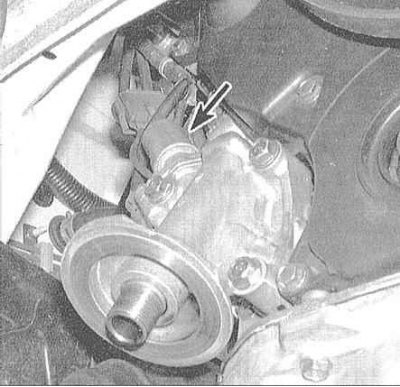
1. The VTEC lock-up control solenoid valve is located on top of the oil filter housing (at the rear on the right side of the power unit) and is best visible through the right front wheel arch.
2. Disconnect the VTEC solenoid valve wiring connector. Measure the resistance between the connector terminal and ground. The nominal value is 14÷30 Ohm, otherwise the VTEC solenoid valve must be replaced.
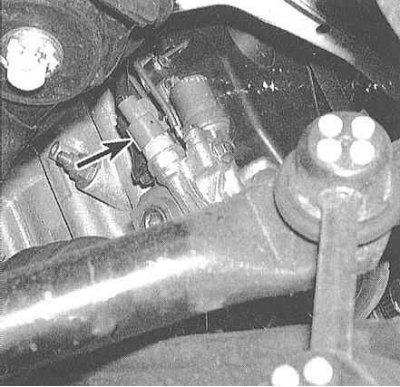
3. With the ignition off, disconnect the wiring harness connector from the VTEC pressure switch and check for continuity between the two switch terminals on the VTEC solenoid. There should be continuity, otherwise replace the switch.
4. Turn on the ignition and measure the voltage between the blue-black wire terminal of the pressure switch sensor and ground. The required value is about 12 V, otherwise you should check the wire in the section between the connector and the PCM for open circuits or shorts to ground.
5. Turn off the ignition and check for continuity between the brown-black wire terminal of the oil pressure switch connector and ground. If there is no continuity, check the brown-black wire for an open in the section between the connector and the ground point.
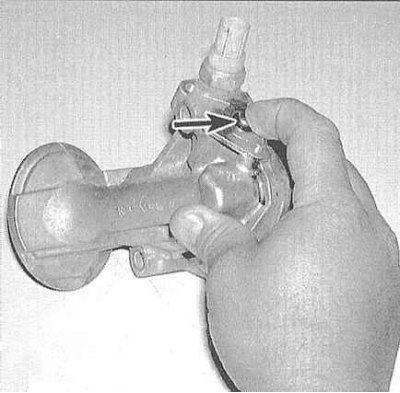
6. Remove the solenoid valve and manually check the free movement of its plunger. When installing the valve back, do not forget to replace the sealing gasket.
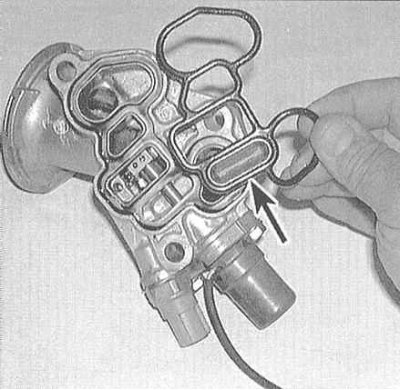
7. Remove the oil filter adapter housing from the engine block. Check the filter element for patency and the condition of the sealing gasket.
Note: A blocked mesh filter is the most likely cause of VTEC system failure.
Rocker arms
1. Bring the piston of the first cylinder to the TDC position of the end of the compression stroke (see Section Bringing the piston of the first cylinder to the top dead center (TDC) position). Remove the cylinder head cover (see Section Removal and installation cylinder head covers).
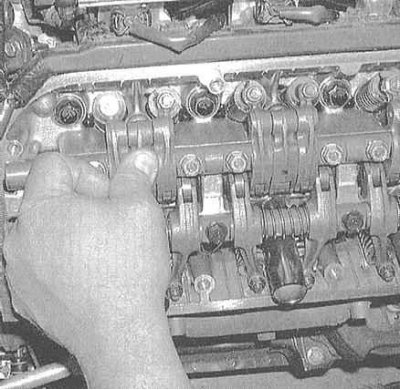
2. Press your finger on the intermediate rocker arm of the inlet valve set of the first cylinder - it should move independently of the primary and secondary rocker arms of the assembly (see the accompanying illustration). Proceeding in the same order, check the proper functioning of the inlet rocker arms of the remaining cylinders (the corresponding pistons are moved to the TDC positions).
Valve clearance correctors
1. The four corrector assemblies are seated in special pockets in each of the engine cylinder heads. The rocker arm assemblies must be removed to provide access to the correctors (see Section Removal, condition check and installation of rocker arm assembly).
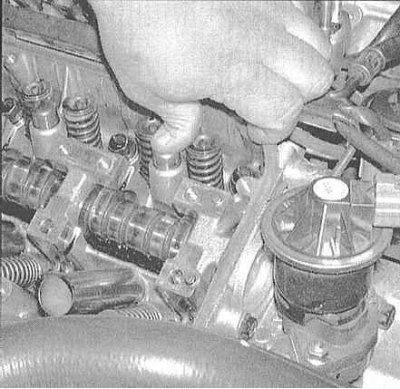
2. Check the correctors for proper operation by pressing the plungers with your finger. The plunger should move with slight resistance, gradually increasing it as it goes deeper, otherwise replace the defective assembly.
Synchronizing assemblies
1. After removing and disassembling the rocker arm assemblies (see Section Removal, condition check and installation of rocker arm assembly), also remove the components of the synchronizing units. Dismantle the assemblies into their component parts.
VTEC Timing Assembly Components:
- a) Primary valve drive rocker arm (primary rocker arm);
- b) Secondary valve drive rocker arm (secondary rocker arm);
- c) Intermediate rocker arm;
- d) Synchronizing piston A;
- e) Synchronizing piston B;
- f) Distribution piston.
2. Check the condition of the distribution spring. Make sure it is not broken or sagging. Replace it if necessary.
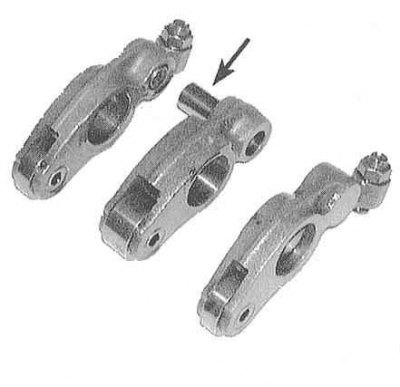
3. Check all other components (rocker arms and synchronizing pistons) for signs of wear, abrasions, scoring, traces of overheating and other defects. Manually check the freedom of movement of the pistons. Replace defective parts.
4. Assembly is carried out in the reverse order of dismantling the components.
Note: Assemble the components of each cylinder assembly together, secure them with a rubber bandage, and only then install them on the axle (see Section Removal, condition check and installation of rocker arm assembly).