
Contents: Precautionary measures ⇊ Removal and installation components ⇊ Catalytic converter ⇊ Silencer and/or tail pipe ⇊ The whole system ⇊
Precautionary measures
For a number of reasons, working on the exhaust system can be the most dangerous of all the work you can do on your vehicle. Always take the following precautions:
- Secure the vehicle securely.
- Wear safety glasses. Exhaust system components are always rusty and metal dust can get into your eyes.
- When using any source of high heat, keep it away from the fuel tank or fuel lines.
- When using a hammer, be careful not to damage the brake or fuel lines. Inspect all lines and hoses where they have been worn out.
CAUTION: Use extreme caution when working on or near the catalytic converter. Surface temperatures can reach 500°C, causing severe burns. Removal or installation should only be performed on a cold exhaust system.
It is very useful to use a special solvent for cleaning rusted bolts and flanges. Wet the rusty parts late in the evening before daytime work, this can significantly speed up the work of unscrewing rusted parts.
The exhaust system on the Accord and Prelude consists of several parts. Fortunately, the parts are usually bolted and nutted rather than riveted. Each bolted connection contains a gasket that must be replaced after each repair.
The first section of pipe connects the exhaust manifold to the catalytic converter. The catalytic converter is a sealed, non-serviceable unit that can be easily unbolted from the system and replaced if necessary. The exhaust system is attached to the body with several welded hooks and flexible rubber hangers; these hangers absorb vibrations and isolate the system from the car body. The hangers must be in place and installed correctly to avoid vibration and contact with the body. A series of metal heat shields extend along the exhaust pipes, protecting the underbody from excessive heat.
Heat shields can be the source of some annoying noises, including a buzzing or rumbling noise related to the speed of the vehicle. Make sure the shields are securely fastened and free of gravel.
The system ends with a muffler and tail pipe at the rear of the vehicle. The inlet pipe, muffler and tail pipe are a single unit and must be replaced as a whole.
When inspecting or replacing exhaust system components, make sure that all proper clearances are present at each point of the vehicle to avoid possible underbody overheating. Check the entire system for damage, missing or poorly positioned parts. Rattling and vibrations in the exhaust system are usually caused by improper alignment of parts. When aligning system parts, leave all bolts and nuts loose until everything is in its proper position, then tighten the parts starting from the front and finishing at the rear. Consider engine, body and suspension movement when replacing parts.
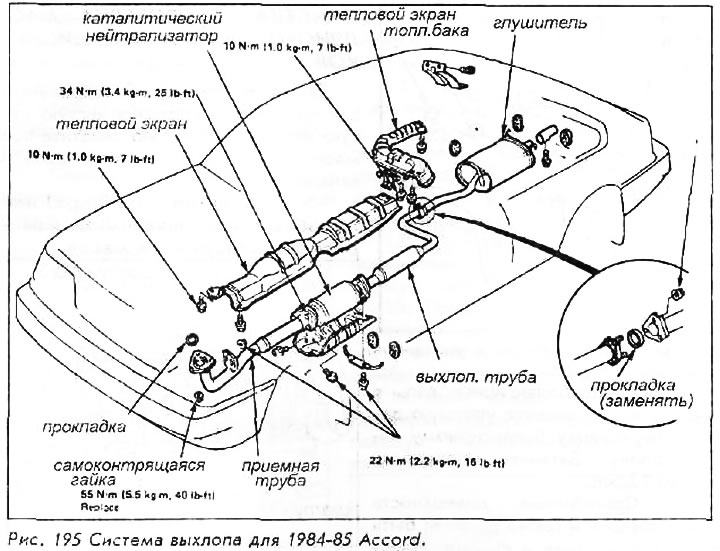
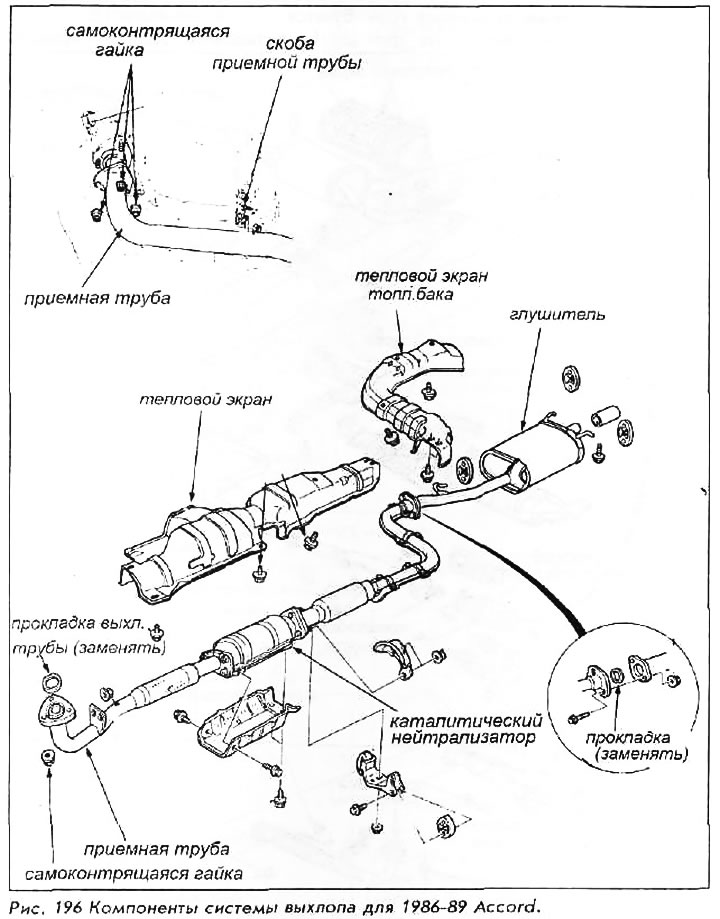
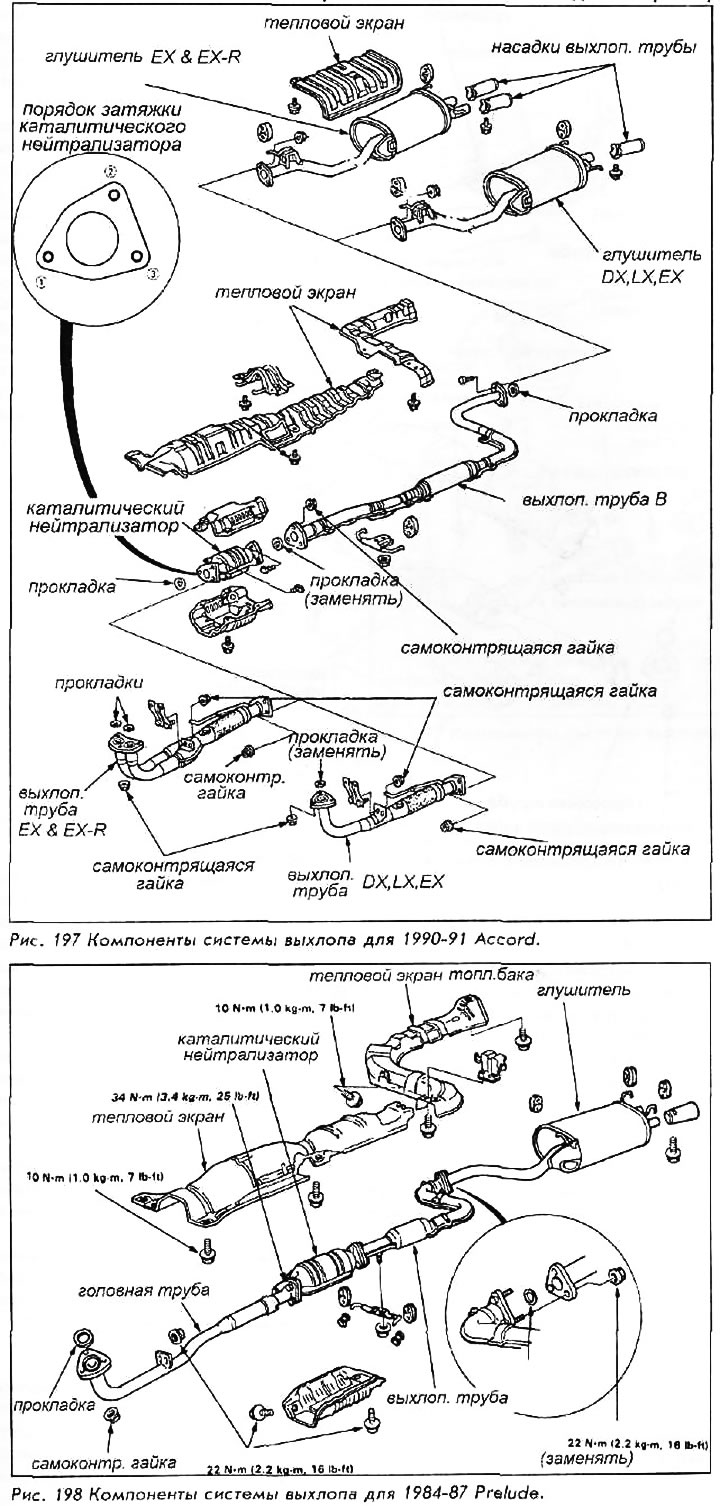
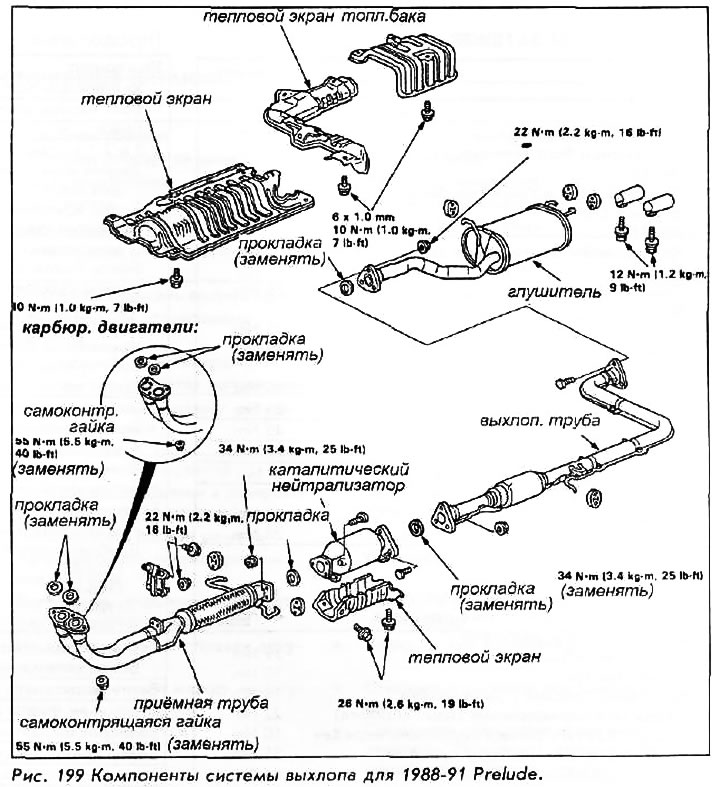
Removal and installation components
ALWAYS use new gaskets for any pipe joint when disassembling it. Use new bolts and nuts to securely fasten all joints. These two simple rules will help prevent leaks in the future.
Catalytic converter
1. Raise and securely support the vehicle.
2. Remove the heat shield(s).
3. Remove the three bolts from the front and rear of the neutralizer.
4. Remove the neutralizer and gaskets.
5. Using new gaskets, connect the neutralizer to the exhaust pipes. Tighten the bolts to 35 Nm.
Silencer and/or tail pipe
The chrome tail extension is a separate part (unlike the muffler and tail pipe); if yours is still in good shape, remove it by loosening the set of screws at the bottom of the extension. To remove the muffler and tail pipe:
1. Raise and securely support the rear of the vehicle.
2. Disconnect the nuts holding the muffler and/or tail pipe on the mating pipes.
3. Remove or disconnect the clamps and supports holding the pipe at all ends. Leave the supports closest to the center.
4. Remove the last supports or hooks and lower the unit to the ground. NEVER leave the muffler hanging partially suspended; you can break the next component in the line.
When replacing a muffler or tail pipe due to rust or corrosion, check adjacent pipes for the same damage. All system components are subject to damage at the same rate.
5. Lift the new unit into place and attach hooks or struts loosely to support it. Wiggle it a little to ensure the muffler is seated properly.
6. Using new gaskets, connect each end to the adjacent pipe. Tighten the connecting bolts and nuts to 25-35 Nm.
7. Tighten the supports and hooks. Make sure that the rubber fastening elements are securely attached to their mounting points.
The whole system
When replacing a complete exhaust system, it is easier to remove the entire system as a unit rather than removing each part individually. Disconnect the first pipe at the manifold joint and work toward the rear of the car, removing the brackets and hooks as you go. Remove the rear muffler bracket and remove the entire exhaust system from underneath the car.
The new system can then be assembled on the work bench and easily checked for proper tightening and gasket integrity. When installing the new assembly, first suspend it using the flexible hooks and then attach it to the mounting brackets. Always use new self-locking nuts, especially at the manifold-to-downpipe junction. Tighten the manifold-to-pipe nuts to 55 Nm. Check body and suspension clearances and install manifold junction bolts, tightening them correctly.