
Accord 1990-91
Steps are provided to remove the crankshaft without changing the position of the pistons in the cylinder block.
1. Remove the engine from the vehicle, remove the flywheel from the engine, unscrew the rear or side right cover from the engine.
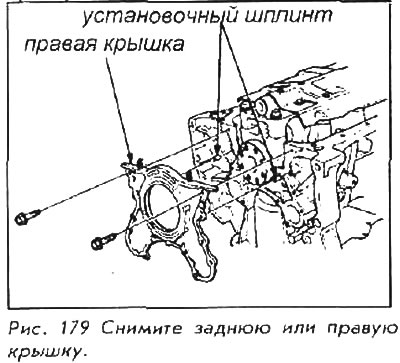
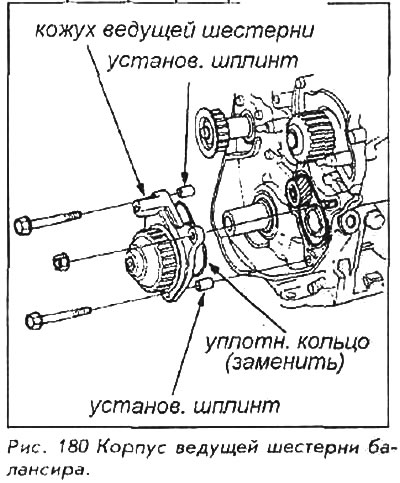
2. Remove the balancer drive housing.
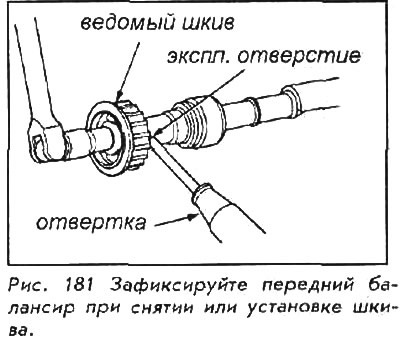
3. Insert a metal pin or similar tool into the service hole of the front balance shaft to hold it in place. Unscrew the belt sprocket and remove it.
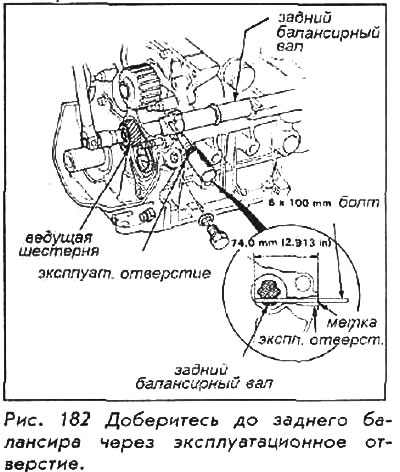
4. Remove the bolt from the rear balance shaft service hole. Align the bolt hole with the hole on the rear balance shaft. Insert a 6x100mm pin or bolt to support the shaft; remove the drive gear or sprocket.
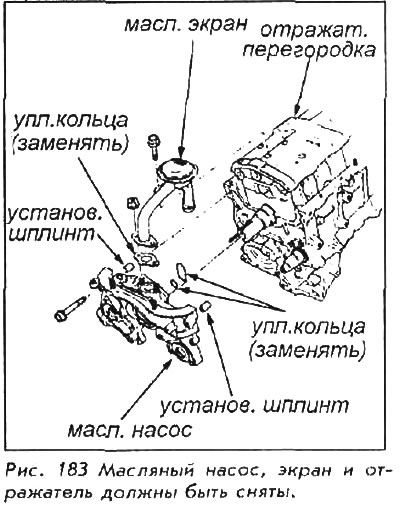
5. Remove the oil screen and oil pump. Remove the baffle plate.
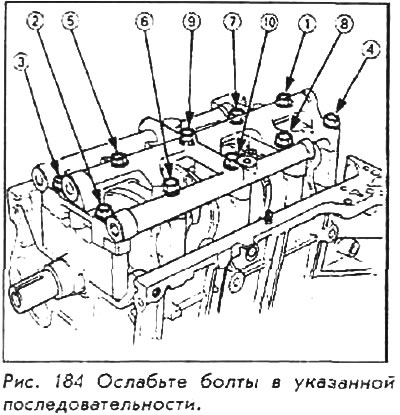
6. Remove the bearing cap bolts and bridge, then remove the caps. Release the tension by turning each bolt approximately 1/3 turn at a time, starting at one end, then moving to the diagonally opposite corner. Follow the sequence shown in the illustration.
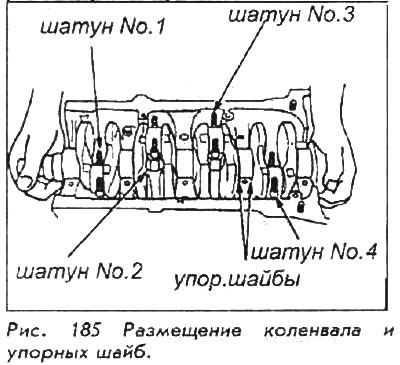
7. Turn the crankshaft so that crankshaft journals No.2 and 3 are at the bottom. Remove the connecting rod caps and bearings, remember where each of them stood - this will be useful during assembly.
8. Remove the crankshaft from the engine - do not damage the journals.
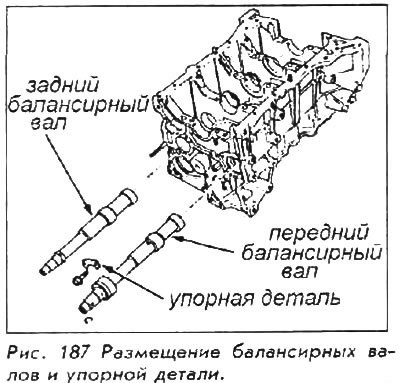
9. Remove the bolts and thrust pieces, then remove the rear and front balance shafts.
To install:
10. Insert the bearing shells into the block and connecting rods.
11. Hold the crankshaft so that the journals for pistons No.2 and 3 are directly below; lower the crankshaft into the block. Make sure the crankshaft journals fit into connecting rods No.2 and 3.
12. Install the connecting rod caps and tighten the nuts by hand.
13. Turn the crankshaft clockwise and place the journals in the connecting rods of pistons No.1 and 4. Install the connecting rod caps and tighten the nuts by hand.
14. Check the connecting rod bearing clearances using a flattened strip gauge.
15. Coat the thrust washer and bolt threads with a light coat of clean oil. Install the thrust washers, main bearing caps and bearing cap bridge. Check the bearing clearances using a flattened strip gauge.
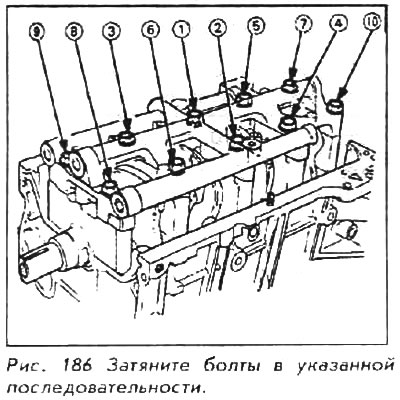
16. Tighten the bolts in two passes: On the first pass, in the correct sequence, tighten each bolt to approximately 30 Nm. On the second pass, in the correct sequence, tighten each bolt to the final tightening torque of 72 Nm.
17. Insert the balance shafts into the block, then install the thrust piece to the front balance shaft and block. Tighten the mounting bolt to 12 Nm.
18. The mating surfaces of the right cover and block must be absolutely clean and dry. Apply liquid gasket to the contact surface of the cover, then install it on the block. Tighten the bolts to 12 Nm.
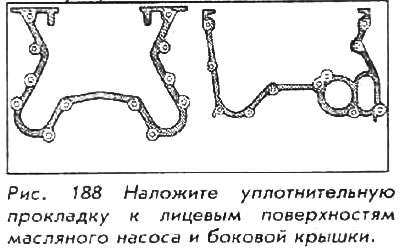
19. The mating surfaces of the oil pump and engine block must be absolutely clean and dry. Apply liquid gasket to the contact surface of the oil pump. Lubricate the valve of the pump and balance shaft seals with plastic grease. Install the oil pump and tighten the bolts to 12 Nm. Wipe off excess plastic grease from the crankshaft and balance shaft; check that the seals are not deformed during installation.
20. Install the baffle plate, then install the oil screen.
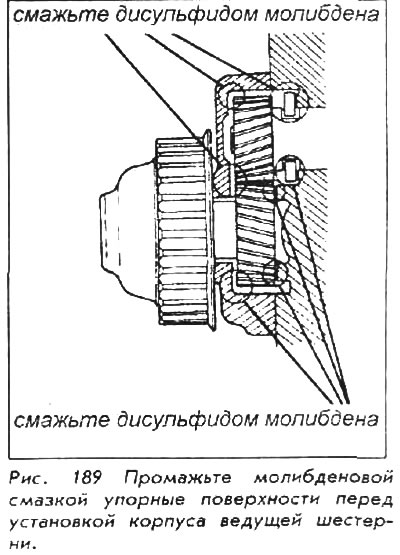
21. Apply molybdenum disulfide grease to the thrust surfaces of the balance gears before installing the driven gear and pinion housing.
22. Use a 6x100mm tool to hold the rear balance shaft in place. Install the balance shaft pulley and pinion. Tighten the bolts to 25 Nm.
23. Secure the front balance shaft in place and install the pulley; tighten the bolts to 30 Nm.
24. On the balancer drive housing, align the notch on the edge of the pulley with the pointer on the housing.
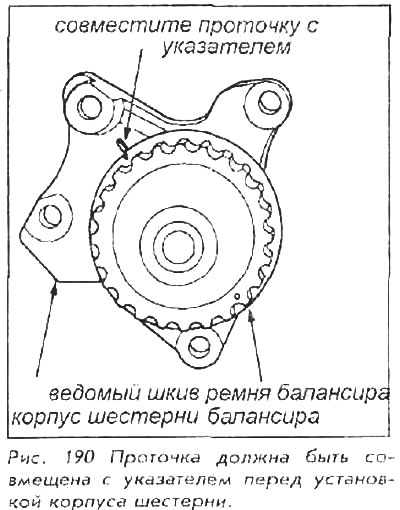
25. Hold the rear balance shaft in place and install the drive housing. Tighten the nuts and bolts to 25 Nm.
Cleaning and checking the bearing oil clearance
Remove the bearing cap for inspection. Using a clean, dry rag, completely clean all oil from the crankshaft journal and bearing.
Plastigage or similar flattened measuring instrument is oil soluble.
Place the measuring strip along the entire width of the bearing shell and tighten to specification. Remove the bearing cap and determine the clearance by comparing the width of the flattened strip with the scale on the packaging. See Fig.165.
Do not rotate the crankshaft when measuring clearance.
Crankshaft axial clearance/connecting rod lateral clearance
Place a small metal strip between the main bearing cap and the crankshaft casting, being careful not to damage any journals. Wiggle it back and forth; measure the distance between the thrust bearing and the crankshaft using a template. Compare the measurements with the specifications. If the clearance is too large, you will need to replace it with a main bearing with a wider running surface or replace the crankshaft. Consult a workshop about this.
The clearance between the connecting rod small end and the crankshaft casting can be checked with a feeler gauge. Press the connecting rod as close to one side as possible and measure the distance on the other side.
[The article was copied from the website «HondaBook.ru»]