
Checking the electric motor circuit
Note: Before performing the test, study the relevant electrical diagrams. The presence of voltage at the connector terminals is checked by testing them with the probe of a grounded test lamp (12 V). Turning on the lamp confirms the presence of voltage at the terminal. If the cause of the malfunction cannot be identified during the tests described below, the car should be driven to a service station for a more complete diagnosis of the system.
1. If the windscreen wipers are working too slowly, first check the battery charge level (see Chapter Settings and ongoing maintenance). If the battery is in good condition, remove the windshield wiper drive electric motor (see below) and try to move the brushes manually, checking their freedom of movement. If necessary, make the appropriate repairs to the rods and lubricate the axle assemblies. Install the electric motor in place, turn on the ignition and start the brushes again. If the windshield wiper speed has not returned to normal after the corrections have been made, check the quality of the contact connections of the circuit and the reliability of the connector fixation, paying special attention to the condition of the grounding. If the circuit is in good condition, replace the electric motor.
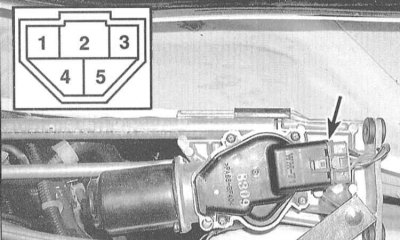
2. If the windshield wipers fail to activate, check the condition of the corresponding fuse. If the fuse is OK, install a jumper wire between the ground terminal of the drive motor and the chassis ground. Repeat the test. If the windshield wipers now operate normally, restore the reliability of the ground contact nodes. If the motor still does not operate, set the wiper control switch to the maximum speed (HI) mode and check for voltage at the connector of the wiring connected to the motor.
Note: To access the connector, you will need to remove the front cowl panel (see Chapter Body) and assembly of the electric motor.
If voltage is present, check the motor by connecting it directly to the battery using a fused jumper wire. If the motor now functions, check the condition of the wiper linkages. If the motor does not start, replace it. If voltage is not present, check the power supply to the wiper control relay for proper operation. If voltage is present at the relay but not at the motor, check the switch for proper operation (see Section Checking the proper functioning and replacing the steering column switches). If the switch is in order, most likely the built-in control unit has failed, the diagnostics of which should be carried out at a service station using special equipment.
3. If the intermittent windshield wipers do not function properly, check the condition of the circuit between the switch and the integrated control unit. If the wiring is OK, check the resistance of the control handle by the delay time on the combination switch (see Section Checking the proper functioning and replacing the steering column switches). If the handle is in good working order, the built-in control unit should be diagnosed in a car service center.
4. If the brushes stop in the position they occupy when the switch is moved to the OFF position, check the correctness of the power supply to the electric motor limit switch. Voltage should be present on the corresponding wire of the motor connector with the switch in the OFF position and the ignition on (ON), otherwise check for an open circuit in the wiring in the section of the circuit between the electric motor and the fuse.
5. If the wipers stop only after the ignition is turned off, disconnect the wiring from the wiper control switch. If the wipers stop now, replace the switch. If the wipers continue to operate, then the electric motor limit switch is damaged, replace the motor.
6. If the brushes do not go under the hood when stopped, check the drive rod for foreign objects underneath. If nothing prevents the brushes from going into the parking position, check the wiring in the section of the circuit between the switch and the motor. If there are no breaks, replace the motor.
Replacing the electric motor
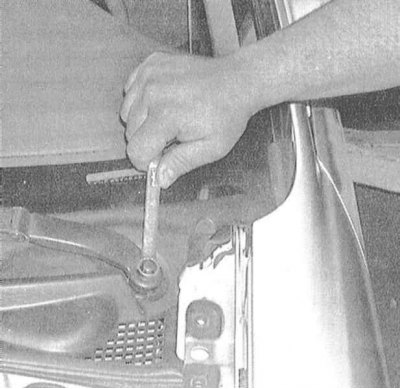
1. Remove the windshield wiper arms.
2. Remove the front fairing cover (see Chapter Body).
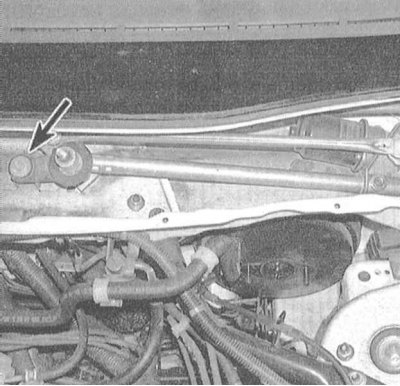
3. Remove the windshield wiper drive assembly from the fairing.
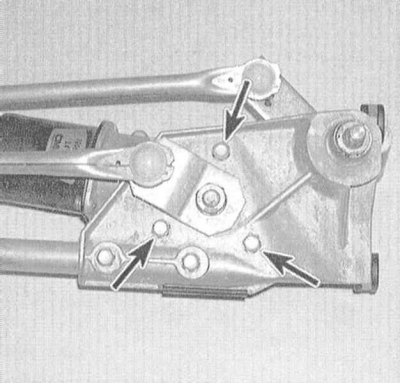
4. Remove the bolts securing the motor to the drive assembly.
5. Remove the electric motor.
6. Disconnect the electrical wiring from the motor.
7. Installation is carried out in reverse order.