
Contents: 1984-85 Accord: 1.8L engine; 1984-87…⇊ To install: ⇊ 1986-89 Accord: 2.0L engine ⇊ 1990-91 Accord: 2.2L engine ⇊ 1988-91 Prelude: 2.0L and 2.1L…⇊
CAUTION: If any repair operation requires removal of an air conditioning system component (on equipped vehicles), do not disconnect the refrigerant lines. If it is not possible to move the component out of the way with the lines attached, have the system towed by a professional. The air conditioning system contains refrigerant under pressure. This gas can be very dangerous. Drain the refrigerant into a sealed container. Refrigerant can be reused many times if it is not contaminated or very old.
1984-85 Accord: 1.8L engine; 1984-87 Prelude: 1.8L or 2.0L engines
All wires and hoses should be labeled during removal. This will save you time during subsequent assembly.
1. Apply the parking brake and place chocks behind the rear wheels.
Raise and secure the front of the vehicle with jacks.
2. Disconnect the negative battery cable, then the positive. Remove the battery and battery cable from the engine compartment.
3. Double check the security of the jacks under the car.
4. Remove the mudguard under the engine.
Using a marker, mark the hinge outline of the hood on the hood; remove the bolts and the hood itself.
5. Drain the engine oil.
When replacing the drain plug, make sure to use a new washer.
6. Remove the radiator cap. Open the drain plug of the radiator drain pipe and drain the coolant from the radiator.
7. Remove the gearbox filler plug; remove the drain plug and drain the fluid from the box.
8. If the vehicle is equipped with a carburetor, perform the following procedures:
- a. Mark and remove the ignition coil wires and the engine secondary ground cable located on the valve cover
- b. Remove the air filter cover and filter.
- c. Remove the air intake, air cleaner nuts/bolts, air control valve and air cleaner,
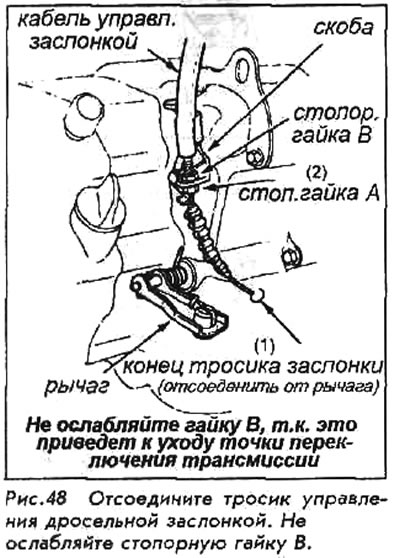
- d. Loosen the throttle cable lock nut and the set nut. Disconnect the end of the throttle control cable from the carburetor (Fig. 48).
Be careful not to bend or tangle the throttle cable. Always replace a damaged cable.
- e. Disconnect connector No.1 of the control box. Remove the control box from its mounting location; support it with a rigid wire and hang it near the engine.
- f. Disconnect the fuel line from the fuel filter and the solenoid vacuum hose from the charcoal canister.
- g. For high altitude models, remove the air flow regulator.
9. If the vehicle is equipped with a fuel injection system, perform the following procedures:
- a. Remove the air intake. Disconnect the cruise control vacuum hose from the air intake, and remove the exhaust muffler pipe.
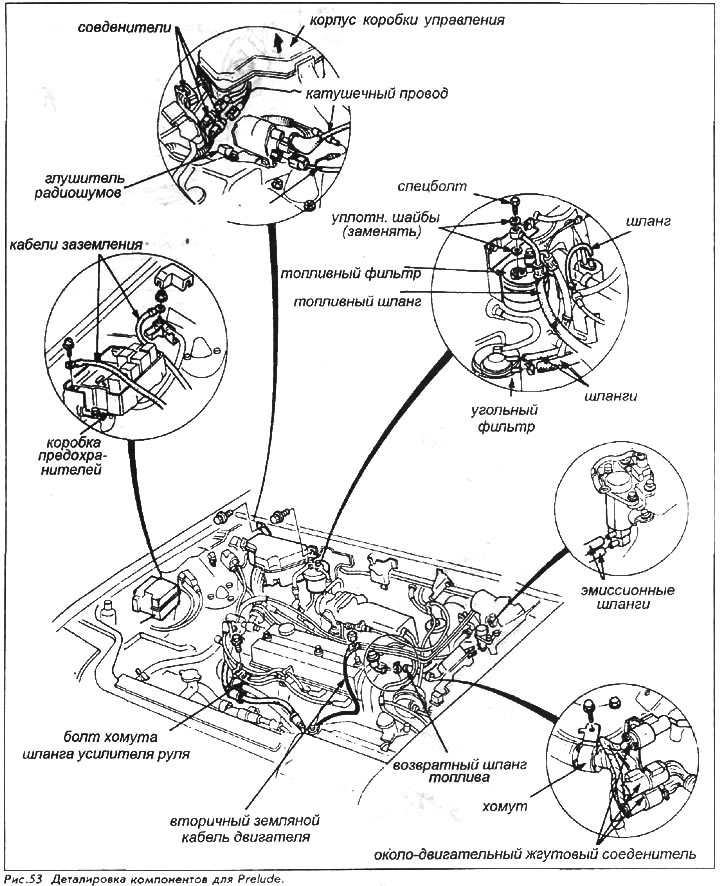
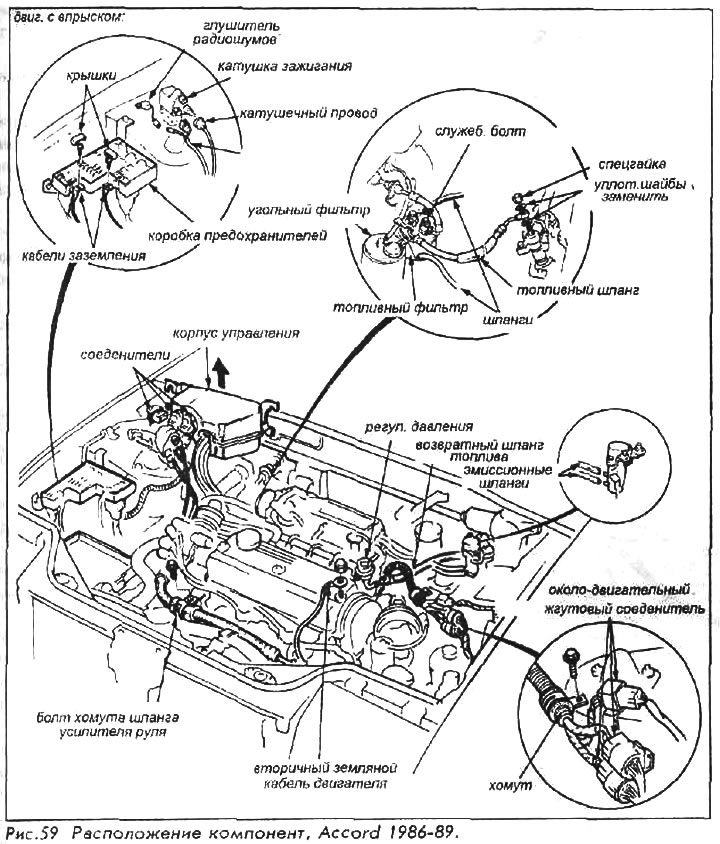
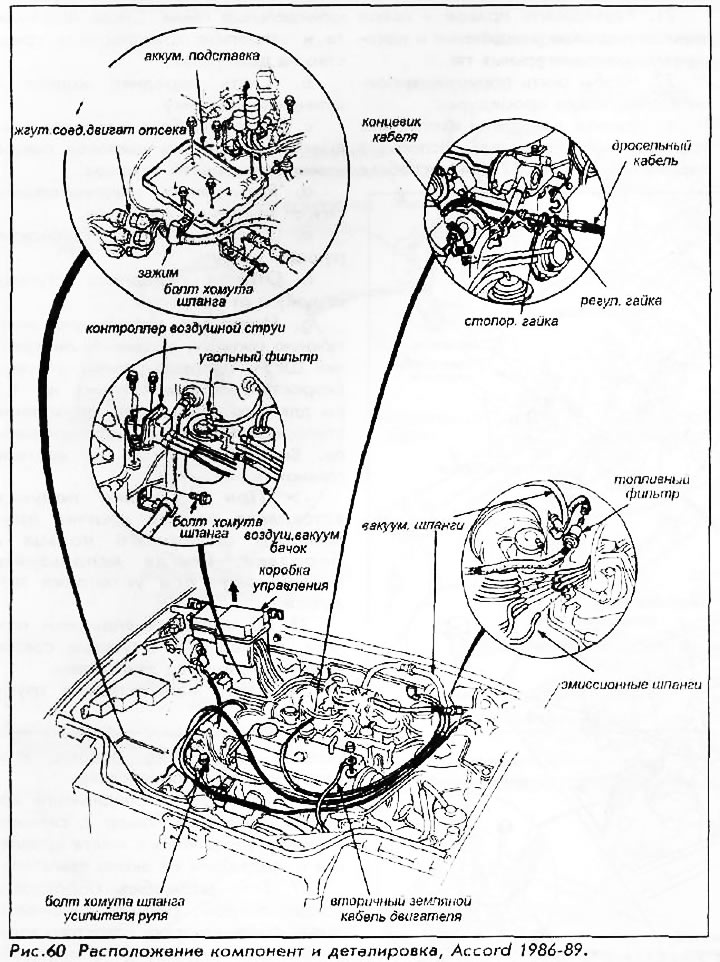
- b. Remove the secondary ground cable from the top of the engine.
- c. Disconnect the air box connecting the pipe. Loosen the pipe clamp bolt and disconnect the emission pipes.
- d. Remove the air cleaner mounting nuts and remove the air cleaner housing assembly.
- e. Loosen the throttle cable lock nut and the mounting nut. Disconnect the end of the cable from the mounting and connection point.
- f. Disconnect the following wires:
- Ground cable from the fuse box.
- Harness connector and clamp in the engine compartment.
- High voltage wire and wires from the primary winding of the ignition coil.
- The wire connecting the ignition coil and the radio noise suppressor.
- g. To reduce the fuel pressure, perform the following procedures:
- Using a rag, place it over the fuel filter to absorb any gasoline that may spray onto the engine.
- Slowly loosen the service bolt approximately one full turn; this will reduce the pressure in the system.
- Using a new seal washer, retighten the service bolt.
- h. Disconnect the fuel return hose from the pressure regulator. Remove the banjo nut, then the fuel supply hose.
- i. Disconnect the vacuum hose from the brake booster.
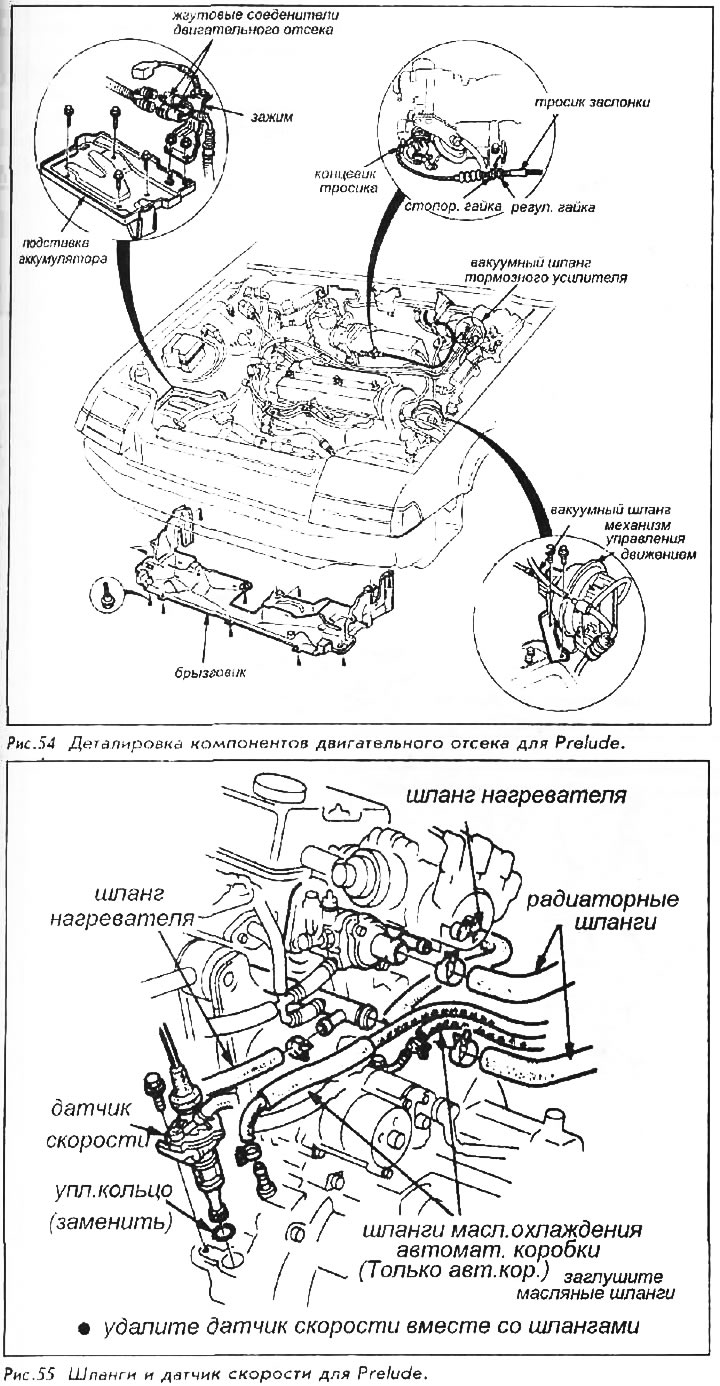
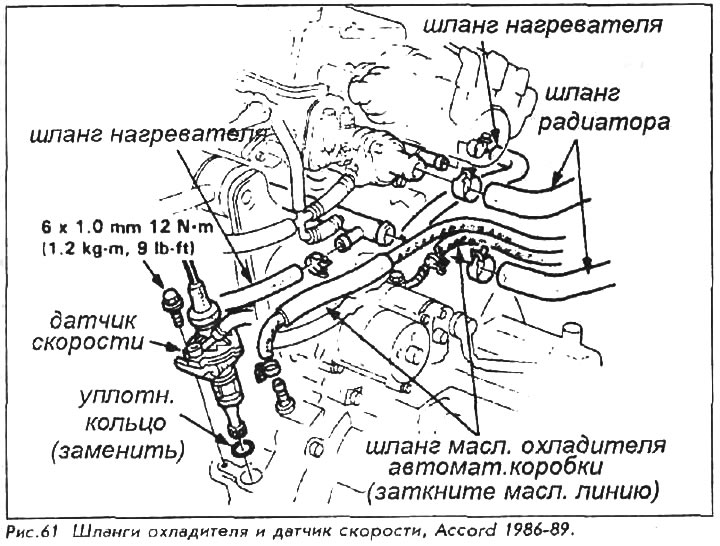
10. Mark and disconnect the radiator and heater hoses from the engine.
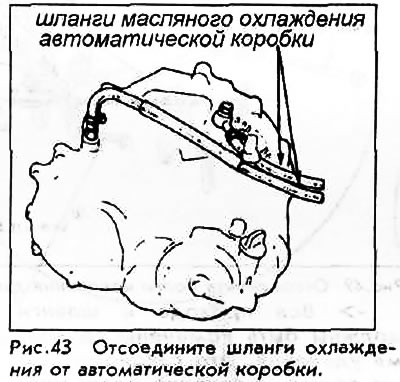
11. If the vehicle is equipped with an automatic transmission, disconnect the oil cooler hoses from the transmission and drain the fluid. Support the hoses near the radiator without twisting them.
12. If the vehicle is equipped with a manual transmission, loosen the clutch cable mounting nut and remove the clutch cable from the release lever.
13. Disconnect the battery cable from the gearbox and the starter cable from the starter clamp.
14. Disconnect both electrical harness connectors from the engine.
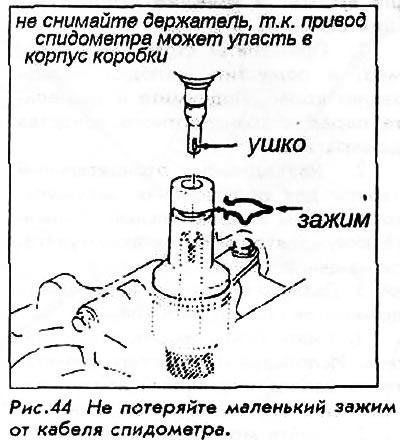
15. Remove the speedometer drive cable clamp. Pull the cable out of the holder.
DO NOT remove the bracket as the speedometer drive mechanism may fall into the case.
16. If equipped with power steering, perform the following procedures:
- a. Remove the bolt securing the speed sensor to the gearbox and the sensor together with the hoses.
Do not disconnect the hoses from the speed sensor; simply move the sensor with the hoses attached.
- b. Remove the power steering pump adjusting bolt, mounting bolt and V-belt.
- c. Without disconnecting the hoses, move the pump away from its installation location. Secure it with a rigid wire - do not let it hang by the hoses.
- d. Disconnect the power steering hose connection from the cylinder head.
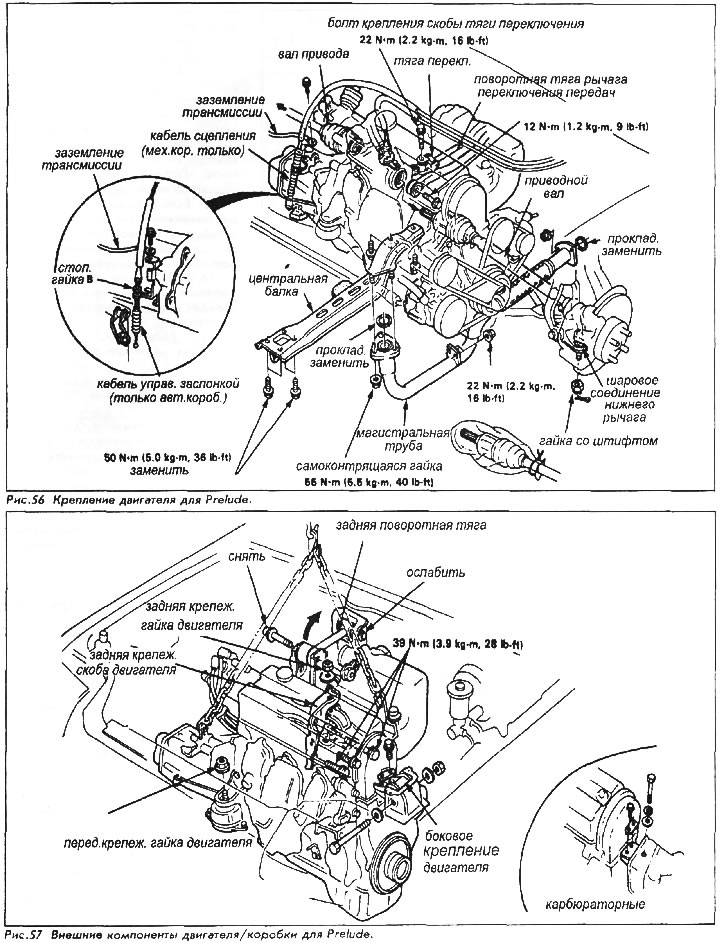
17. Remove the center beam from the bottom of the engine. Loosen the radial rod nuts to make it easier to remove the axle shafts later.
18. If the vehicle is equipped with air conditioning, perform the following procedures:
- a. Remove the compressor clutch lead wire.
- b. Loosen the belt adjusting bolt and drive belt.
DO NOT loosen or disconnect the air conditioner hoses. The air conditioner compressor can move without discharging the system.
- c. Remove the compressor mounting bolts and lift the compressor out of its mounting location with the hoses attached. Secure it to the front bulkhead with a piece of strong wire. Never hang the compressor by the hoses.
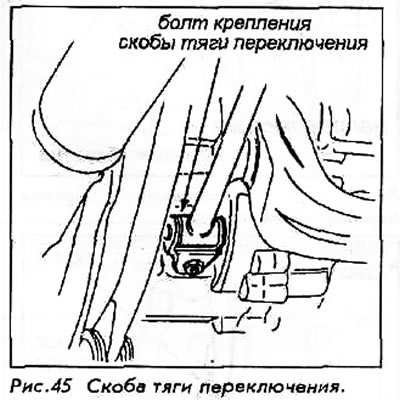
19. If the vehicle is equipped with a manual transmission, remove the shift rod bracket mounting bolt and disconnect the shift lever pivot rod.
20. If the vehicle is equipped with an automatic transmission, perform the following procedures:
- a. Remove the center console.
- b. Place the gearshift lever in Reverse. Remove the pin from the end of the cable.
- c. Remove the cable mounting bolts and cable holder.
- d. Remove the throttle cable from the throttle lever. Loosen the lower lock nut and disconnect the cable from its mounting location.
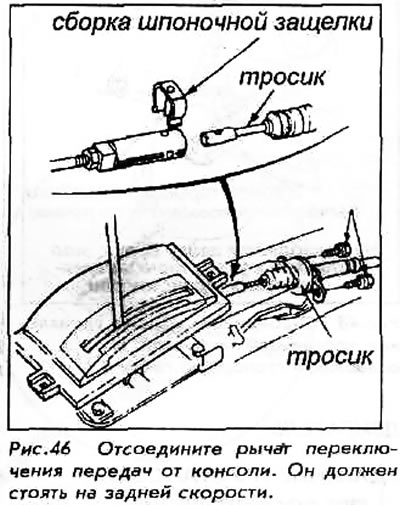
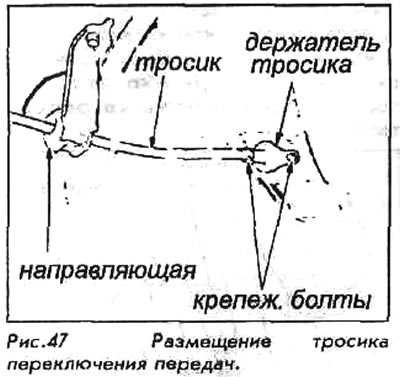
21. Disconnect the right and left lower ball joints and the tie rod ends.
22. To remove the axle shafts, perform the following procedures:
- a. Remove the jacks and lower the vehicle. Using a 32mm socket wrench, loosen the spindle nuts. Raise and secure the vehicle on the jacks again.
- b. Remove the front wheel and spindle nut.
- c. Loosen the ball joint bolt and separate the ball joint from the front hub.
- d. Disconnect the connecting rods from the steering knuckles.
- e. Loosen the stabilizer bar bolts.
- f. Move the front hub outward and away from the axle shafts.
- g. Using a small pry bar, slide the inner CV joint out approximately 1/2" (1.3 cm) to remove the snap ring from the differential. Remove the axle shaft from the final drive housing.
When installing the axle shaft, insert the axle until the snap ring clicks into the groove. Always use a new clamp when installing axle shafts.
23. On fuel injected models, disconnect the harness connectors and clamp above the engine.
24. Remove the main exhaust pipe.
25. Attach the winch to the engine and lift it slightly to eliminate sagging.
26. Disconnect the control box connector No.2, remove the control box from its mounting location and hang it near the engine.
27. If the vehicle is equipped with air conditioning, remove the idle air control solenoid valve.
28. If the vehicle is equipped with an air chamber (High Altitude Models), remove it.
29. Remove the three mounting bolts from underneath the airbox. Push the engine out so that the engine mount comes out of the engine mount stand.
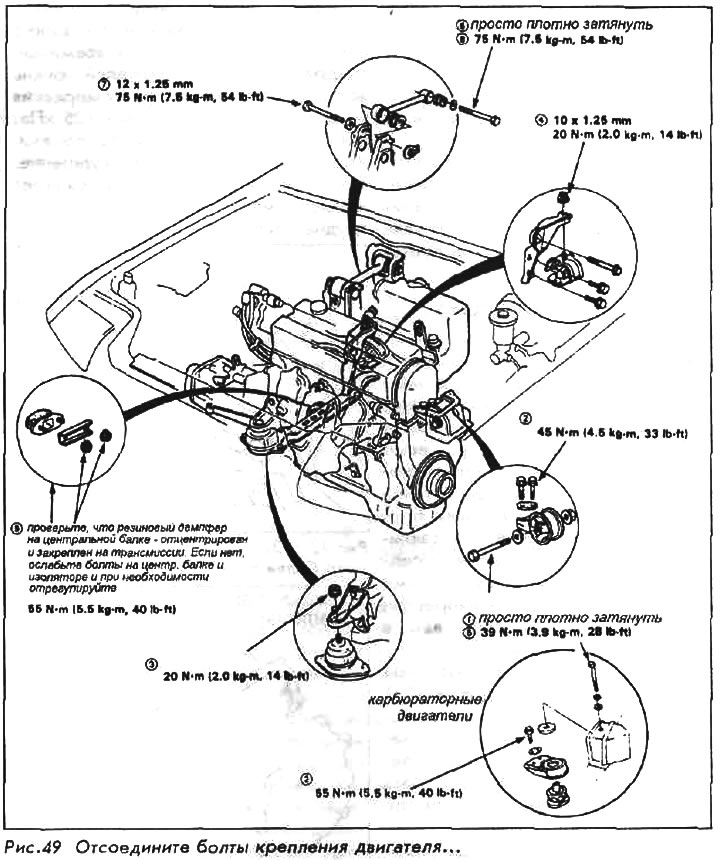
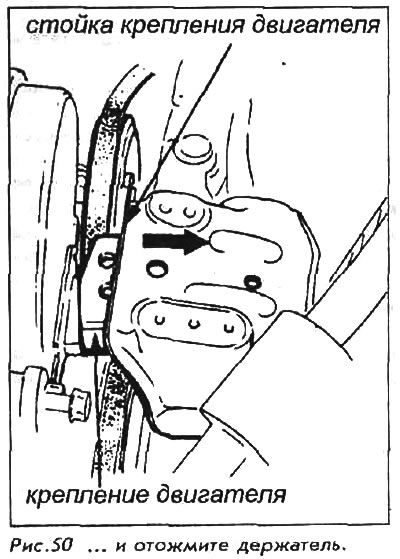
30. Remove the front and rear engine mounting nuts.
31. Loosen the alternator bolts and remove the drive belt. Disconnect the alternator wiring harness and remove the alternator.
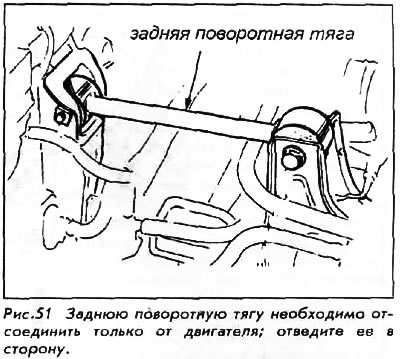
32. In the engine, remove the rear steering rod bolt; loosen the bolt in the frame mount, swing the bar and move it to the side.
33. Carefully lift the engine, making sure all wires and hoses have been removed from the engine/transmission. Remove it from the vehicle.
34. Remove the transmission.
35. If manual transmission, remove the clutch cover and clutch disc.
36. Install the engine on the stand.
To install:
37. The gearbox assembly with the drive axle must be installed on the engine before it is installed on the vehicle. The engine must be completely assembled with the oil pan, valve cover, etc., even if they are to be removed later.
38. Lower the engine into the vehicle.
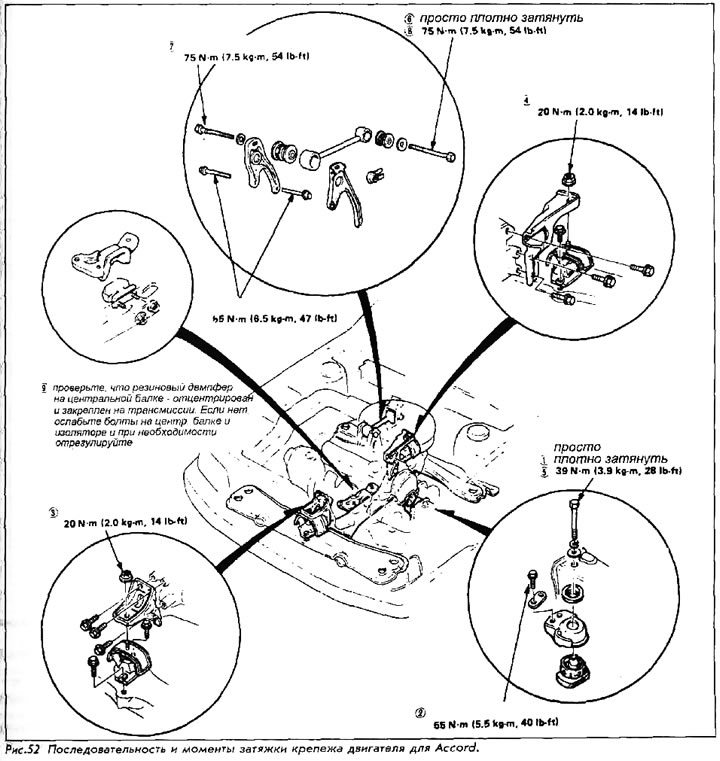
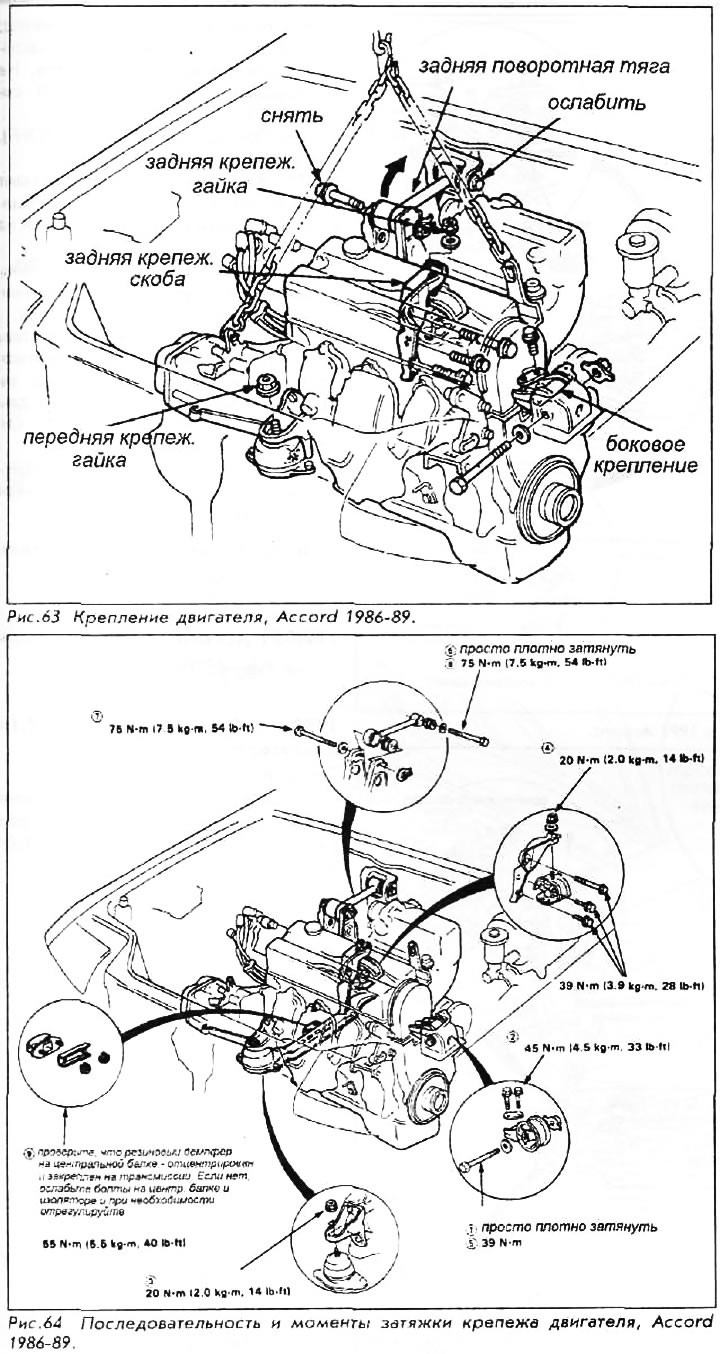
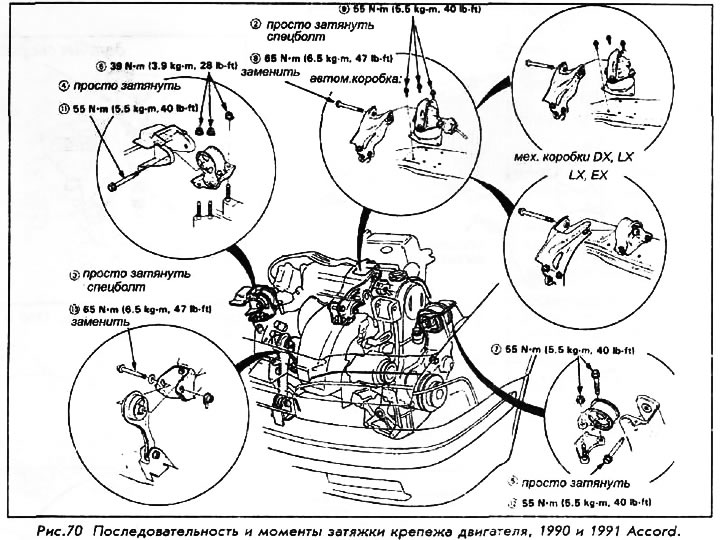
All engine mounting bolts should initially be hand-tightened. After that, they should be tightened in a specific order with a specific amount of force so that the special rubber pads properly dampen engine vibrations.
39. Attach the rear steering link to the engine.
40. Install the front and rear engine mounting nuts.
41. Attach the generator bracket, generator and belt.
42. Install the rear engine mount bracket.
43. Install the rear engine mounting nut, tightening it to 20 Nm.
44. Install the front engine mounting nut, tightening the bolt to 20 Nm.
45. Return the engine mount to the engine mount stand; install the bolts and tighten one bolt (at the top) to 39 Nm. Tighten the adjacent pair of bolts to 55 Nm.
46. Loosen the chain in the engine winch. Continue securing the engine by tightening each bolt to the correct torque.
47. Install the cruise control vacuum hoses.
48. Install the axle shafts. Use a new snap ring and make sure the shaft is locked in the gearbox.
49. For vehicles with automatic transmission, connect the throttle control cable to the bracket, tighten the lock nut, and attach the cable to the throttle lever on the transmission. Install the shift cable and cable clamp; tighten the cable mounting bolts at the gearbox to 10 Nm only. Reconnect the cable at the switch inside the vehicle and install the center console.
50. For vehicles with manual transmission, install the shift rod bracket and bolt; tighten it to 22 Nm.
51. Attach the gear shift lever pivot rod; tighten the bolt to 10 Nm.
52. Install the air conditioning compressor and belt.
53. Using new gaskets and self-locking bolts, connect the exhaust system to the engine. Tighten the nuts to 55 Nm. Install and tighten the 2 support strut bolts.
54. Tighten the radial rod nuts to 44 Nm.
55. Install the center beam under the engine. Use new nuts and tighten them to 50 Nm.
56. Install the power steering pump and belt. Install the speed sensor, tightening the bolt to 10 Nm only.
57. Install the speedometer cable. Align the end of the cable with the groove in the holder. Position the clamp so that the bent leg is in the groove. Double check this installation by gently pulling on the cable; he must not weaken.
58. If the vehicle is equipped with an automatic transmission, connect the ATF cooler lines.
59. If the vehicle is equipped with a manual transmission, install the clutch cable to the release lever. Adjust the clutch free play.
60. Connect the gearbox ground cable.
61. Connect the radiator and heater hoses.
62. Connect the fuel supply hose(s) to the fuel filter.
63. For high altitude vehicles, install an air flow regulator.
64. Connect the vacuum hoses of the carbon filter cleaning solenoid valve control.
65. Install the control box.
66. Connect the throttle cable. Tighten the lock nut.
67. Reconnect the electrical harnesses including the coil, idle speed control solenoid valve, engine harness connectors and the secondary ground cable located between the body and the valve cover. Check all wiring to ensure it is within the clamps and not in contact with hot or moving parts.
68. Install the air intake pipes and air filter. Make sure the vacuum hoses are properly installed.
69. Double check all installation components, paying special attention to missing hoses or sagging wires, loose nuts and tools forgotten in the engine.
70. Fill transmission oil to the correct level.
71. Fill the cooling system.
72. Fill with engine oil.
73. Install the hood. On Prelude, reinstall the grille and turn the headlights to the DOWN position.
74. Connect the battery cables (positive cable first).
75. Disconnect the coil wire from the distributor. Insulate or protect the end of the cable to prevent arcing between it and the engine or surrounding metal. Without touching the accelerator, turn the ignition key to the START position and crank the engine for approximately 5-10 seconds; this will develop some oil pressure inside the engine, Do not exceed cranking time of 10 seconds.
76. Turn ignition OFF and reconnect the coil.
77. Start the engine and let it idle. Carefully check the hoses and lines for any signs of leaks.
78. Bleed air from the cooling system; check timing and idle speed.
79. After the engine has warmed up completely and the fan(s) have run at least once, recheck the engine for fluid leaks. Turn the engine off.
80. Adjust belts, clutch and throttle cable as necessary.
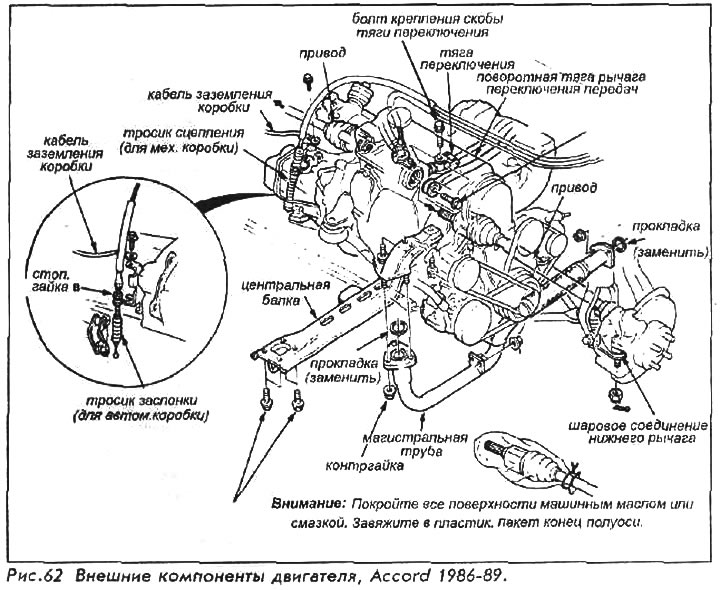
1986-89 Accord: 2.0L engine
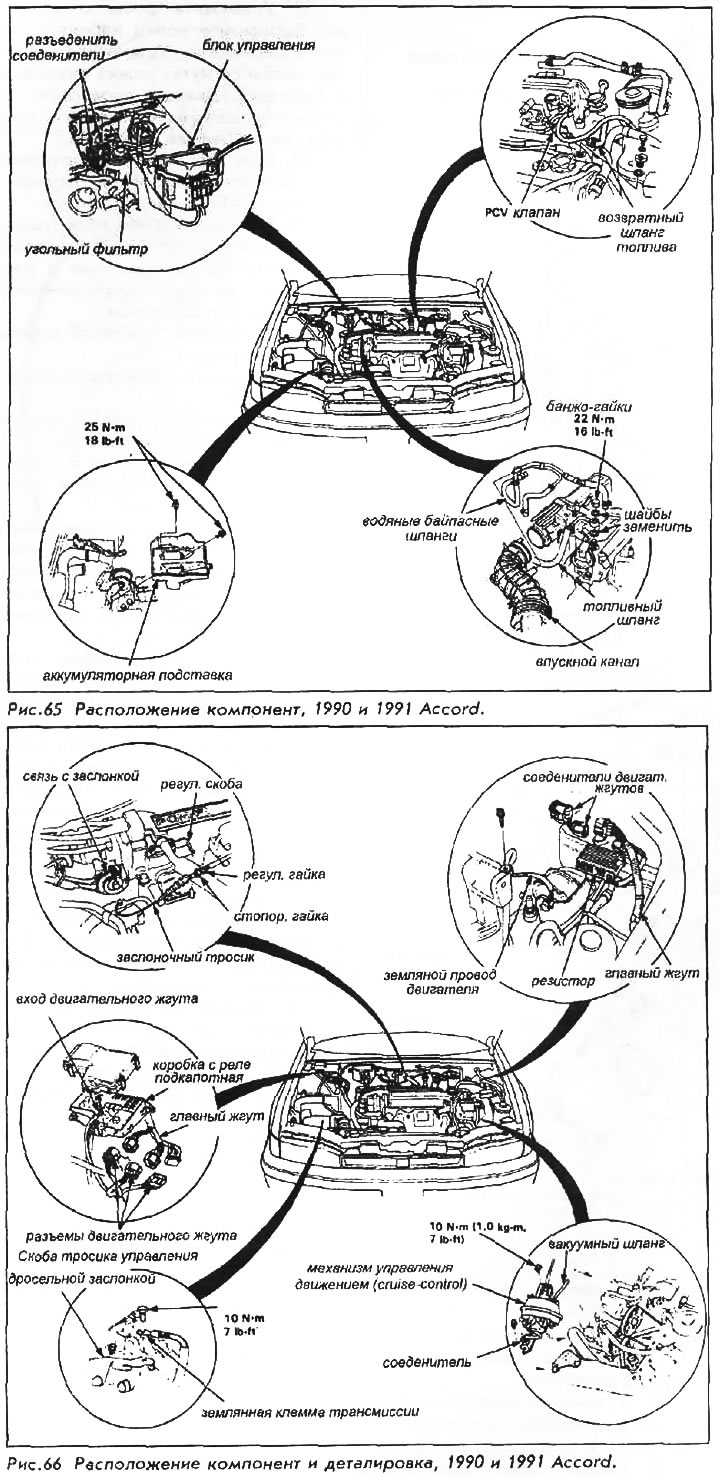
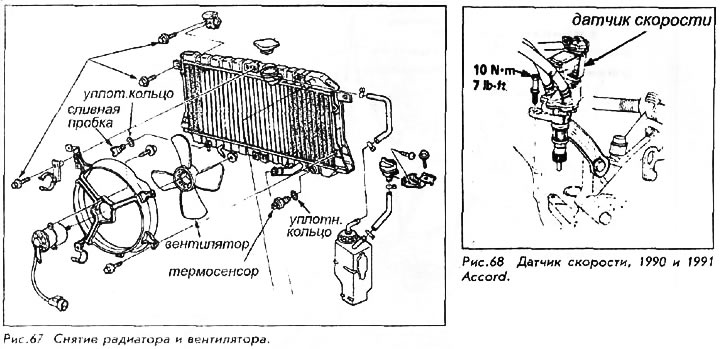
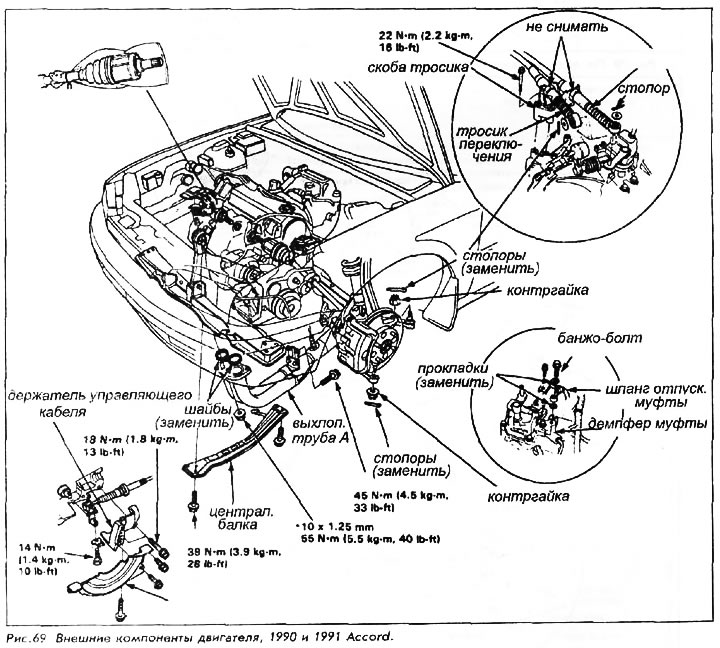
1990-91 Accord: 2.2L engine
1988-91 Prelude: 2.0L and 2.1L engines
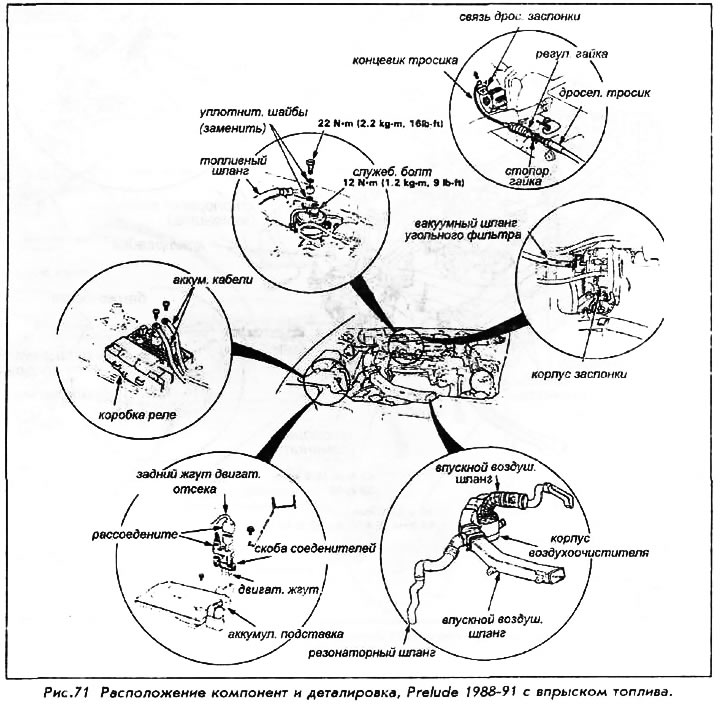
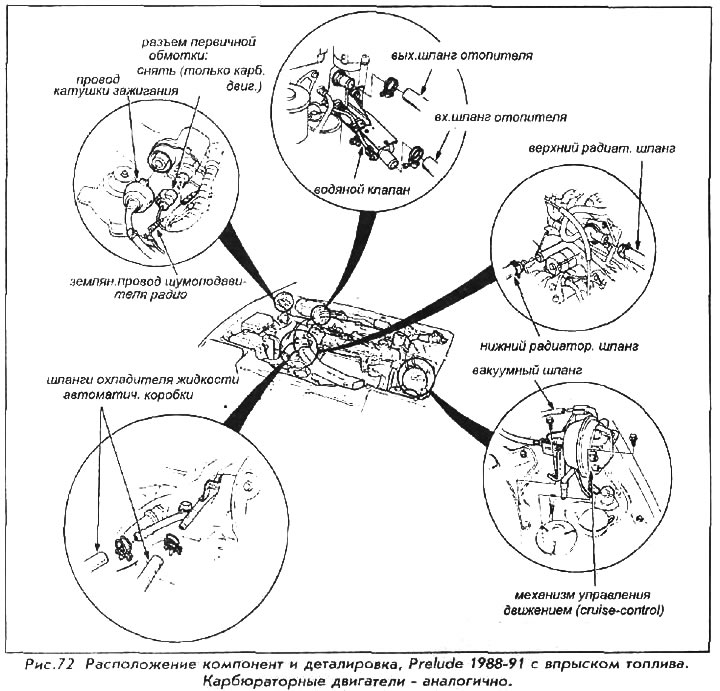
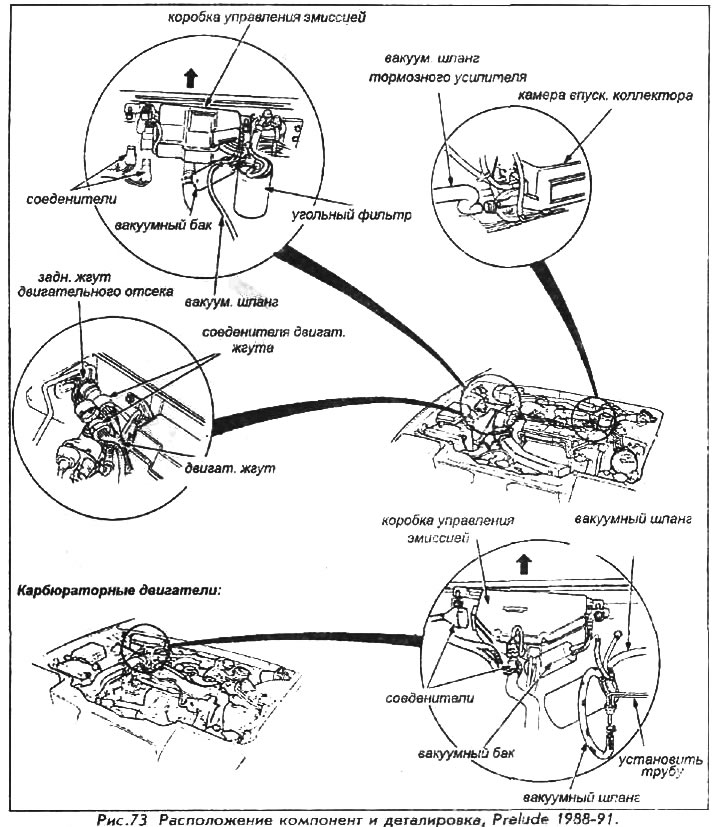
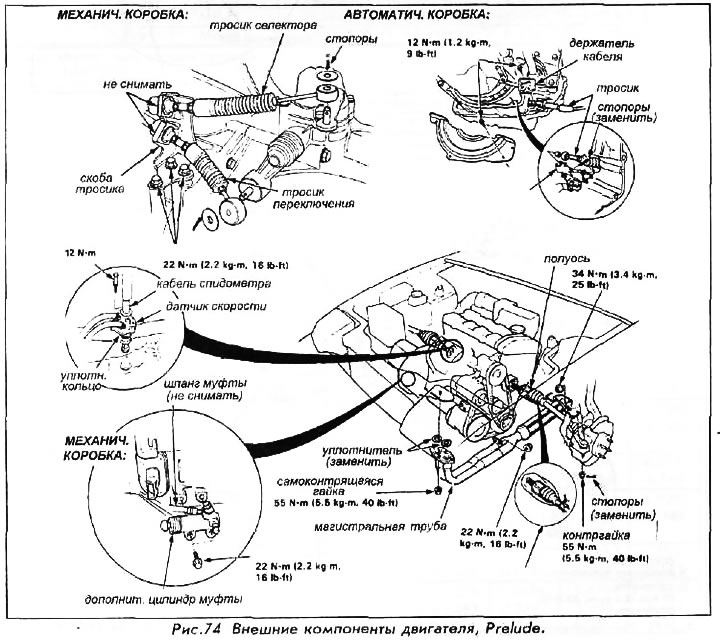
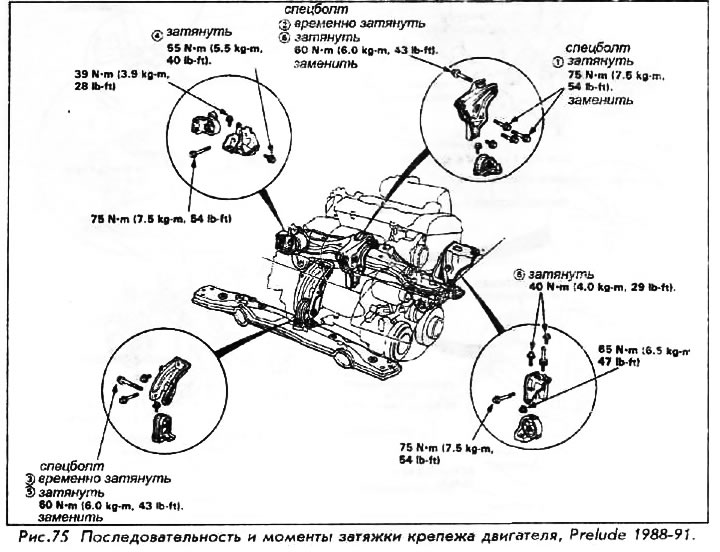
The procedures are generally similar to those described in the section for "1984-85 Accord: 1.8L Engine".
[The article is based on information from the website: HondaBook.ru]