

Typical front shock absorber assembly design with coil spring 1 - Self-locking nut; 2 - Damper rod support washer; 3 - Rubber protective ring of the damper rod; 4 - Damper rod support bushing; 5 - Damper support base; 6 - Rubber support cushion; 7 - Rubber spring seat cushion; 8 - Coil spring; 9 - Dust cover plate; 10 - Dust cover; 11 - Recoil buffer plate; 12 - Recoil buffer; 13 - Damper assembly |
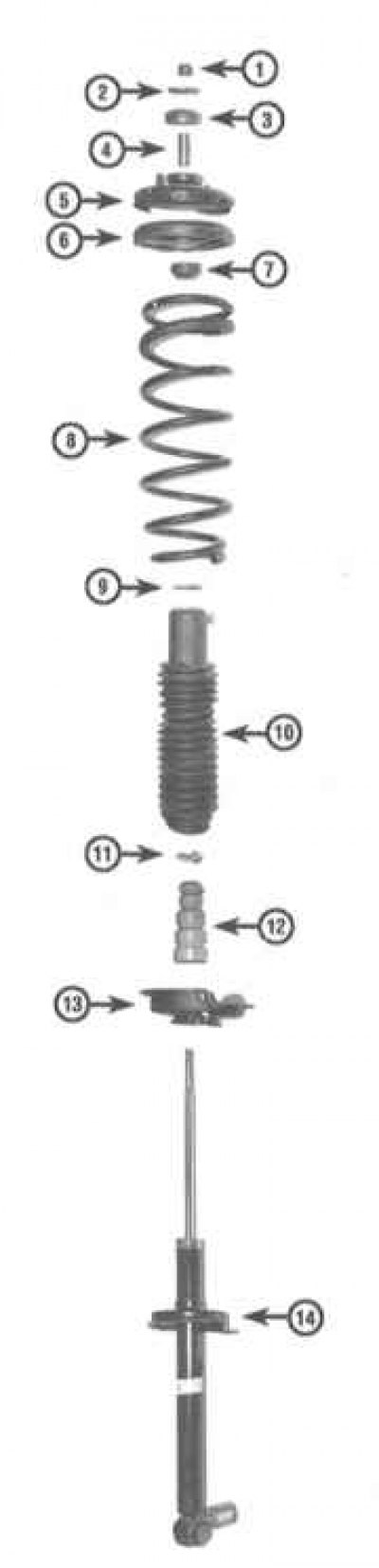
Typical rear shock absorber assembly design with coil spring 1 - Self-locking nut; 2 - Damper rod support washer; 3 - Rubber protective ring of the damper rod; 4 - Damper rod support bushing; 5 - Damper support base; 6 - Rubber support cushion; 7 - Rubber spring seat cushion; 8 - Coil spring; 9 - Dust cover plate; 10 - Dust cover; 11 - Recoil buffer plate; 12 - Recoil buffer; 13 - Spring seat cushion; 14 - Damper assembly |
1. Remove the shock absorber assembly from the vehicle (see Section Removal and installation the front shock absorber assembly with a coil spring or Removal and installation the rear shock absorber assembly with a coil spring).
2. Check the shock absorber for signs of leaks, dents, cracks and other mechanical damage. Inspect the coil spring for chips, cracks, signs of subsidence, and the rubber cushions of its supports for signs of hardening and aging of the material. At Honda service stations, you can always buy shock absorbers assembled with coil springs on an exchange basis, which allows you to significantly reduce time and money costs. In view of the above, before you begin to disassemble the shock absorber for the purpose of carrying out a major overhaul, conduct marketing, determining the prices of replacement components and comparing them with the costs of purchasing a refurbished assembly.
Caution! Removing the coil spring from the shock absorber assembly is potentially dangerous and should only be done using high-quality special tools.
3. Clamp the shock absorber assembly in a vice with soft jaws (not too tight).
4. Mark the position of the support base in relation to the spring (if the spring is to be replaced, then in relation to the damper assembly).
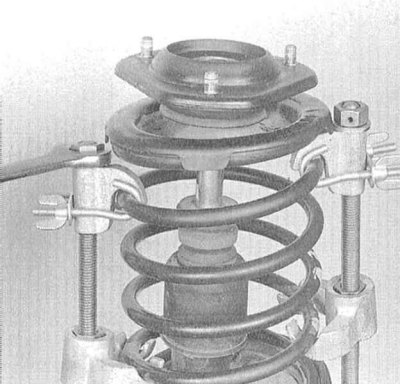
5. Following the manufacturer's instructions, install the coil spring compressor tool. Tighten the nuts on the tool studs until the spring is compressed enough to completely relieve the support base.
6. Remove the protective cap and loosen the self-locking nut, holding the damper rod from turning with a rod wrench. Remove the upper support components from the shock absorber, laying them out on a clean surface strictly in the order of their arrangement on the assembly.
7. Carefully remove the compressed coil spring from the assembly and store it in a safe place.
Attention! Never turn the compressed spring with its ends facing you!
8. Remove the remaining components from the damper rod and lay them out on the workbench (in the order they were installed on the assembly).
9. Transfer the recoil buffer with its plate, dust cover and its plate to the new damper assembly. Pull the rod out of the damper to its full stroke length and thread it through the components being installed.
10. Carefully place the compressed coil spring onto the shock absorber assembly. Make sure that the lower end of the spring is seated correctly in its seat.
11. Install the spring seat rubber cushion, piston rod support bushing, assembly support base, retaining nut washer and new self-locking nut. Before tightening the nut, make sure that the marks made during disassembly are correctly aligned.
12. Hold the rod from turning with a bar wrench and tighten the self-locking nut to the required torque. Release the spring compressor and remove it from the assembly. Install the protective cap.
13. Bring the assembly to its standard place and install it on the car (see Section Removal and installation the front shock absorber assembly with a coil spring or Removal and installation the rear shock absorber assembly with a coil spring).