


Contents: Fuel injectors ⇊ Main Relay ⇊ CHECK ENGINE warning light ⇊ Electronic Air Control Valve (EACV) ⇊ Air Conditioning Compressor Clutch…⇊ Solenoid Cleaning Shut-Off Valve ⇊ Ignition Advance Block ⇊ Exhaust Gas Recirculation Control…⇊ Air Intake Control Solenoid Valve ⇊ Generator control ⇊ Bypass Control Solenoid Valve (BPCSV) ⇊ Shut-off Control Solenoid Valve ⇊
The main purpose of the ECU is to maintain a good level of performance in all situations. The ECU interprets and compares various input signals from sensors and uses the resulting calculations to control the level of output signals. In many cases, this control slows down rather than speeds up driving.
Fuel injectors
All models use 4 fuel injectors integrated into the intake manifold and controlled individually by the ECU.
The ECU controls the system, including the solenoids inside each injector, based on engine speed, manifold pressure, and other variables. The ECU can recognize injectors that are not functioning electrically and set a fault code. Physical problems, such as a dirty injector or contaminated fuel, cannot be detected because they are not electrical in nature.
Main Relay
Although the ignition key turns on the main relay to supply power to the vehicle, the control of switching on the ground of the components is carried out by the ECU. When the ECU receives information that the ignition key is in the ON position and either the crankshaft signal or the engine speed signal is present, the ECU closes the fuel pump power relay.
CHECK ENGINE warning light
The warning lamp on the instrument cluster will be illuminated by the ECU for 2 test seconds after the key is turned to the ON position. After this test time has expired, the ECU will turn on the lamp at any time when it detects an electrical circuit fault in the system.
The warning lamp on the instrument cluster will remain illuminated as long as the key is in the ON position. Once the ignition is turned off and then back on, the warning lamp will remain off as long as the original fault or any other fault is present. Although the lamp will not re-ignite, the original fault code will be stored in memory when the ignition key is turned to the "OFF" position. For this reason, diagnosis should be based on the presence of fault codes and not on the illuminated warning lamp.
Electronic Air Control Valve (EACV)
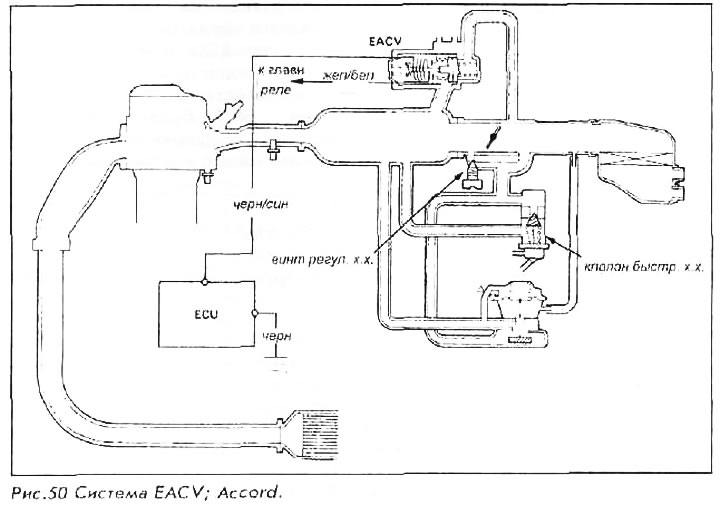
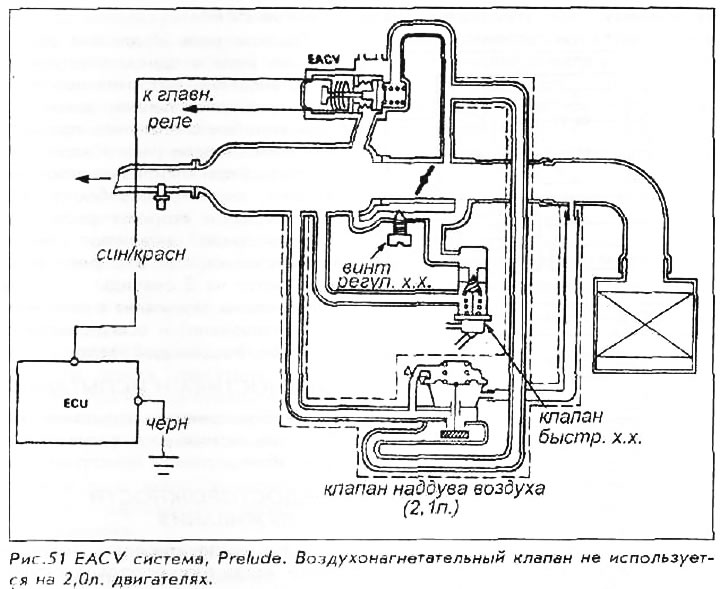
The EACV controls the amount of air bypassing the throttle valve in response to signals from the ECU. When the engine is cold, the air conditioner is on, the automatic transmission is at speed, or the alternator is charging, the EACV is activated to properly control the idle speed.
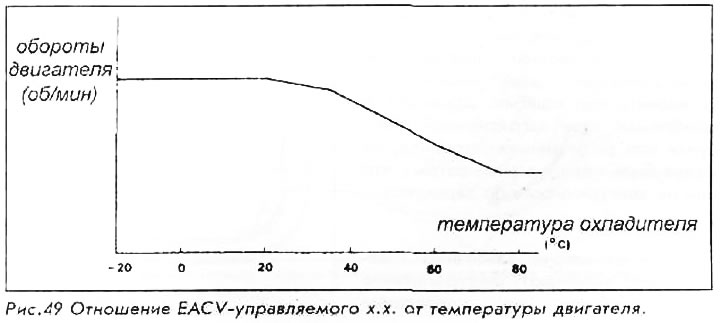
All vehicles use a high idle speed control valve controlled by a temperature-sensitive valve. When the engine is cold, a large amount of air is admitted to the engine, increasing the idle speed. The 2.2L Accord engines include an additional high idle speed control valve to provide a large amount of air during cranking. Note that in all cases, the external idle speed adjustment screw acts on the air bleed passage, not the throttle mechanism.
Air Conditioning Compressor Clutch Relay
When the ECU receives a request for air conditioning from either the A/C switch (Accord) or the compressor control unit (Prelude), the signal to the compressor clutch relay is delayed until the ECU can enrich the air/fuel mixture. This allows the compressor to engage with the least effect on overall vehicle drivability.
Solenoid Cleaning Shut-Off Valve
When the coolant temperature is below a predetermined level, the ECU supplies voltage to the purge stop solenoid, which reduces the vacuum to the purge control valve. The coolant temperature limit or vacuum reduction activation point is different for each engine.
Ignition Advance Block
The igniter, although part of the ignition system, is started by a signal from the ECU. The timing of the ignition spark, including advance, is determined by the ECU.
Exhaust Gas Recirculation Control Solenoid Valve (EGR CSV)
When the EGR function is required to ensure NOx emission control, the ECU grounds the control solenoid valve. The valve allows the vacuum supplied to the EGR to be regulated, thus precisely controlling the operation of the EGR.
Air Intake Control Solenoid Valve
The Accord uses an intake control system to reduce the noise present during the intake. When the engine speed is below 3500 rpm, the ECU turns on the intake control solenoid valve. The open valve directs manifold vacuum to the intake control diaphragm. As a result, the intake air will pass through the resonator chamber, smoothing and calming the air flow.
Generator control
On Accord engines, the ECU controls the voltage produced by the alternator. Controlling the alternator output according to the current draw and driving conditions of the vehicle results in reduced engine load, which saves fuel.
Bypass Control Solenoid Valve (BPCSV)
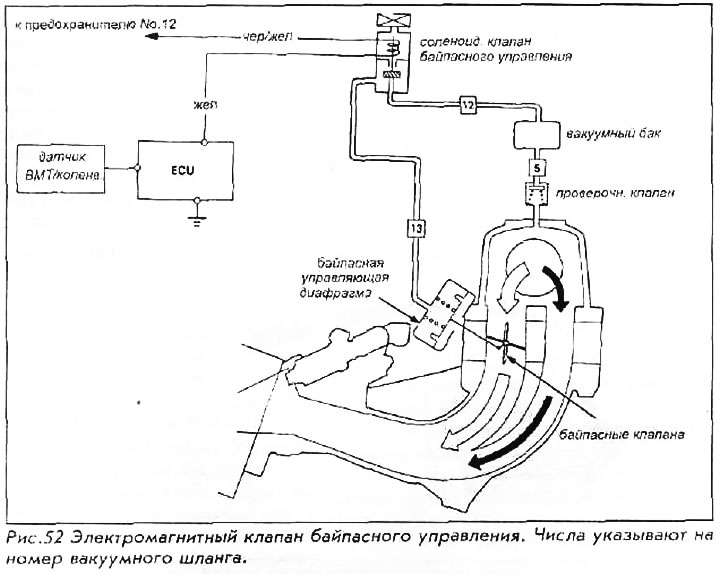
Used only on 2.0L Prelude engines, this system provides 2 air passages inside the manifold.
BPCSV is controlled by ECU; when the engine speed is below 5000 rpm, the valve is activated and intake air flows through the long channel. At more than 5000 rpm, the valve is disengaged and the shorter channel is open.
Shut-off Control Solenoid Valve
The shut-off control solenoid valve is located on the transmission. On the Accord and Prelude, the valve is controlled by a separate transmission control unit. The ECU uses input signals from the speed sensor and throttle angle sensor to determine the exact timing of the valve engagement. The shut-off control solenoid valve only receives ON or OFF signals from the ECU; intermediate positions are not allowed.
Article source on the website: www.hondabook.ru