
WARNING: This procedure REQUIRES the use of a propane enrichment kit. Do not begin this procedure if a kit is not available. Ensure that the propane tank is sufficiently full before beginning.
The mixture can also be determined with an exhaust gas analyzer or emission tester, but this equipment is rarely available to the car enthusiast. If this method is used, you must still access the mixture screws to make the adjustment.
Fuel-injected vehicles do not allow manual adjustment of the fuel-air mixture. This is the responsibility of the engine control module or ECU; it also controls the operation of the fuel injector according to electrical signals sent to the injector by the controller of all sensors and monitors. If the engine with fuel injection experiences problems related to emissions, then the sensors and computer-controlled output components must be checked (tested) and repaired.
Keihin 2 carburetor
1984-85 Accord, 1886-89 Accord with manual
1. Put the car in neutral and apply the parking brake, block the wheels. Start the engine and warm it up to normal temperature (the fan should turn on at least once).
2. Disconnect the vacuum hose from the air inlet control diaphragm and pinch the end of the hose.
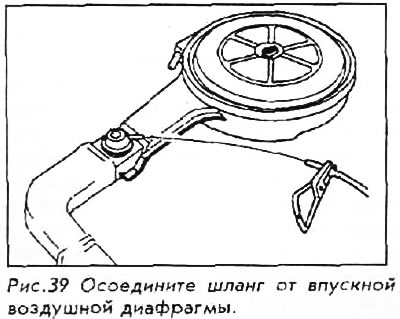
3. Connect a suitable tachometer to the engine and follow the manufacturer's instructions.
4. Check the idle speed with all equipment switched off. If necessary, adjust the idle speed with the throttle stop screw.
5. Disconnect the air cleaner inlet pipe from the air duct on the radiator bulkhead.
6. Insert the hose from the propane kit approximately 10 cm into the inlet tube.
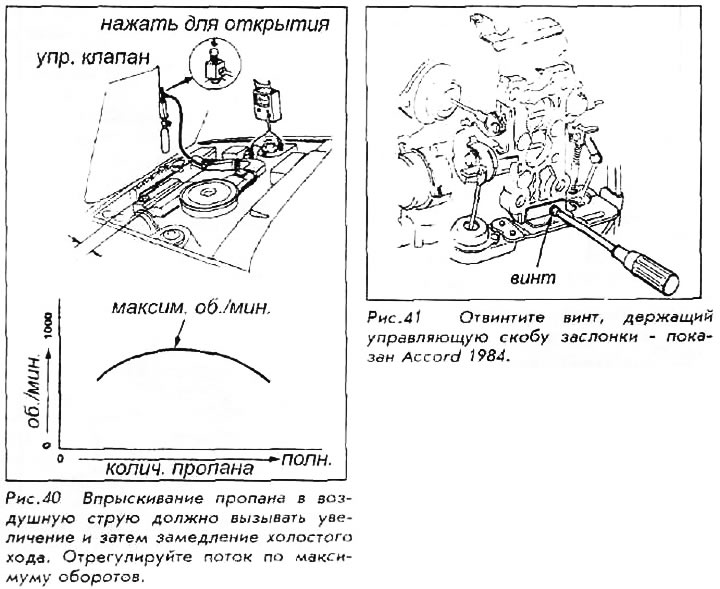
7. With the engine at idle, depress the button on top of the propane unit, then slowly open the control valve to obtain maximum engine speed. As propane flows, the speed should increase.
If propane is supplied abruptly, the engine may stall.
8. The idle speed should increase as follows:
- 1984-85 Accord with manual transmission - 100±25 rpm.
- 1984-85 Accord automatic - 50±20 rpm.
- 1986 Accord with manual transmission - 35±20 rpm.
- 1987-89 Accord with manual transmission - 50±20 rpm.
9. If the speed increase is within specification, disconnect the propane kit and repair any disconnected hoses. Otherwise, proceed to the next step. Turn off the ignition.
10. Disconnect the vacuum hose from the quick idle unloader valve. Pull the throttle cable out of the bracket.
11. Remove the carburetor nuts, washers, and bolts securing the metal vacuum manifold. Lift the carburetor off the stand, then tilt it back to gain access to the throttle controller bracket screws.
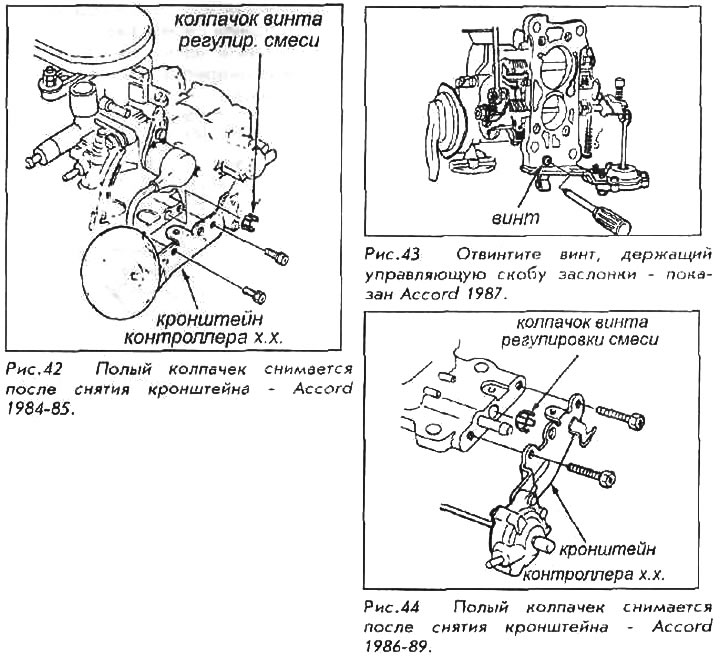
12. Disconnect the throttle controller bracket. Remove the hollow mixture screw cap from the throttle controller bracket and then reinstall the bracket. With the cap removed, the mixture screw can be accessed from the outside of the carburetor body with the carburetor in place.
13. Install the carburetor, connect the vacuum hoses to the quick idle unloader valve. Connect the air cleaner.
14. Start the engine and warm it up again to normal temperature.
15. Disconnect the vacuum hose from the air intake control diaphragm and pinch the end of the hose. Install the propane kit and recheck the maximum engine speed when rich with propane.
16. If the speed is too low after introducing propane, the mixture is rich. Turn the mixture adjustment screw clockwise by % of a turn and repeat the check.
17. If the speed is too high after introducing propane, the mixture is lean. Turn the mixture adjustment screw counterclockwise by % of a turn and repeat the check.
18. Close the propane valve and repeat the idle speed test. First, run the engine at 2500 rpm for 10 seconds to stabilize the idle conditions.
19. If engine speed is within specification, disconnect propane kit, all test equipment and reinstall vacuum hoses and air cleaner inlet tube.
20. If the engine speed is not within specification, recheck the speed and adjust as necessary by turning the throttle stop screw, then repeat procedures 14-19.
21. Adjust the idle speed by adjusting the idle speed control screw if necessary.
22. If the car is equipped with air conditioning, perform a second check with the air conditioning on. Adjust the speed by adjusting the adjusting screw on the idle speed booster diaphragm if necessary.
Keihin 2 carburetor
1886-89 Accord Automatic
1. Put the car in neutral and apply the parking brake, block the wheels. Start the engine and warm it up to normal temperature (the fan should turn on at least once).
2. Disconnect the vacuum hose from the air intake control diaphragm and pinch the end of the hose.
3. Connect a suitable tachometer to the engine and follow the manufacturer's instructions.
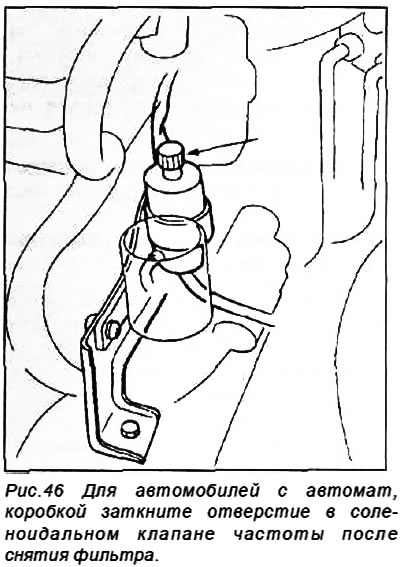
4. Disconnect the air filter from the frequency solenoid valve C and plug the hole in the valve.
5. With the engine unloaded, reduce the idle speed as much as possible by turning the throttle stop screw.
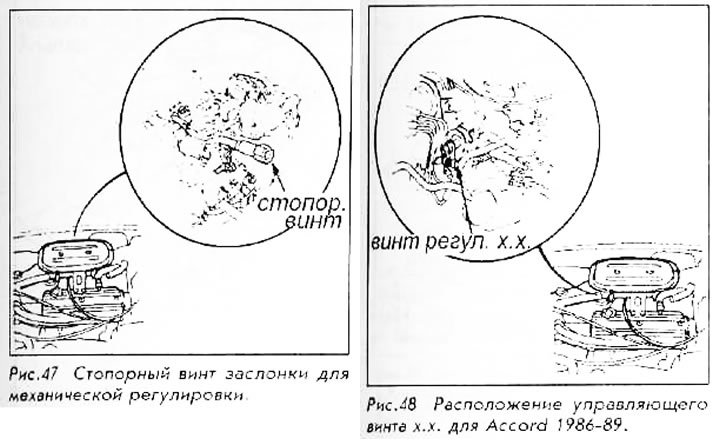
6. Adjust the idle speed by turning the idle control screw to 600±50 rpm (630±50 rpm on 1987-89 models).
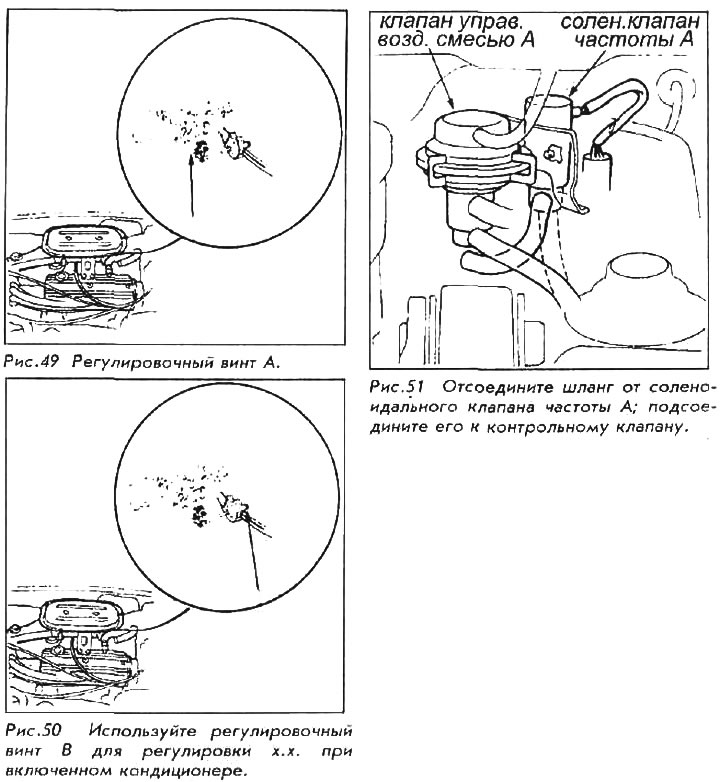
7. With the headlights on, rear defroster and heater blower at maximum, adjust idle speed by turning adjusting screw A to 600±50 rpm on 1986 models and 700+50 rpm on 1987-89 models.
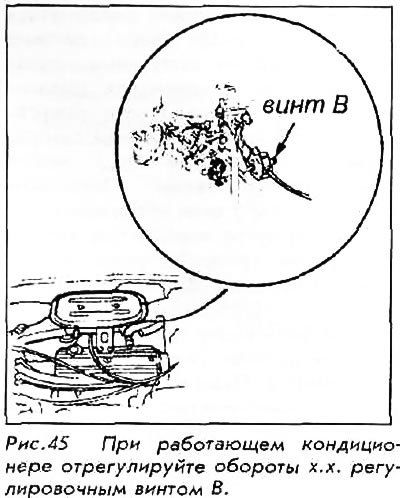
8. If the vehicle is equipped with air conditioning, adjust the idle speed by turning the adjusting screw B to 700±50 rpm with the air conditioning on.
9. With the engine under no load, remove the internal vacuum hose from the idle speed gain throttle controller and plug the hose.
10. Adjust the idle speed by turning the throttle stop screw to 700+50 rpm (650+50 rpm on high-altitude models).
11. Disconnect the hose from frequency solenoid valve A and connect to air control valve A.
12. Disconnect the air cleaner inlet pipe from the air duct on the radiator bulkhead.
13. Insert the hose from the propane kit into the inlet tube approximately 10 cm.
14. With the engine at idle, depress the button on top of the propane unit, then slowly open the control valve to obtain maximum engine speed. As propane flows, the speed should increase.
If propane is supplied abruptly, the engine may stall.
15. The engine idle speed should increase to 135±35 rpm.
16. If engine speed increases as per specification, disconnect propane kit, all test equipment and reinstall vacuum hoses. If engine speed does not increase as per specification, continue testing with next step. Turn ignition off.
17. Disconnect the vacuum hose from the quick idle unloader valve. Pull the throttle cable out of the bracket.
18. Remove the carburetor nuts, washers, and bolts securing the metal vacuum manifold. Lift the carburetor off the stand, then tilt it back to access the throttle controller bracket screws.
19. Disconnect the throttle controller bracket. Remove the hollow mixture screw cap from the throttle controller bracket and then reinstall the bracket. With the cap removed, the mixture screw can be accessed from the outside of the carburetor body with the carburetor in place.
20. Install the carburetor, connect the vacuum hoses to the quick idle relief valve. Connect the air cleaner.
21. Start the engine and warm it up again to normal temperature.
22. Disconnect the vacuum hose from the air intake control diaphragm and pinch the end of the hose. Install the propane kit and recheck the maximum engine speed when rich with propane.
23. If the speed is too low after introducing propane, the mixture is rich. Turn the mixture adjustment screw clockwise by % of a turn and repeat the check.
24. If the speed is too high after introducing propane, the mixture is lean. Turn the mixture adjustment screw counterclockwise by % of a turn and repeat the check.
25. Close the propane valve and repeat the idle speed test. First, run the engine at 2500 rpm for 10 seconds to stabilize the idle conditions.
26. If engine speed is within specification, disconnect the propane kit, all test equipment and reinstall the vacuum hoses and air cleaner inlet tube.
27. If the engine speed is not within specification, recheck the speed and adjust as necessary by turning the throttle stop screw, then repeat the adjustment procedures.
28. Turn off the engine. Close the propane valve, remove all plugs and reconnect all hoses.
29. Start the engine and repeat the idle speed check.
Increase engine speed to 2500 rpm 2 or 3 times after 10 minutes, then check idle speed. Idle speed should be 700±50 rpm on 1986 models and /30±50 on 1987-89 models.
30. Check the idle speed with the headlights, heater blower and rear window defroster on. The idle speed should be 700+50 rpm.
31. Recheck the idle speed with the automatic transmission switch in gear. The idle speed should be 700±50 rpm.
32. Recheck the idle speed with the air conditioner on and the speed switch in the PARK or neutral position. The idle speed should be 750±50 rpm.
33. Recheck the idle speed with the air conditioner on and the gear shifter in gear. The idle speed should be 750±50 rpm.
34. If the idle speed does not reach the specification for points 30 through 33, check the idle speed control system.
Keihin twin carburetors
1984-90 Prelude
Make sure the carbs are properly synchronised before checking the idle speed and mixture. You will also need to pull the ECU fuse for at least 10 seconds to reset the ECU after the procedure.
1. Start the engine and warm it up to normal temperature (the fan should turn on at least once).
2. Disconnect the vacuum hose from the air inlet control diaphragm and plug the end of the hose.
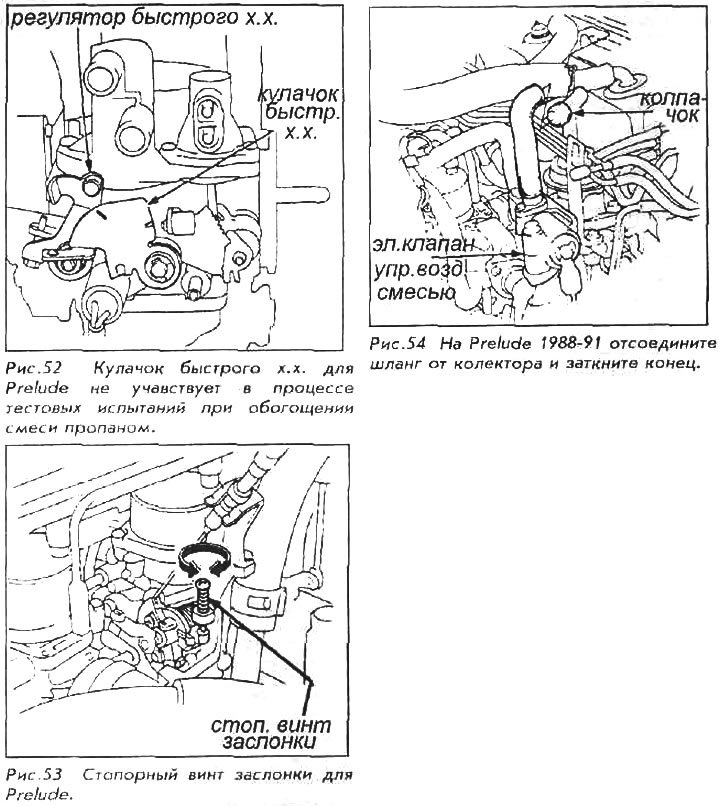
3. Connect the tachometer. Make sure that the fast idle lever is not opposite the fast idle cam, otherwise you will need to move the left carburetor.
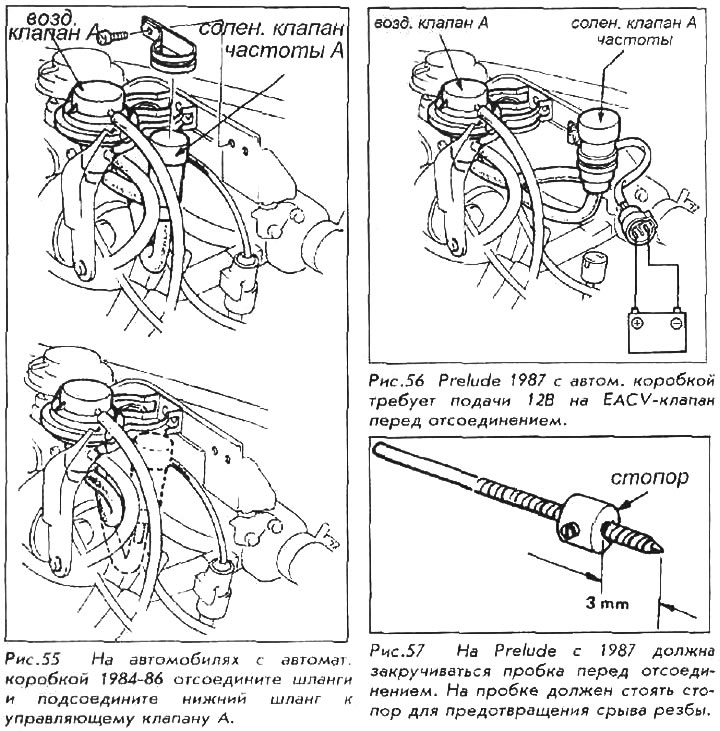
4. Check the idle speed with all equipment turned off. The speed should be 800±50 rpm (750±50 rpm with an automatic transmission in gear). If necessary, adjust the idle speed by turning the throttle lock screw.
If idle speed is excessive, check throttle control.
5. On 1987 automatic vehicles only, disconnect the connector from frequency solenoid valve A and use a short to connect the valve to 12V. On all other vehicles, disconnect the two connectors from the EACV valve, disconnect the hose from the vacuum hose manifold and cap the end of the hose.
6. Disconnect the vacuum lines and connect the lower hose to the air control valve A. Disconnect the vacuum hose from the air conditioning idle speed controller. Disconnect the air cleaner inlet tube from the air intake duct.
7. Insert the hose from the propane kit approximately 10 cm into the inlet tube.
8. With the engine at idle, depress the button on top of the propane unit, then slowly open the control valve to obtain maximum engine speed. As propane flows, the speed should increase.
If propane is supplied abruptly, the engine may stall.
9. The idle speed should increase as follows:
- 1984-86 with manual transmission - 45±25 rpm.
- 1984-86 with automatic transmission - 1 10±25 rpm.
- 1987 with manual transmission -65±20 rpm.
- 1987 with automatic transmission - 130±25 rpm (in D3 or D4).
- 1988-90 with manual transmission - 170±20 rpm.
- 1988-90 with automatic transmission - 50±10 rpm.
10. If the speed changes as expected, the test is complete, disconnect the test equipment and reinstall all lines and hoses. Otherwise, on 1987 and later Preludes, remove the carburetors and use steps 11-13 below; on later models - plugs can be removed without removing the carburetors; proceed with point 15.
11. Drill the safety plugs of the mixture adjustment screws.
When drilling, do not exceed 3 mm depth to avoid damaging the adjusting screws.
12. Screw a 5mm screw into the plug hole.
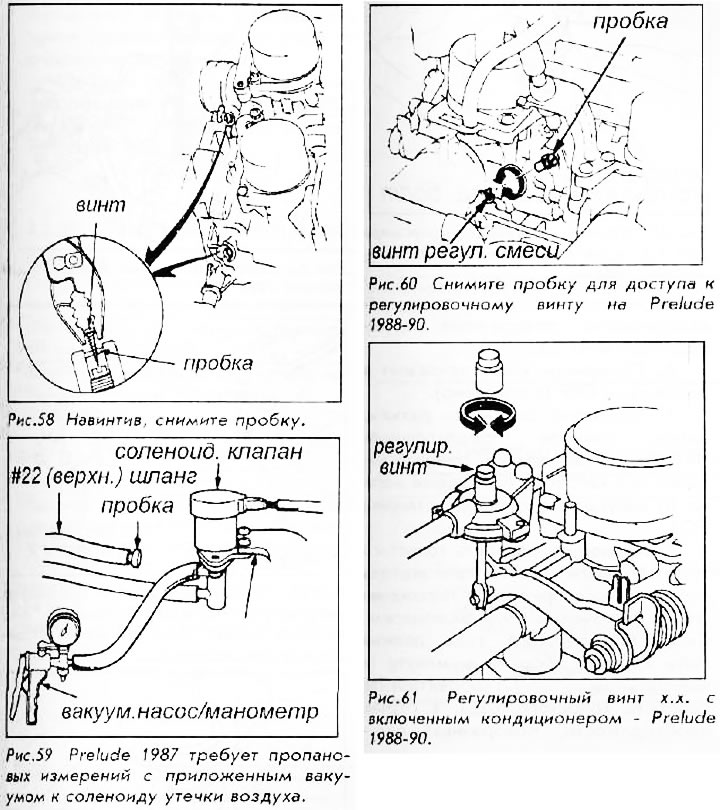
13. Using pliers, pull out the plug.
14. Reinstall the carburetors.
15. Start the engine and warm it up to normal temperature (the fan should turn on at least once).
16. Recheck the maximum RPM when enriched with propane. If the mixture is rich, turn the adjusting screws 1/4 turn counterclockwise.
17. Close the propane control valve.
18. Run the engine at 2500 rpm for 10 seconds to stabilize the mixture conditions, then check the idle speed. Adjust the idle speed if necessary.
19. On 1984-86 models, remove the propane enrichment kit and reconnect the control diaphragm inlet hose. Install new plugs in the idle mixture screw holes.
20. On 1987-89 models, disconnect the vacuum hose #5 from the air intake valve and seal it.
21. On a 1987 Prelude, disconnect the upper vacuum hose #22 from the air leak solenoid valve and plug its end. Connect the vacuum gauge to the solenoid valve.
22. With the engine idling, depress the button on top of the propane unit, then slowly open the control valve and check for vacuum. There should be vacuum.
23. If there is no vacuum, inspect the air leak solenoid valve.
24. Inspect thermal valve C.
25. Remove the propane enrichment kit and reconnect the connector.
26. On 1988-90 vehicles equipped with air conditioning, the idle speed should be checked at the end of the procedure with the air conditioning still on. If adjustment is necessary, remove the small cap from the adjusting screw and make an external adjustment.
(Based on materials from the website: www.HondaBook.ru)