
26. Place a new O-ring and a new piston seal ring on the special tool and push them onto the special tool toward the large end. Assemble taking into account the following:
- Do not expand the sealing rings excessively. Put the rings on carefully so as not to damage them. After putting them on, compress the sealing rings using the special tool (gauge).
- Replace the O-ring and piston seal ring assembly.
27. Pull the O-ring into the piston groove, then pull the piston seal ring into the piston groove on top of the O-ring.
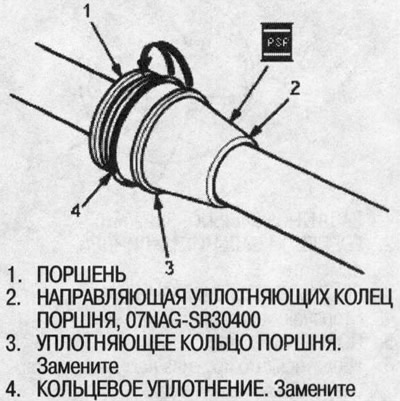
28. Apply power steering fluid to the piston seal ring and the inside surface of the special tool.
29. Carefully place the special tool on the rack and on the piston sealing ring.
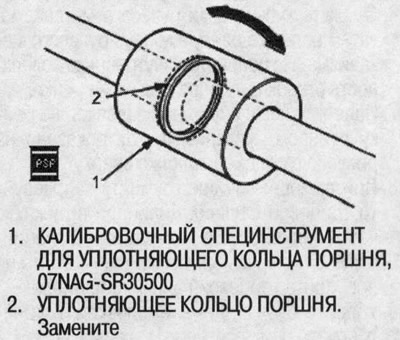
30. Move the special tool up and down several times until the valve sealing ring fits tightly into the piston.
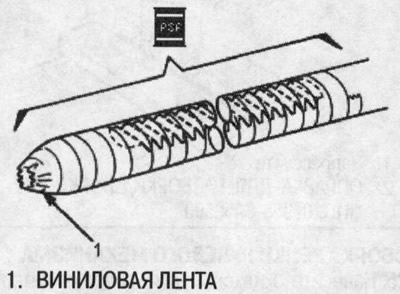
31. Wrap the rack teeth and end faces with vinyl tape and apply power steering fluid over the vinyl tape.
Note: Make sure the vinyl tape is wound neatly and without any ridges.
32. Apply power steering fluid to the inside surface of the new cylinder end seal.
33. Place the cylinder end seal on the steering rack with the groove side facing the piston. When placing the cylinder end seal, do not damage the sealing lip surface of the seal with the edges or teeth of the rack.
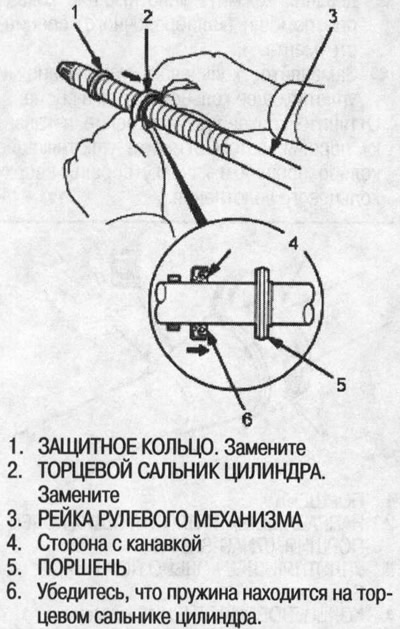
34. Remove the vinyl tape from the steering rack, then remove the remaining adhesive layer of the tape.
35. Place the new protective ring on the steering rack, then the cylinder end seal on the piston.
36. Lubricate the teeth of the steering rack, then insert the rack into the steering housing. Do not damage the inner surface of the cylinder walls with the edges of the rack.
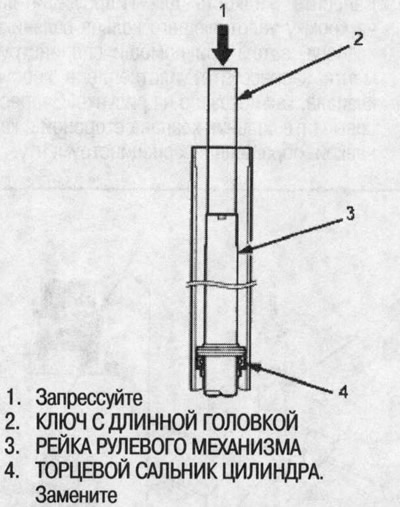
37. Place the long head wrench on the steering rack as shown in the illustration in the middle column above.
38. Using the special tool, press the cylinder end seal into the lower part of the cylinder. Do not press the special tool with excessive force to avoid damaging the cylinder end seal.
39. Remove the long-head wrench and center the steering rack.
40. Wrap the end edges of the rack with vinyl tape and apply power steering fluid over the vinyl tape. Make sure the vinyl tape is neatly wound with no ridges.
41. Apply power steering fluid to the inside surface of the new cylinder end seal.
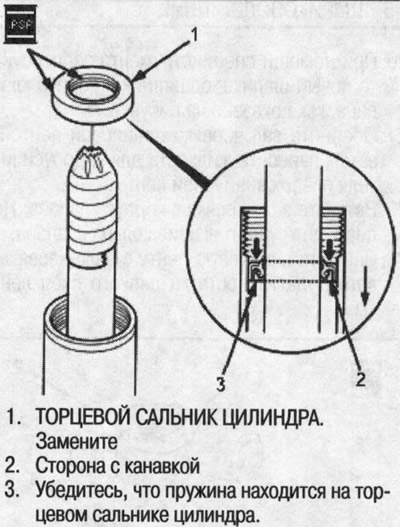
42. Place the cylinder end seal onto the steering rack with the grooved side facing the piston.
43. Using a special tool, press in the cylinder end seal. When putting on the cylinder end seal, do not damage the sealing surface of the seal with threads and burrs on the punched section of the cylinder body.
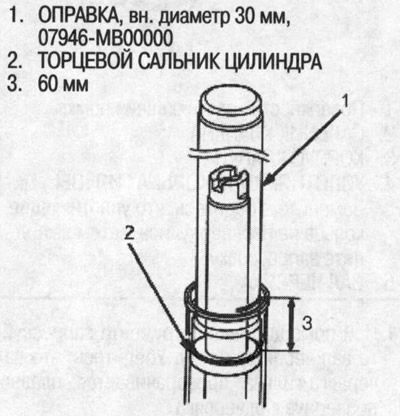
44. Remove the vinyl tape from the steering rack, then remove the remaining adhesive layer of the tape.
45. Clamp the steering gear in a vice with soft jaws as shown in the figure. Do not clamp the cylinder in the vice.
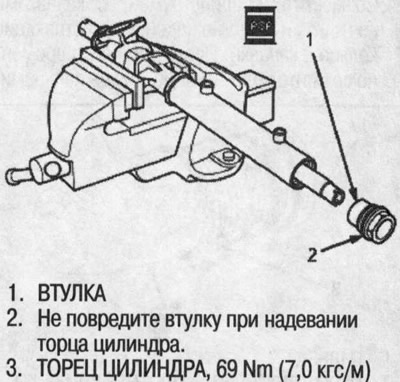
46. Apply power steering fluid to the inside surface of the cylinder end, then install the cylinder end by screwing it into the cylinder.
47. Remove the steering gear from the vice.
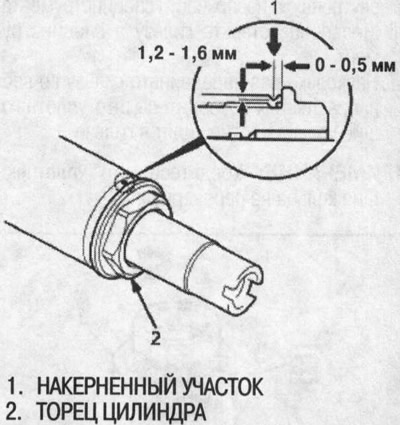
48. After tightening the end of the cylinder, punch a point on the cylinder as shown in the figure. Punch the cylinder in the place opposite to where the punched point was drilled during disassembly.
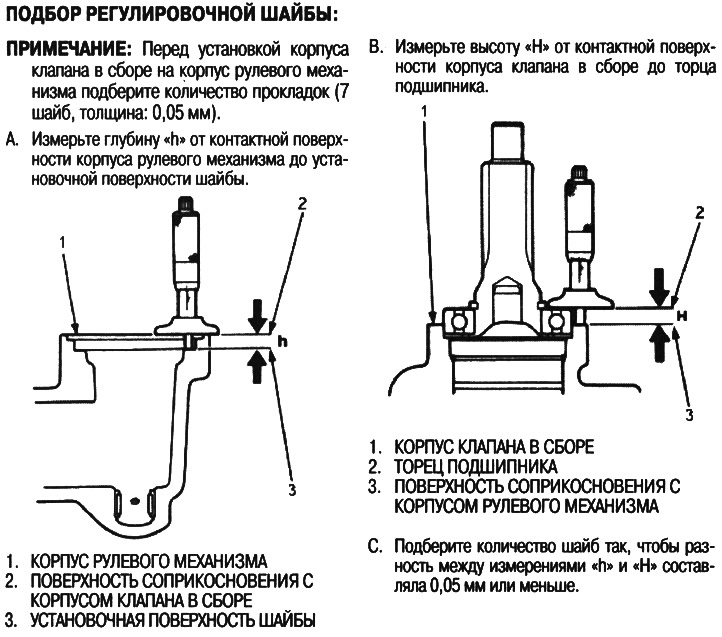
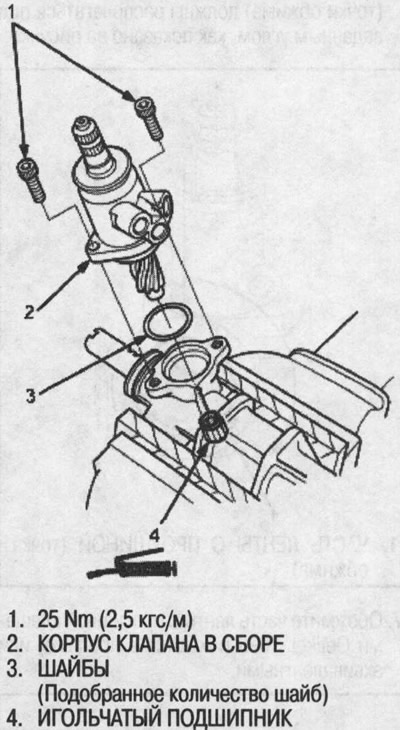
49. Select the adjusting shim(s). Use the original shims only when assembling the steering gear without replacing the worm shaft, valve body and steering gear housing with new ones (see picture on the next page, top left).
50. Place the selected washers on the bearing surface of the steering gear housing.
51. Apply grease to the needle bearing in the steering gear housing.
52. Apply the sealant evenly to the contact surface so that it does not get inside the housing.
53. Install the valve body assembly onto the steering gear body by engaging the gears. Observe the installation position of the valve body assembly (direction of tube connection).
54. Tighten the bolts to the required torque (see figure on the next page, top right).
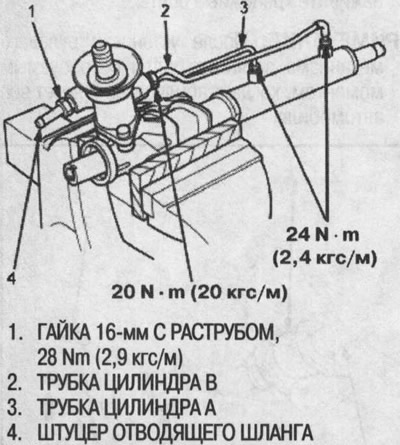
55. Connect the outlet hose fitting, cylinder tubes A and B.
Perform the assembly taking into account the following:
- Clean the fittings thoroughly. There should be no foreign matter in them.
- Connect the cylinder tubes A and B by first tightening the socket nuts by hand, then to the required torque.
56. Place the rubber bushing on the worm shaft.
57. Lubricate the sliding surface of the guide rack and insert it into the steering gear housing.
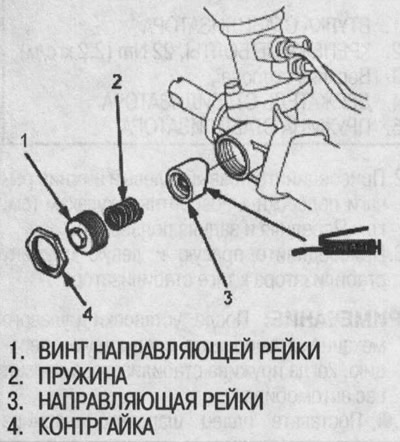
58. Apply new sealant to the threads of the guide rack screw.
59. Install the spring, rack guide screw and lock nut onto the steering gear.
60. Adjust the guide rail screw (see above). After adjustment, make sure that the rack moves smoothly by moving it right and left.
61. Place the lock washer and screw the tips onto the rack, securing the lock washer so that its protrusions enter the slots in the tips.
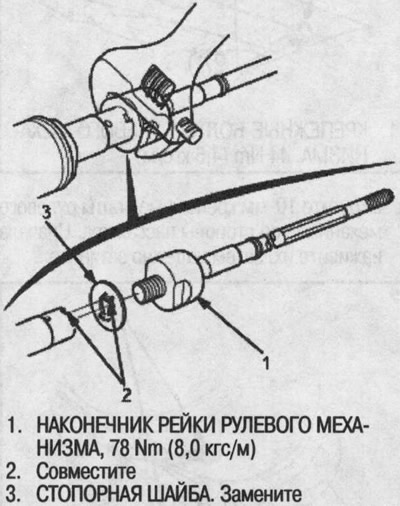
62. Tighten both rack ends. Be careful not to damage the rack surface with the wrench.
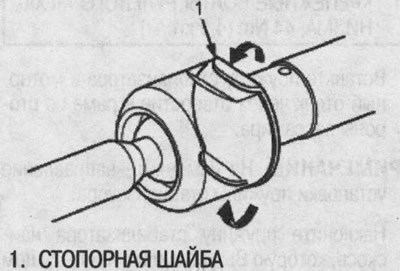
63. Bend the lock washer onto the flat areas on the rack tips.
64. Apply a thin layer of silicone grease to the contact areas of the grooves and the rack boot.
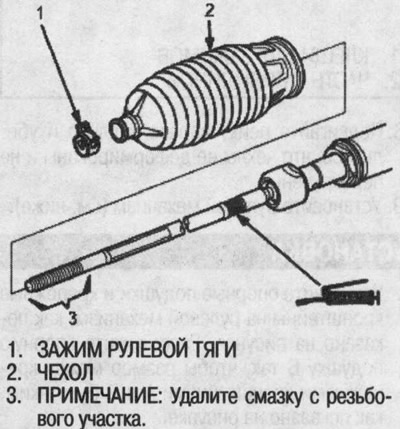
65. Center the steering rack within its travel. Apply sealing adhesive to the inside surface of the boot and the adjacent area around the cylinder body. Place the boot on the end of the rack and place it on the cylinder body. Install the tie rod clamp. After installing the boots, remove excess grease from the threaded area of the rack tip.
66. Install the new cover clip, aligning the tabs with the slots in the tape.
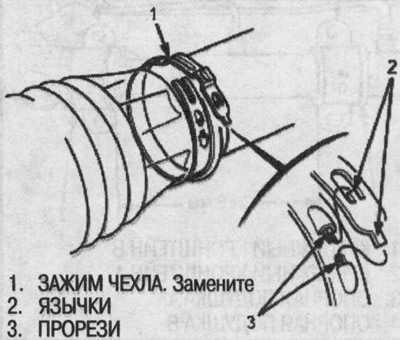
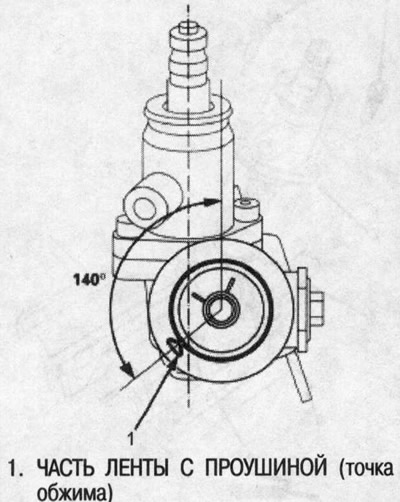
Note: The eyelet parts of the tape (crimp points) must be positioned at a given angle as shown in the figure.
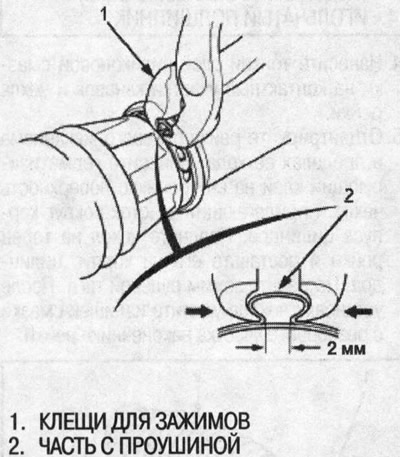
67. Crimp the eyelet portion of the strap using Oetiker 1098 pliers (commercially available) or equivalent.
68. Move the rack to the right and left and make sure that the covers are not deformed or twisted.
69. Install the steering gear (see below).