
Contents: Examination ⇊ Replacement ⇊
Warning! Do not open the radiator cap or remove the thermostat until the engine has cooled down completely! See also the warning at the beginning of the Section Antifreeze - general information.
Examination
1. Before you finally decide that the thermostat is out of order, check the coolant level in the system, the condition and tension of the drive belt (see Chapter Settings and ongoing maintenance), as well as the proper functioning of the temperature meter.
2. One possible reason for the engine warming up too slowly (according to the meter readings) is that the thermostat is stuck in the open position. Replace the thermostat with a new one.
3. If the engine overheats, feel the upper radiator hose with your hand. If the hose is not hot, the thermostat may be stuck in the closed position, blocking the circulation of coolant through the radiator. Replace the thermostat.
Warning! Never operate the vehicle with the thermostat removed! This may disrupt the on-board processor feedback, which will lead to increased toxicity of exhaust gases and excessive fuel consumption.
4. If the upper hose is hot, this means that the coolant is circulating properly through the radiator, i.e. the thermostat is open. Refer to the materials in the Section on diagnosing faults in the cooling system.
Replacement
1. Disconnect the negative cable from the battery.
Warning! If the car stereo system is equipped with a security code, make sure you have the correct combination to activate the audio system before disconnecting the battery!
2. Drain the coolant from the radiator (see Chapter Settings and ongoing maintenance). If the mixture has been changed recently, save it for future use.
3. Follow the upper radiator hose to the engine and locate the thermostat housing cover.
4. Loosen the clamp and remove the hose from its connecting pipe. If the hose is "stuck", grab it with pliers (as close to the cut as possible) and try to rotate it on the pipe in order to destroy the retaining layer of deposits. The old hose that needs to be replaced can simply be cut (try not to scratch the pipe).
5. If the surface of the branch pipe that contacts the hose is corroded or mechanically damaged, it makes sense to replace the thermostat housing cover.
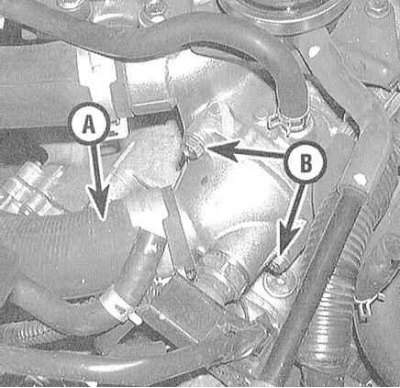
6. Loosen the mounting bolts and remove the thermostat housing cover.
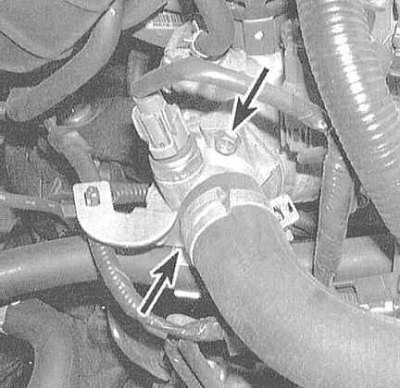
If the lid is stuck, tap it with a soft-faced hammer. Be prepared to collect any spilled liquid.
7. Try to remember the installation position of the thermostat (valve pin up), then remove it from the casing.
8. Remove all traces of sealant and old gasket material from the surfaces of the casing and cover.
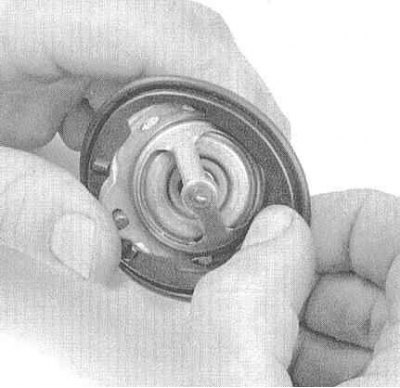
9. Replace the thermostat rubber seal.
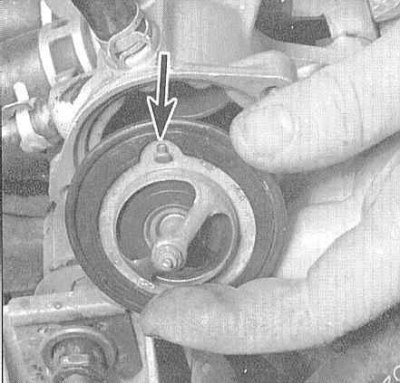
10. Install the thermostat into the housing (do not use any sealant). Make sure that it is facing upwards with the bleeder finger and the side equipped with the spring towards the engine.
11. Replace the cover and secure it with the bolts, tightening them to the required torque.
12. Connect the hose to the cover pipe and secure it securely with a clamp. Replace all components removed for access.
13. Fill the system with the required amount of coolant (see Chapter Settings and ongoing maintenance).
14. Start the engine and check for leaks and proper functioning of the thermostat (see paragraphs 2 through 4).