
Contents: Expansion tank ⇊ Radiator ⇊
Warning! Do not proceed with the procedures until the engine has cooled down completely. See also the warning at the beginning of the Section Antifreeze - general information.
Expansion tank
1. The coolant expansion tank is located near the radiator in the right front (4-cylinder models) or right front (V6 models) corner of the engine compartment (near the battery).
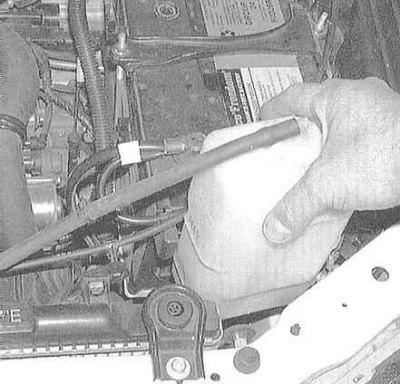
2. Follow the overflow hose from the radiator filler neck to the top of the expansion tank. Remove the cap with the hose attached to it. Remove the tank by pulling it straight up and freeing it from the support bracket.
3. Drain the coolant from the expansion tank into the prepared container.
4. Rinse the tank, wipe it from the outside and check for cracks and other damage. Replace if necessary. The level of the liquid inside the tank should be easy to read through the translucent walls.
5. Installation is carried out in reverse order.
Radiator
Removal
1. Disconnect the negative cable from the battery.
Warning! If the car stereo system is equipped with a security code, make sure you have the correct combination to activate the audio system before disconnecting the battery!
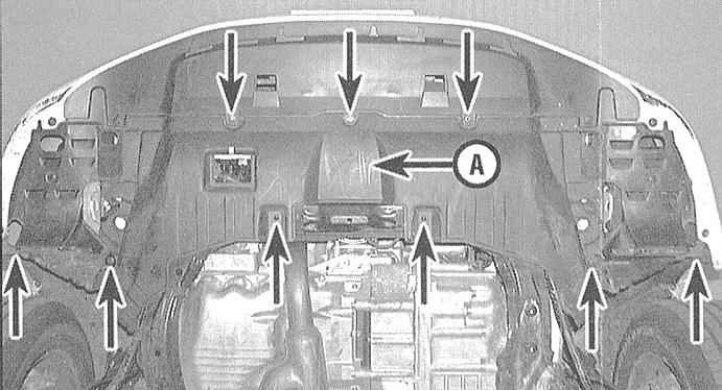
2. Set the parking brake and support the rear wheels with wheel chocks. Jack up the front of the vehicle and place it on supports. If so equipped, remove the radiator splash shield.
3. Drain the cooling system (see Chapter Settings and ongoing maintenance). If the coolant has been changed recently, save it for future use (see warning in Section Antifreeze - general information).
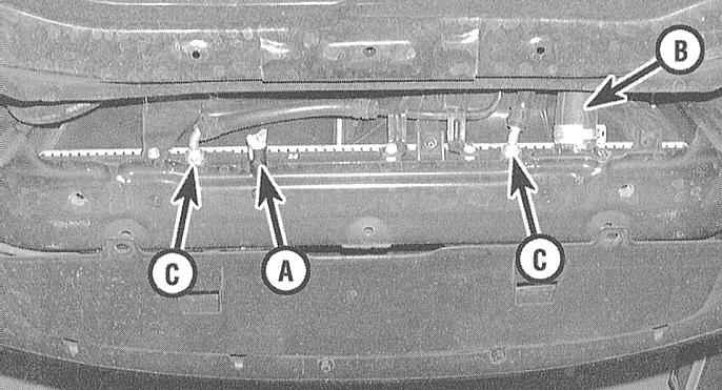
4. On models with AT, disconnect the ATF cooling lines from the radiator (see accompanying illustration). Be prepared to collect any spilled fluid, immediately plug the open ends of the tubes and fittings.
5. Disconnect the cooling fan wiring connector (see Section Checking the condition of the cooling system fans and their switching circuits; replacement of fans).
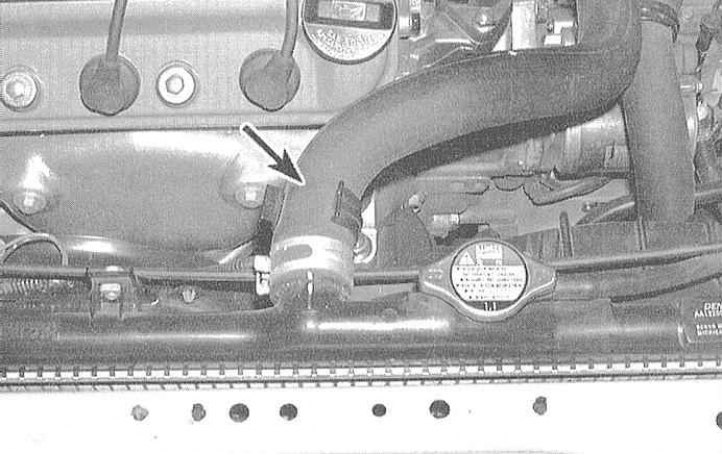
6. Loosen the clamps and disconnect both (upper and lower) hoses from the radiator. If the hoses are "stuck" to the connecting pipes, use pliers or a knife (with subsequent replacement of the hoses). Also disconnect the hose going to the expansion tank.
7. Remove the fans (see Section Checking the condition of the cooling system fans and their switching circuits; replacement of fans).
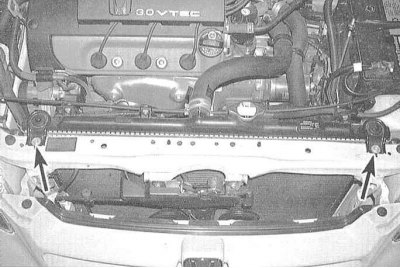
8. Unbolt and remove the small brackets securing the upper edge of the radiator to the support beam.
9. Carefully remove the radiator from the engine compartment. Be careful not to spill coolant on painted body panels and do not cut your fingers on the sharp fins of the heat exchanger.
10. After removal from the vehicle, the radiator can be checked for signs of leaks, damage, and violations of the internal permeability of the heat exchanger. Any repairs should only be carried out in a specialized workshop using the necessary equipment.
11. Remains of insects and vegetation can be removed from the space between the heat exchanger plates by blowing with compressed air (remember to wear protective glasses!), or by cleaning with a soft brush. Try not to bend the thin heat exchanger plates or cut your fingers on them.
12. Check the condition of the radiator rubber supports; if necessary, replace any faulty components.
Installation
1. Installation is carried out in the reverse order. Make sure that the radiator is correctly positioned on its supports.
2. After installation is complete, fill the system with the required coolant composition (see Chapter Settings and ongoing maintenance), if necessary, release air locks from the tract through a special release valve.
3. Start the engine and check for signs of leaks. Warm up the engine to normal operating temperature (both radiator hoses should be hot to the touch). Check the coolant level and add the appropriate amount of coolant mixture if necessary.
4. On models with AT, check the ATF level and top up if necessary.