
Warning: Fuel and its vapors are extremely explosive. Ensure that all possible sources of heat, flame or sparks are switched off or removed from the work area before commencing work. This also applies to all automotive energy consumers - electric motors, fans, etc. Keep a dry powder fire extinguisher (class B-C) on hand at all times.
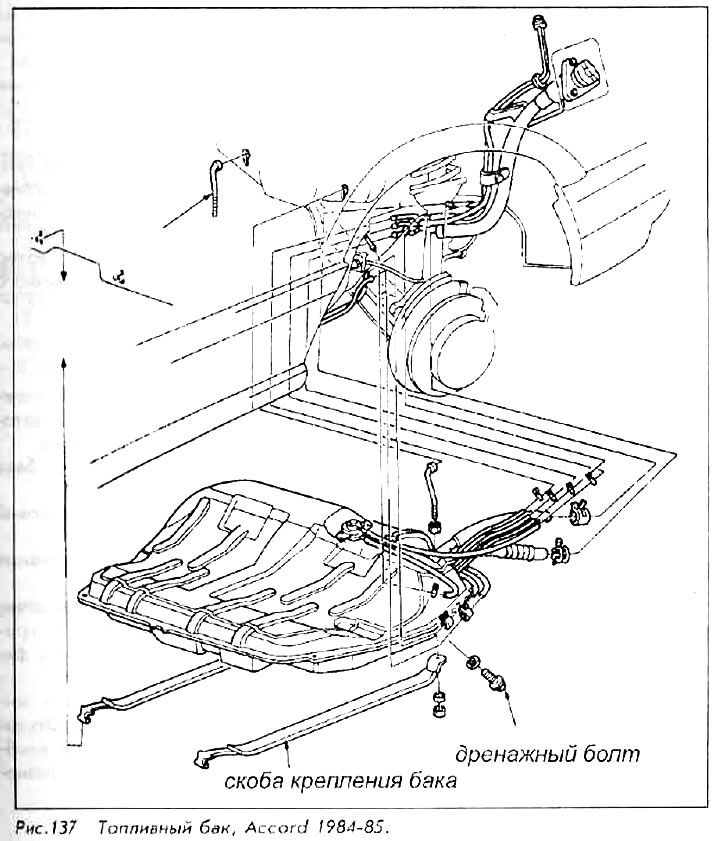
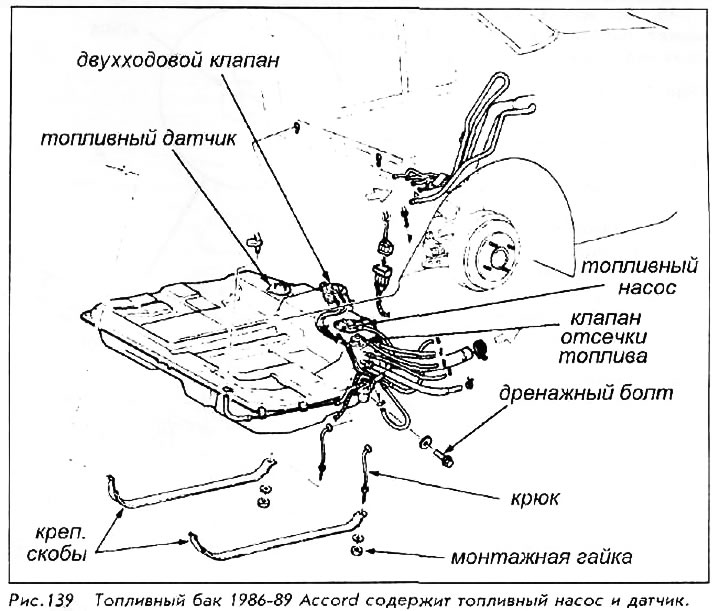
1. Block the front wheels. Raise the rear of the vehicle and secure it.
2. Remove the drain bolt from the tank and drain the remaining fuel.
3. Disconnect the sensor connector.
4. Mark and disconnect the hoses from the pipes mounted above the control arm. Release the clamps and, by turning the hose, remove it from the fitting.
5. Use a jack and a wide block under the tank. Adjust the position as necessary to ensure the tank is evenly supported.
6. Remove the nuts holding the tank brackets. The brackets will fall down.
7. Lower the jack and remove the tank from under the car.
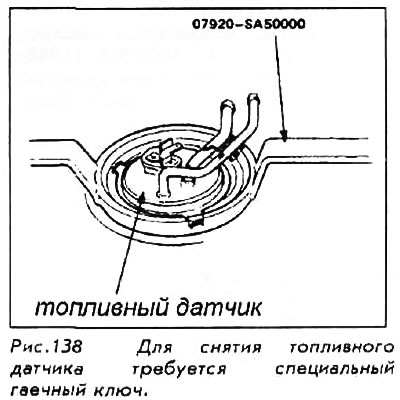
8. If the fuel sensor needs to be removed, use Honda tool 07920-SA50000 or 07920-SA20000 to remove the thrust sleeve. Then pull out the sensor.
To install:
9. Install the fuel gauge, if removed. Tighten the fastener.
10. Place the tank on the jack and position it under the car. Put the tank back in place.
11. Install the tank brackets and tighten the fastening nuts to 22 Nm. Make sure that the opposite ends of the brackets are in place.
12. Connect the hoses and electrical connectors.
13. Install the drain bolt onto the tank and tighten it to 50 Nm.
14. Lower the vehicle to the ground. Using the funnel on the fuel filter and pouring fuel slowly, fill the fuel tank.
15. During starting, the starter may operate longer than usual due to insufficient fuel in the lines.