
Contents: When starting off and accelerating…⇊ When starting off and accelerating…⇊ When decelerating in forward gear…⇊ When slowing down in reverse gear…⇊
When starting off and accelerating in forward gears (4WD mode)
Manual transmission (MT):
1. Raise the vehicle with all four wheels (see chapter 1).
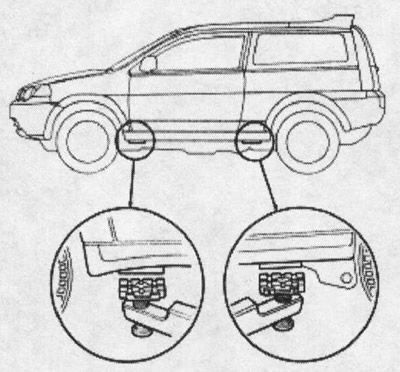
2. Start the engine and warm it up to normal operating temperature (the radiator fan will turn on at least twice).
3. While the engine is running at idle speed, shift into 1st gear and disengage the clutch.
4. Apply the parking brake securely.
- If the engine stalls, the 4WD system is OK.
- If the engine continues to run, there is a problem with the 4WD system. Check the differential fluid. If it is OK, replace the differential-torque distributor housing assembly.
Automatic transmission (AT):
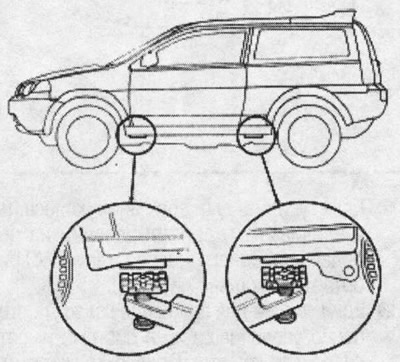
1. Raise the vehicle on all four wheels (see chapter 1).
2. Place a mark on either the front or rear propeller shaft.
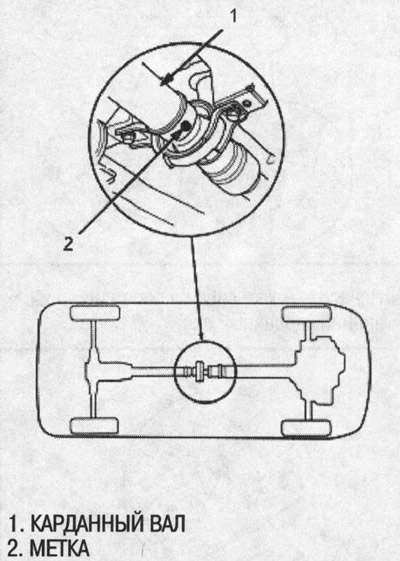
3. Start the engine and warm it up to normal operating temperature (the radiator fan will turn on at least twice).
4. While the engine is running at idle speed, shift to position 1.
5. Apply the parking brake securely and measure the time it takes to turn the propeller shaft 10 times.
- If the measured time is more than 10 seconds, the 4WD system is normal.
- If the measured time is less than 10 seconds, there is a fault in the 4WD system. Check the differential fluid. If it is OK, replace the differential-torque distributor housing assembly.
When starting off and accelerating in reverse gear (4WD mode)
Manual transmission (MT):
1. Raise the vehicle with all four wheels (see chapter 1).

2. Start the engine and warm it up to normal operating temperature (the radiator fan will turn on at least twice).
3. While the engine is running at idle speed, shift into reverse gear and disengage the clutch.
4. Apply the parking brake securely.
- If the engine stalls, the 4WD system is OK.
- If the engine continues to run, there is a problem with the 4WD system. Check the differential fluid. If it is OK, replace the differential-torque distributor housing assembly.
Automatic transmission (AT):
1. Raise the vehicle with all four wheels (see chapter 1).
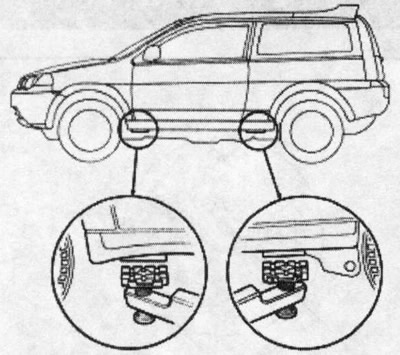
2. Place a mark on either the front or rear propeller shaft.
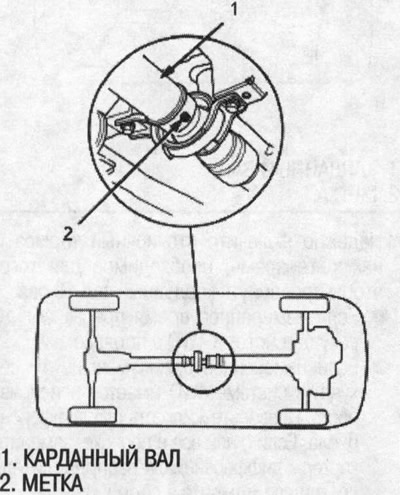
3. Start the engine and warm it up to normal operating temperature (the radiator fan will turn on at least twice).
4. While the engine is running at idle speed, shift to position R.
5. Apply the parking brake securely and measure the time it takes to turn the propeller shaft 10 times.
- If the measured time is more than 10 seconds, the 4WD system is normal.
- If the measured time is less than 10 seconds, there is a fault in the 4WD system. Check the differential fluid. If it is OK, replace the differential-torque distributor housing assembly.
When decelerating in forward gear (2WD mode)
1. Place chocks under the front wheels, lift the left rear wheel and secure it to the safety stands as shown in the figure.
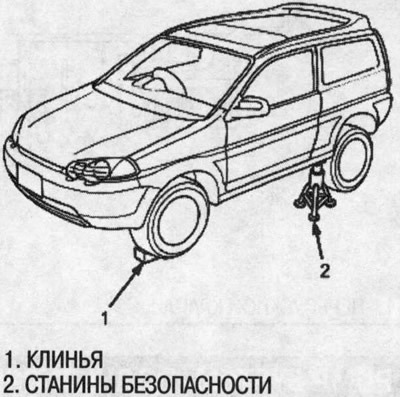
2. Grasp the wheel and continuously turn it counterclockwise more than one revolution.
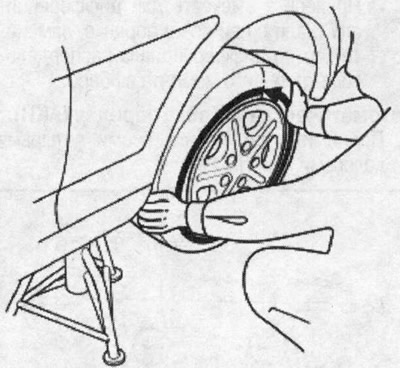
- If the wheel rotation force does not increase when decelerating in forward gear, the 2WD system operates normally.
- If the effort to turn the wheel gradually increases, there is a fault in the system. Check the differential fluid. If it is OK, replace the differential-torque distributor housing assembly.
When slowing down in reverse gear (4WD mode)
1. Place chocks under the front wheels, lift the left rear wheel and secure it to the safety stands as shown in the figure.
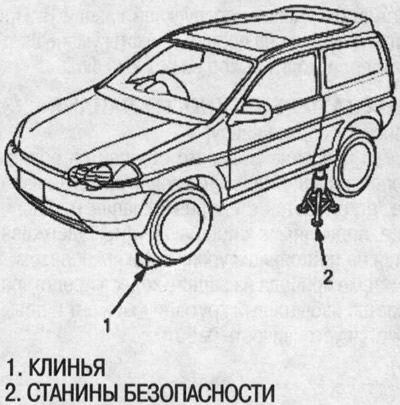
2. Grasp the wheel and continuously turn it counterclockwise more than one revolution.
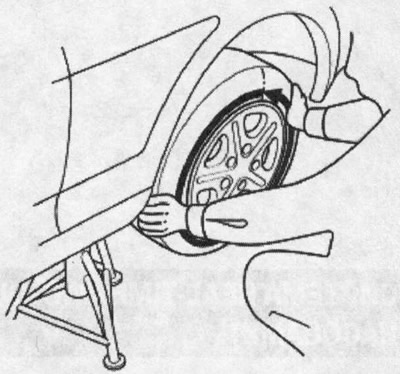
- If the wheel rotation force does not increase when decelerating in forward gear, the 2WD system operates normally.
- If the effort to turn the wheel gradually increases, there is a fault in the system. Check the differential fluid. If it is OK, replace the differential-torque distributor housing assembly.