
2. Turn the ignition key to the "ON" position.
3. Measure the voltage between terminal "2" of the pressure switch connector and ground.
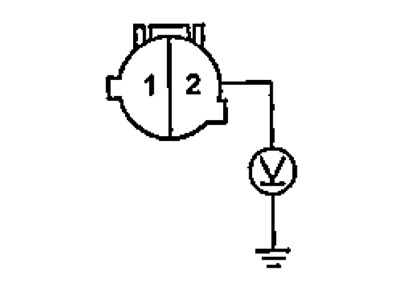
If the voltage is 4.30-5.25 V, proceed to point #5, if the voltage is more or less, proceed to point #4.
4. Measure the voltage between terminal "28" of the electronic fuel injection control unit connector and ground.
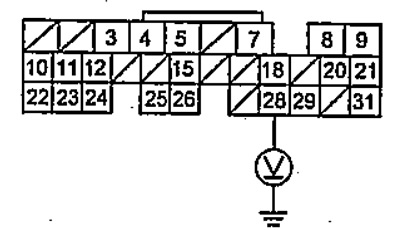
If the voltage is 4.30 - 5.25 V, eliminate the open circuit in the wires between the pressure switch and the electronic control unit of the injection system; if the voltage is more or less, install a serviceable electronic control unit of the injection system and perform diagnostics from the beginning.
5. Turn the ignition key to the "OFF" position.
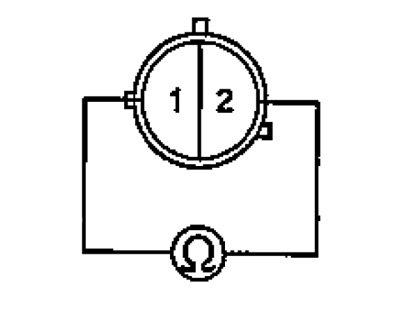
6. Check the conductivity between terminals "1" and "2" of the pressure switch connector. If there is conductivity, proceed to step #7, if there is no conductivity, the pressure switch should be replaced.
7. Connect the suppression switch connector.
8. Disconnect the air conditioner switch connector.
9. Turn the ignition key to the "ON" position.
10. Measure the voltage between terminal "2" of the air conditioner switch and ground.
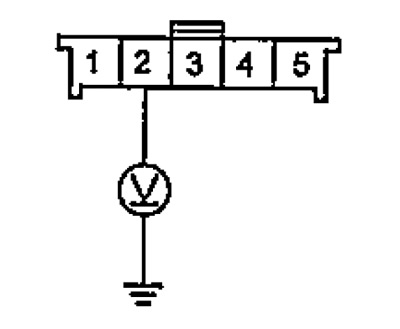
If the voltage is approximately 4.30 - 5.25 V, proceed to step #11, if the voltage is more or less, repair the open circuit in the wires between the pressure switch and the air conditioner switch.
11. Turn the ignition key to the "OFF" position.
12. Remove the air conditioner switch. If the air conditioner switch is OK, proceed to step #13, if the air conditioner switch is bad, it should be replaced.
13. Disconnect the heater fan speed switch connector.
14. Check the conductivity between terminal "1" of the air conditioner switch connector and terminal "6" of the heater fan speed switch.
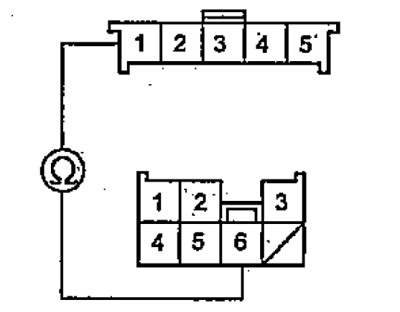
If there is continuity, proceed to step #15; if there is no continuity, repair the break in the wire circuit between the heater fan speed switch and the air conditioner switch.
15. Remove and check the heater fan speed switch. If the switch is OK, proceed to step #16, if it is not OK, it should be replaced.
16. Disconnect the temperature sensor connector behind the evaporator,
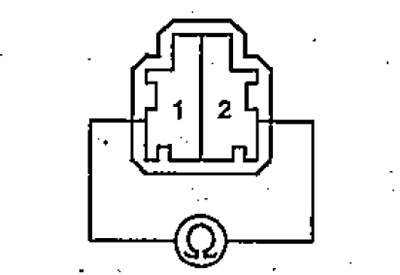
17. Place the temperature sensor behind the evaporator in water and, changing the water temperature, measure the resistance between terminals "1" and "2" of the temperature sensor connector behind the evaporator. Make sure that the resistance of the temperature sensor behind the evaporator changes according to the graph.
 |
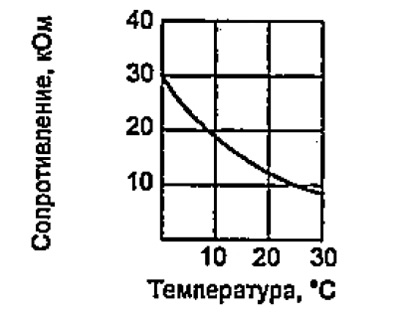 |
If the resistance changes with temperature according to the graph, proceed to step #18, if not, replace the temperature sensor behind the evaporator.
18. Disconnect the connector of the electronic control unit of the injection system.
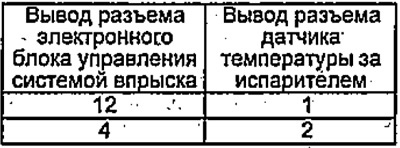
19. Check for continuity between the terminals of the connectors of the temperature sensor behind the evaporator and the electronic control unit of the injection system.
 |
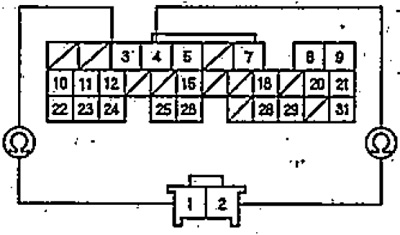 |
If there is conductivity between the terminals, proceed to point No.20; if there is no conductivity, eliminate the break in the wire circuit between the electronic control unit of the injection system and the temperature sensor behind the evaporator.
20. Check the continuity between the 12" terminal of the electronic fuel injection control unit connector and ground.
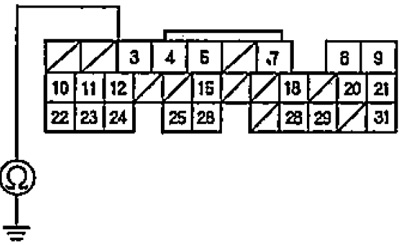
If there is continuity, repair the short to ground in the circuit between the evaporator temperature sensor and the ECU. If there is no continuity, check the reliability of the ECU/evaporator temperature sensor connectors, pressure switch, air conditioner switch. If all connectors are OK, replace the ECU with a known good one and test again. If the signs of malfunction disappear after replacement, the ECU should be replaced.