
Contents: Check the starter engagement: ⇊ Check for wear and damage ⇊ Checking the cranking voltage and…⇊ Checking the rotation speed when…⇊ Checking the starter switch ⇊ Testing the starter solenoid ⇊
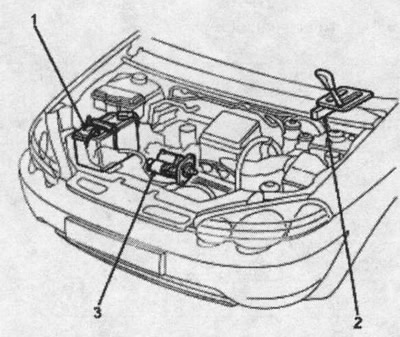
Locations of Launch System Components
Note: Left hand drive model shown; the layout on the right-hand drive model is similar.
1. Battery
2. Automatic transmission selector switch
3. Starter
Note: Before testing, the ambient temperature must be between 15 and 38°C.
Recommended procedure:
- Use a starting system tester.
- Connect and operate the equipment in accordance with the manufacturer's instructions.
- Perform testing, troubleshooting, and repair as described below.
Procedure option:
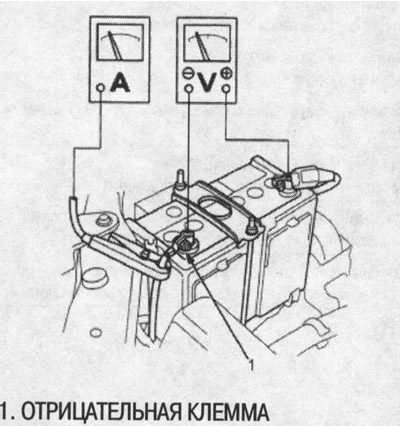
- Use the following equipment: o Ammeter, measuring range 0-400 A
- Voltmeter, measurement range 0-20 V (with measurement accuracy up to 0.1 V)
- Tachometer, measurement range 0-1200 rpm (rpm')
- Connect the voltmeter and ammeter as shown in the figure.
Note: After performing this test or subsequent repair, reset the ECM/PCM to clear any existing DTCs.
Check the starter engagement:
1. Remove fuse #59 (15A) from the underhood fuse/relay box.
2. Turn the ignition key to the START (III) position with the selector lever in position N or P. The starter should turn the engine.
- If the starter does not turn the engine, proceed to step 3.
- If the engine cranks erratically or too slowly, proceed to Checking for Wear and Damage below.
3. Check the battery, positive battery cable, ground, starter cut-off relay, and wire connections for looseness or corrosion. Repeat testing. If the starter still does not crank the engine, proceed to step 4.
4. Disconnect the connector (BLACK/WHITE wire and solenoid terminal) from the starter.
5. Connect the positive (+) battery terminal and the solenoid terminal with a jumper wire. The starter should turn the engine over.
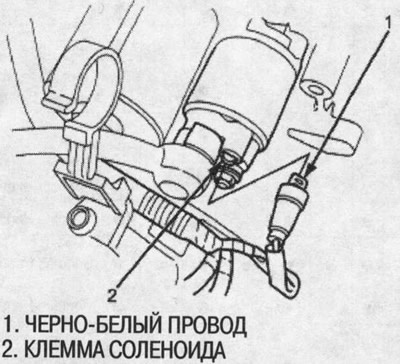
If the starter still does not turn the engine, remove it and diagnose its internal faults.
If the starter turns the engine, proceed to step 6.
6. Check the ignition switch (see chap. "Body electrical equipment").
7. Check the starter cut-off relay (see chap. "Body electrical equipment").
8. Check the immobilizer system (see chap. "Body electrical equipment").
9. Check the automatic transmission selector switch (see chap. "Automatic transmission").
10. Check for a break in the wire between the ignition switch and the starter.
Check for wear and damage
The starter should turn the engine smoothly and steadily. If the starter engages but does not turn the engine steadily, remove it and check the starter pinion and torque converter ring gear for damage.
Check that the drive pinion freewheel clutch does not stick or slip when the starter rotor rotates together with the drive pinion. If damaged, replace the pinions.
Checking the cranking voltage and current consumption
The cranking voltage must be at least 8.5 V. The current consumption must not exceed 350 A.
If the cranking voltage is too low or the current consumption is too high, check:
- is the battery dead?
- is there a break in the starter rotor lamellas
- is the starter rotor seizing?
- is there a short circuit in the rotor winding
- is there excessive resistance caused by friction in the engine
Checking the rotation speed when cranking
The engine speed when cranking should be above 100 rpm (min⁻¹).
If the RPM is too low, check:
- are the battery or starter terminals loose?
- is there excessive wear on the starter brushes?
- is there a break in the rotor lamellas
- whether the helical spline or pinion gear is dirty or damaged
- are there any defects on the freewheel clutch of the drive gear
Checking the starter switch
With the selector lever in position N or P, turn the ignition key to position START (III) and release it to position ON (II). When releasing the key, the starter pinion should disengage from the torque converter ring gear.
If the pinion gear is hanging on the torque converter ring gear, check:
- are there any malfunctions in the operation of the core and the solenoid switch
- whether the drive gear assembly is dirty and whether the freewheel clutch is damaged
Testing the starter solenoid
1. Check the holding coil for continuity between terminal S and the rotor housing (ground). The coil is good if there is continuity.
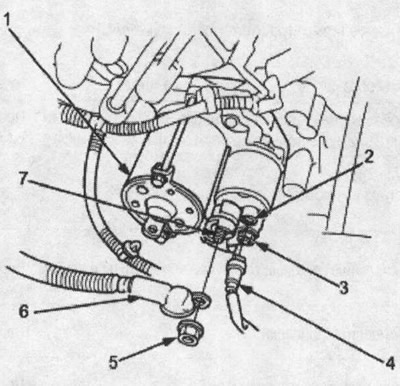
1. rotor housing (ground); 2. terminal S; 3. terminals; 4. black and white wire; 5. Terminal B fastening nut, 9 Nm (0.9 kgf/m); 6. starter cable; 7. terminal B
2. Check the pull-in coil for continuity between terminals S and M. The coil is good if there is continuity.
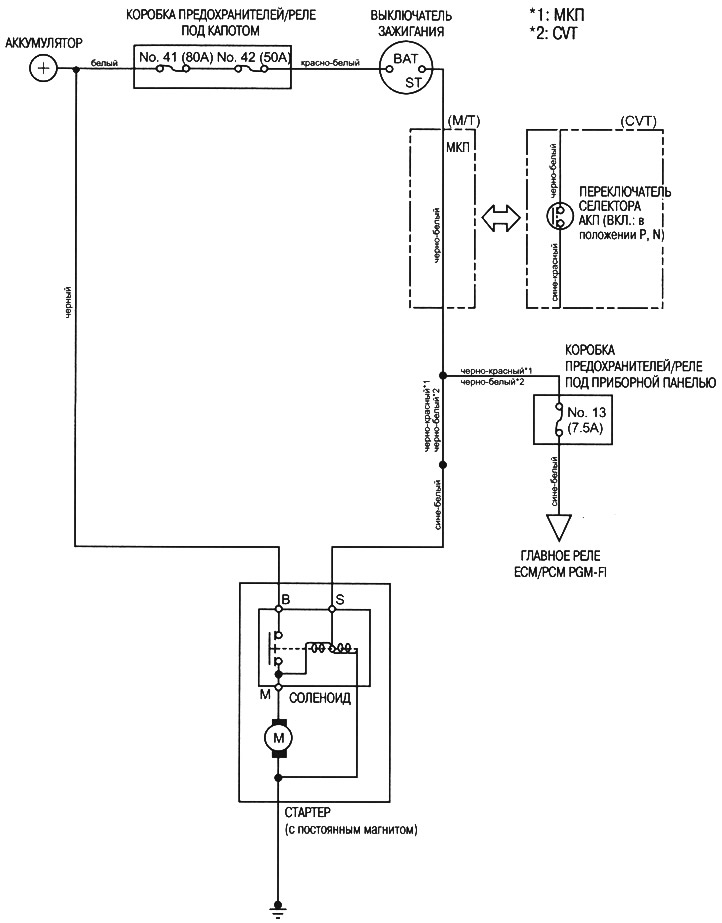
Wiring diagram (CVT left-hand drive)
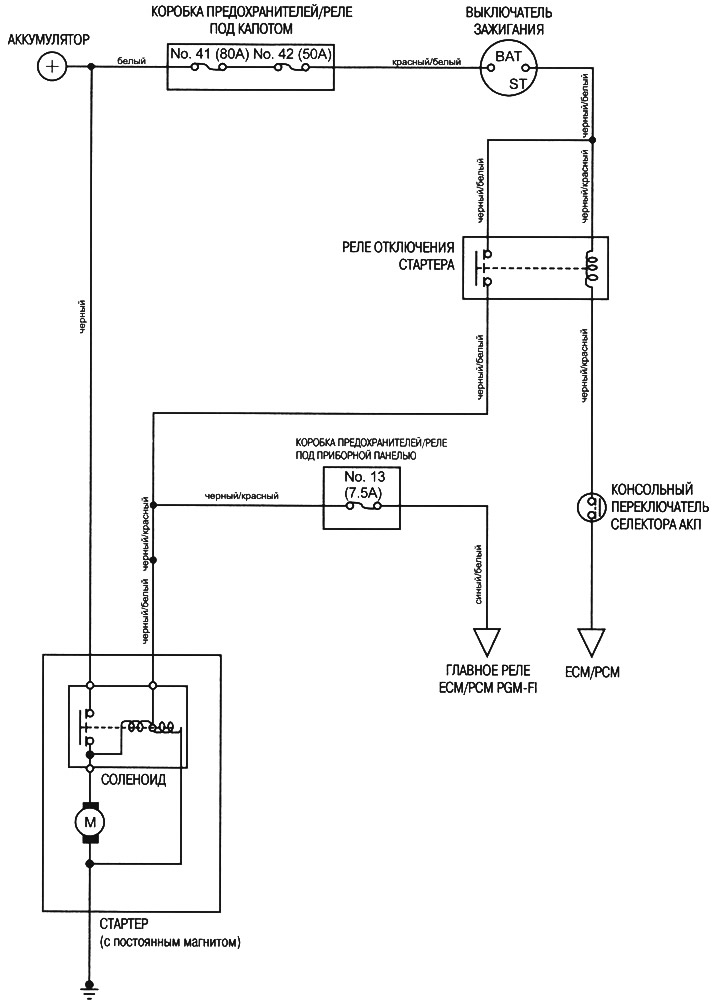
Electrical diagram (manual transmission, CVT with right-hand drive)
(Full text available on the portal www.hondabook.ru)