
2. Check the surface of the commutator and its diameter.
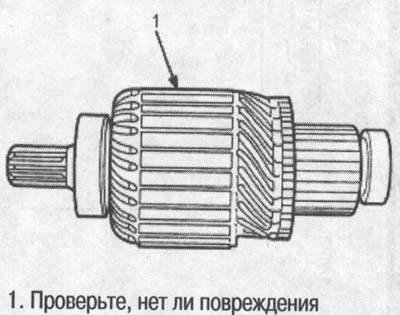
If the surface is dirty or scorched, sand or lathe it to within the specified tolerances, or restore it with 500 or 600 grit sandpaper.
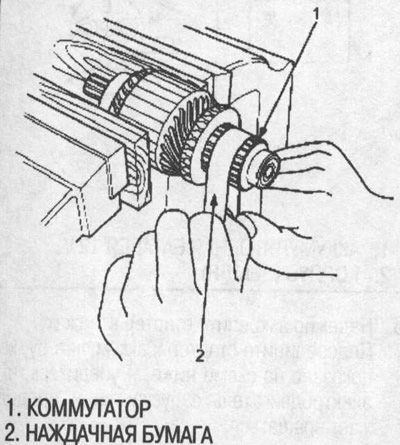
If the commutator diameter is less than the limit value, replace the rotor.
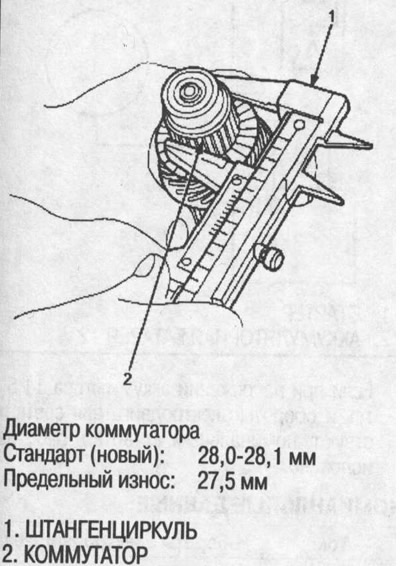
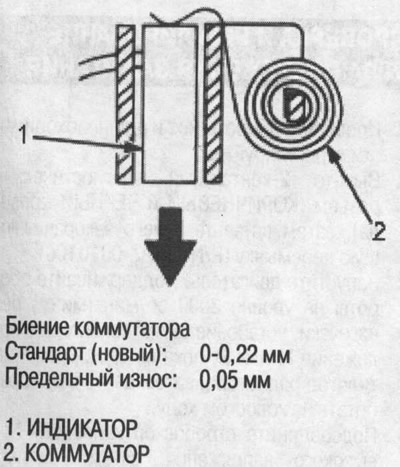
3. Measure the commutator runout.
If the commutator runout is within tolerance, check for carbon dust or brass chips between the lamellas.
If the commutator runout is greater than the permissible limit, replace the rotor.
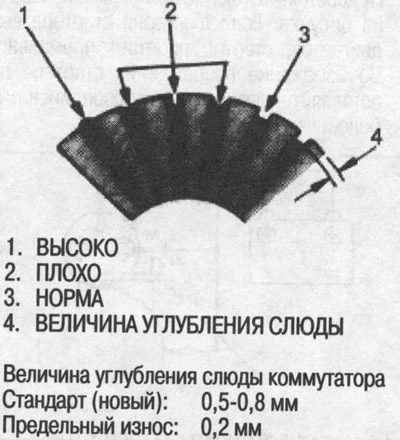
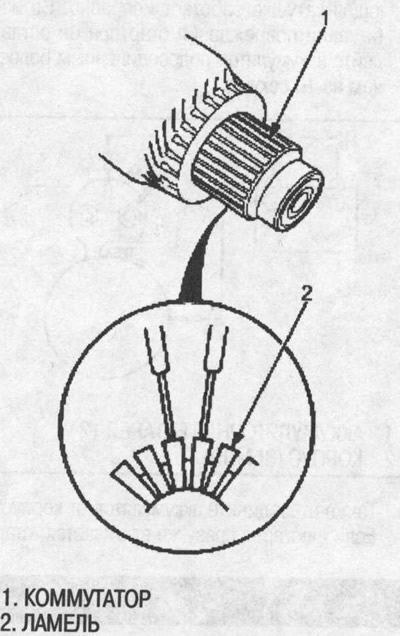
4. Check the depth of the mica recess. If necessary, cut the mica with a hacksaw blade and bring the depth to the standard. If the limit value cannot be maintained, replace the rotor.
5. Check for continuity between the commutator lamellas. If there is a break between any of the lamellas, replace the rotor.
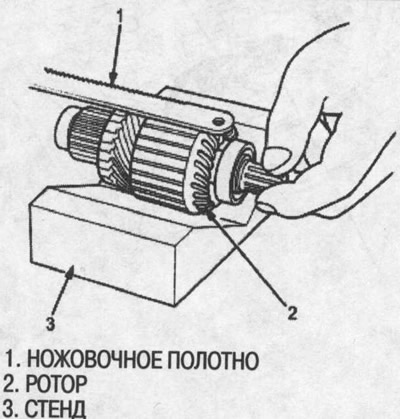
6. Place the rotor on the stand. Bring the hacksaw blade to the rotor core. If the blade is attracted to the core or vibrates when the core rotates, the rotor is shorted. Replace the rotor.
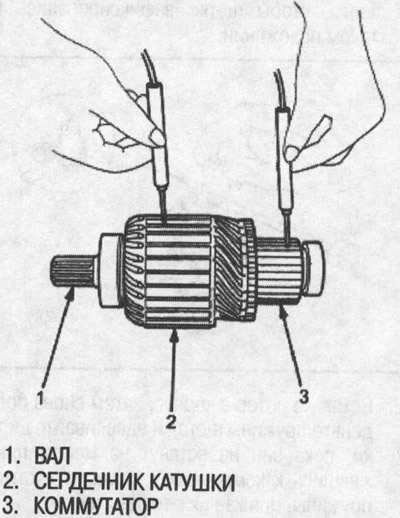
7. Using an ohmmeter, make sure there is no conductivity between the commutator and the rotor coil core and between the commutator and the rotor shaft. If there is conductivity, replace the rotor.
[Publication reprinted from the website HondaBook]