
Note:
- Wear protective gloves when removing and installing the windshield.
- To avoid damaging the finish, use seat covers.
- Use glass bonding kit, P/N 08C73-X0230N.
1. Remove:
- Rear view mirror (with rear spoiler, see above)
- Handrails (if necessary on both sides)
- Door finishing (if necessary on both sides, see below)
- Front pillar trim (both sides, see below)
- Windscreen wiper arms and bonnet grille cover.
2. Remove the molding and glass bracket. If necessary, cut the molding with a knife.
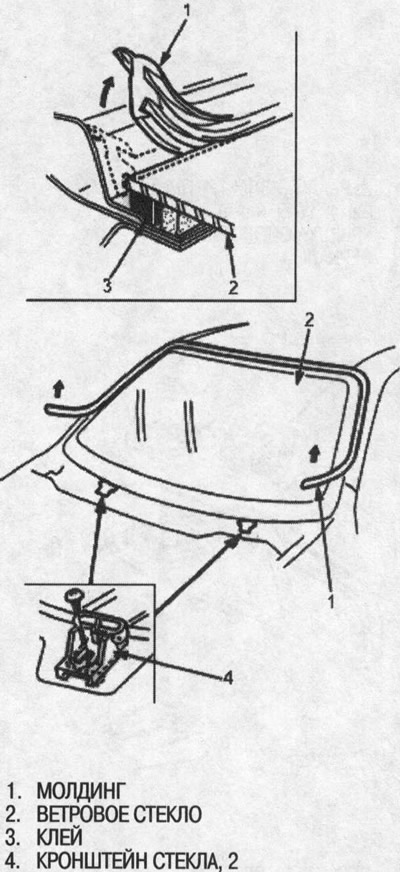
3. Disassemble the front part of the headlining (see below). Do not bend the upholstery excessively, otherwise it may become wrinkled or broken.
4. Apply the protective tape. Use an awl to make a hole in the adhesive layer of the rubber partition and the dashboard seal from the inside of the car. Thread the piano wire through the hole and wrap both ends around a wooden block.
5. With the help of a partner, move the piano wire back and forth like a saw. To avoid damaging the body and dashboard, keep the piano wire as close to the windshield as possible. Carefully saw through the rubber partition and adhesive around the entire perimeter of the windshield.
6. Carefully remove the windshield.
7. Using a knife, evenly scrape off the old glue, leaving about 2 mm on the contact surface around the entire perimeter of the windshield opening:
- Do not scrape off the adhesive down to the paintwork of the car body; damaged coating will prevent quality adhesion.
- Remove the rubber gasket and fasteners from the body.
- Cover adjacent areas before painting.
8. Clean the contact surface on the body using a sponge soaked in alcohol. After cleaning, do not allow oil, grease or water to come into contact with the clean surface.
9. If reinstalling an old windshield, scrape off all traces of old adhesive from the windshield, rubber gasket and dashboard seal with a putty knife, then clean the surface and edge of the windshield with alcohol where the new adhesive will be applied. Make sure the contact surface is free of water, oil and grease.
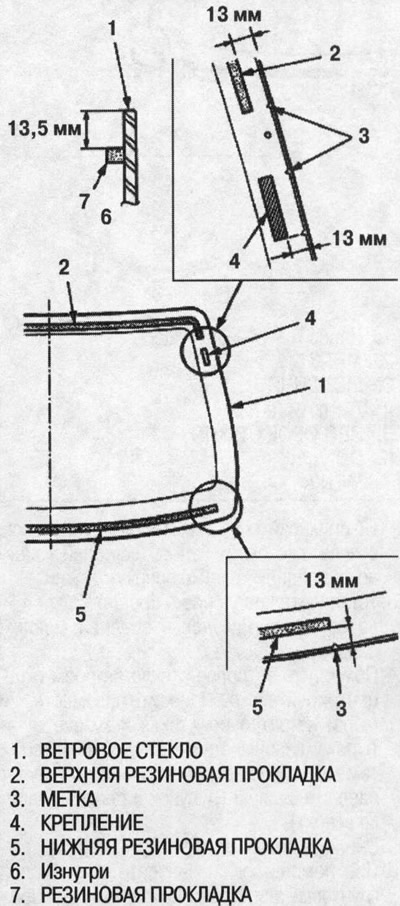
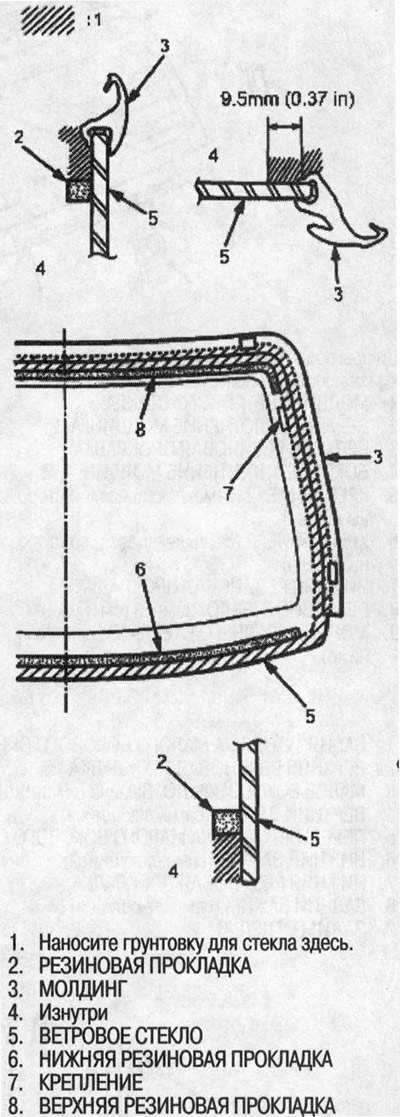
10. Glue the upper rubber gasket, lower rubber gasket and fasteners to the inner surface of the windshield as shown in the figure:
- Make sure the rubber gasket, fasteners and instrument panel seal are aligned with the alignment marks.
- Avoid touching the areas on the windshield where the adhesive will be applied.
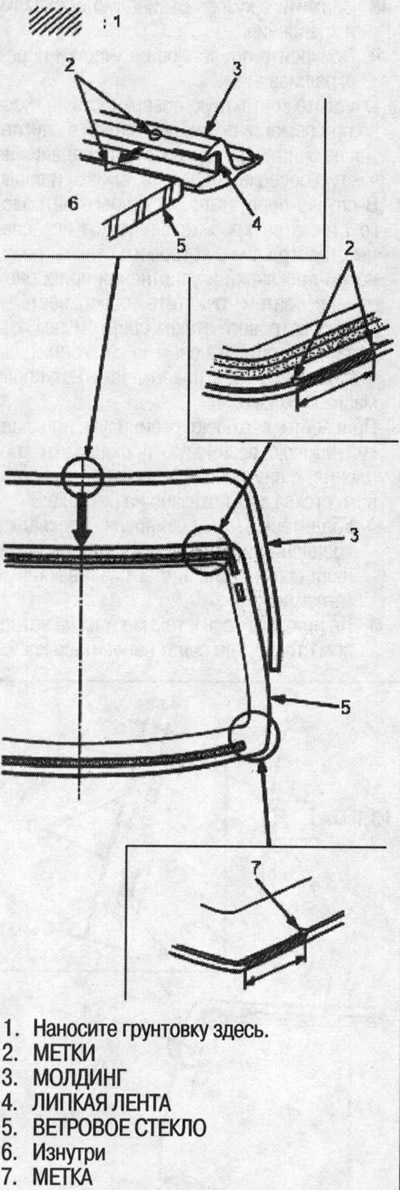
11.Apply primer (3MN-200 or equivalent) to the areas between the marks on the windshield. Tape the molding to the edge of the windshield.
- Make sure the mark on the molding is aligned with the mark on the windshield.
- Avoid touching the areas on the windshield where the adhesive will be applied.
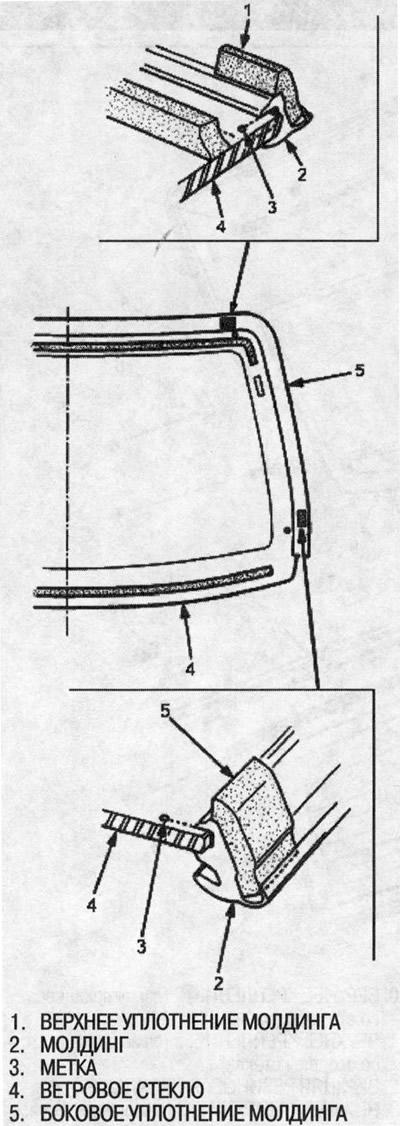
12. Adhere the top molding seal and side molding seal to the molding. Do not touch the areas of the windshield where the adhesive will be applied.
13. Install the glass mount and brackets onto the body.
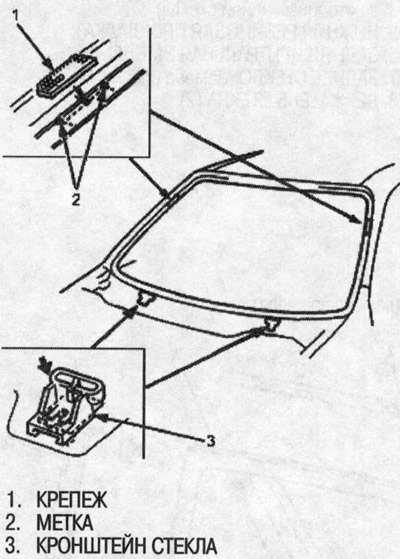
14. Place the windshield in the opening and center it. Use a felt-tip pen to mark the windshield and body at the four indicated points. Do not touch the areas of the windshield where the adhesive will be applied.
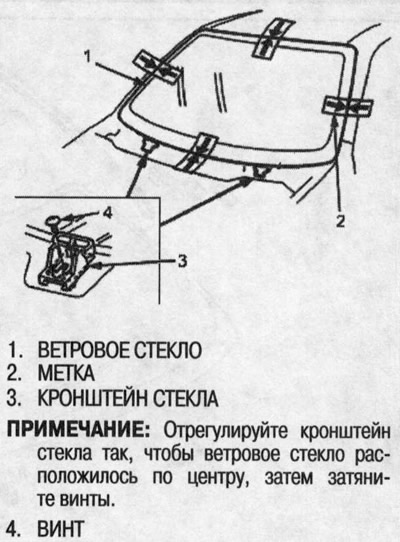
15. Remove the windshield.
16. Using a sponge, apply a thin layer of glass primer around the perimeter of the windshield edge between the rubber baffle and the molding as shown in the picture, then wipe it lightly with gauze:
- Apply glass primer to the molding.
- Do not apply body primer to the windshield and do not scare the sponges for applying body primer and glass primer.
- Do not touch the primed surfaces with your hands, otherwise the adhesive may not adhere to the windshield properly and water will leak through the windshield after installation.
- Avoid contact with water, dust and abrasive materials on the primed surface.
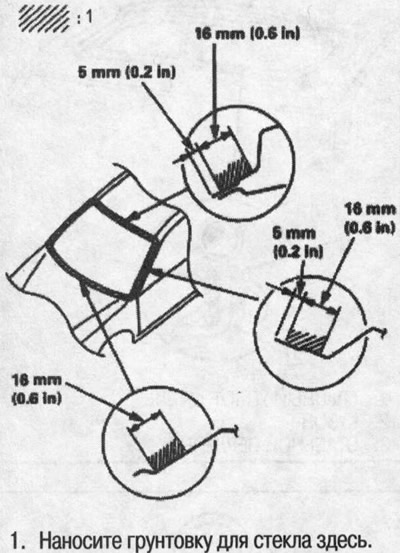
17. Using a sponge, apply a thin layer of body primer to the old adhesive remaining around the perimeter of the windshield opening. Allow the body primer to dry for at least 10 minutes:
- Do not apply glass primer to the body and do not mix up the sponges used to apply glass primer and body primer.
- Do not touch primed surfaces with your hands.
- Cover the instrument panel before painting the opening.
18. Before filling the tube, make a V-shaped cut on the end of the nozzle as shown in the picture.
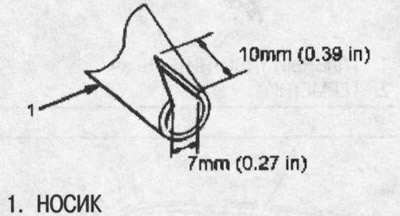
19. Fill the tube with adhesive without air pockets to ensure continuous application. Insert the tube into the syringe and apply a bead of adhesive around the perimeter of the windshield edge between the rubber baffle and the molding as shown. Apply the adhesive within 30 minutes of applying the glass primer. Make the bead thicker in the corners.
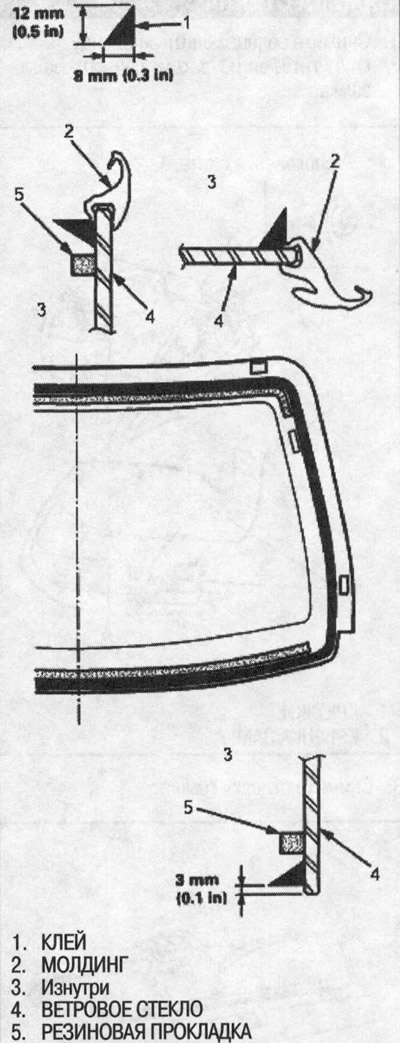
20. Hold the windshield over the opening using suction cups, align it with the marks made in step 14, and lower it onto the glue. Apply light pressure to the windshield until its edges are completely seated on the glue along the entire perimeter. Do not open or close the doors until the glue has dried.
21. Scrape off or wipe off excess adhesive with a putty knife or cloth. Remove adhesive from the paintwork or windshield with a soft cloth dampened with alcohol.
22. Allow the adhesive to dry for at least one hour, then spray the windshield with water and check for leaks. Mark the leak areas and allow the windshield to dry, then seal with sealant:
- Allow the vehicle to sit for at least four hours after installing the windshield. If the vehicle must be driven within the first four hours, drive slowly.
- Keep the windshield dry for the first hour after installation.
23. Install all other removed components. After the glue has completely dried, install the rearview mirror. It is not recommended to:
- Slam the doors with all the windows closed.
- Excessive bending of the body (when entering and leaving roads at an angle or when driving on uneven roads).
(Full version on the source website: hondabook.ru)