
Contents: Vanishing Error ⇊ Diagnostic system "Honda Diagnostic…⇊ Erasing codes ⇊ Resetting the electronic control…⇊ Training the electronic control unit…⇊ Diagnostic Trouble Codes ⇊ Checking signals at the terminals of…⇊ Checking signals at the terminals of…⇊ Checking signals at the terminals of…⇊
Vanishing Error
The term "intermittent fault" refers to systems that have a fault, but whose testing currently shows no fault. If the "Malfunction indicator lamp" ("Check Engine") does not light, check all connectors associated with the circuit being tested for poor connections and loose terminals. If the indicator lights up but then goes out, the fault is intermittent.
Diagnostic system "Honda Diagnostic System"
The malfunction indicator is on:
1. Start the engine and check the indicator.
Note: When the ignition key is in the position and the engine is not running, the indicator lights up for 15-20 seconds.
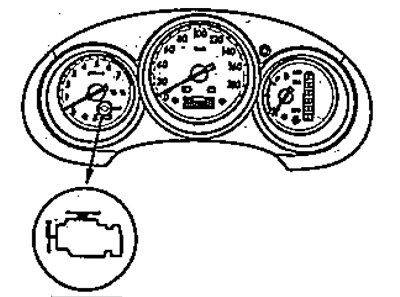
Malfunction Indicator Lamp (Check Engine).
2. If the indicator remains on, connect the tester to the diagnostic connector (DLG).
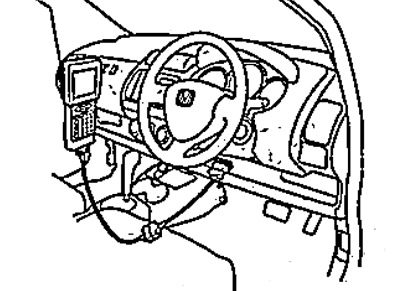
3. Turn the ignition key to the "ON(ll)" position and wait 30 seconds.
4. Read the fault codes and write them down. Also check the archive and/or current data, download all the data found.
Note:
- Historical data shows the engine condition before the first fault, misfire or fuel interruption was detected.
- The scanner can read fault codes, history data, current data and other data from the engine/transmission control unit.
Malfunction indicator does not light: If the indicator does not light but the vehicle is faulty, have it diagnosed.
Erasing codes
Using a scanner
When using a scanner, make sure that the mode is set to erase all ECU data at once (self-learning data); freeze frame data and stored fault codes). After erasing all data, perform the following procedures in the following order: self-learning of the electronic control unit for idle speed characteristics (see below), self-learning of the crankshaft position sensor (see section "Control system").
1. Clear the fault codes using a scanner with the engine off.
2. Turn the ignition key to the "OFF" position.
3. Turn the ignition key; to the "ON (II)" position and wait 30 seconds.
4. Turn the ignition key to the "OFF" position and disconnect the scanner from the diagnostic connector.
Without using a scanner
1. Turn the ignition key to the "OFF" position.
2. Pull the fuse box outward and remove fuse No.20 (15 A).
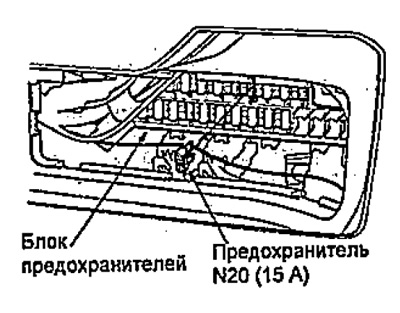
3. Install fuse #20 back after 10 seconds or more.
Resetting the electronic control unit data
1. Reset the ECU data using a scanner with the engine off.
2. Turn the ignition key to the "OFF" position.
3. Turn the ignition key to the "ON (II)" position and wait 30 seconds.
4. Turn the ignition key to the "OFF" position and disconnect the scanner from the diagnostic connector.
5. Perform the procedure for training the electronic control unit.
Training the electronic control unit for idle characteristics
This procedure is necessary for training the ECU.
The training procedure must be performed in the following cases:
- eCU replacement;
- eCU data reset;
- eCU data update;
- replacing or cleaning the throttle body.
Note: Clearing fault codes using a scanner does not require ECU training.
1. Make sure that all additional equipment is turned off (radio, air conditioning, lighting, etc.).
2. Reset the ECU data using a scanner.
3. Turn the ignition key to the "ON(II)" position and wait 2 seconds.
4. Start the engine. Keep the engine speed at 3000 rpm and wait until the fan and radiator turn on or until the engine temperature reaches 90°C.
5. Let the engine run for about 5 minutes at idle speed with the throttle valve fully closed.
Note: If the radiator fan starts to run, do not turn on the time it was running for 5 minutes.
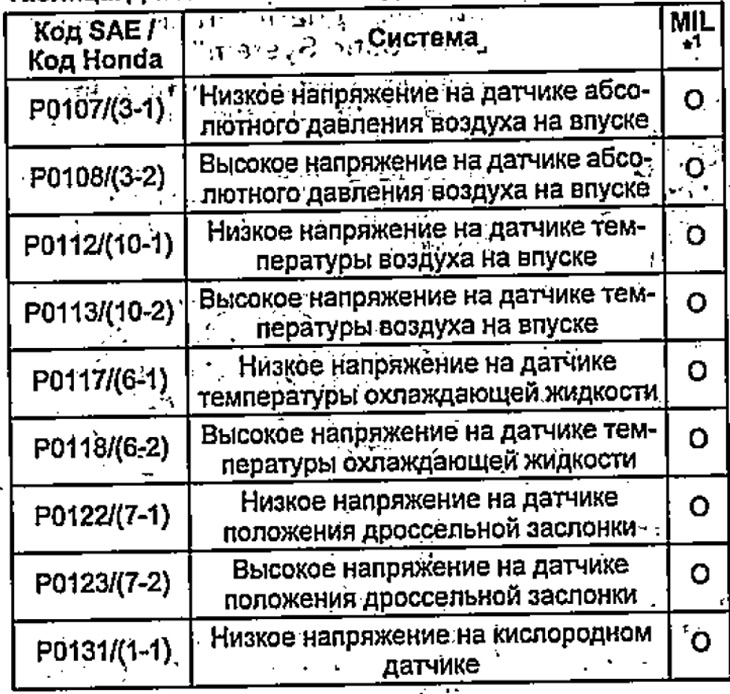
Diagnostic Trouble Codes
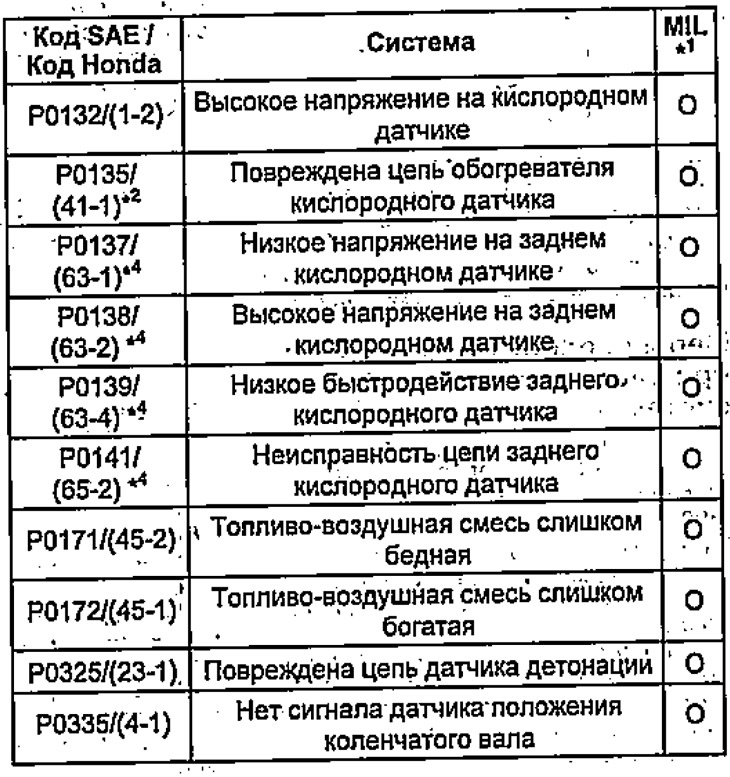
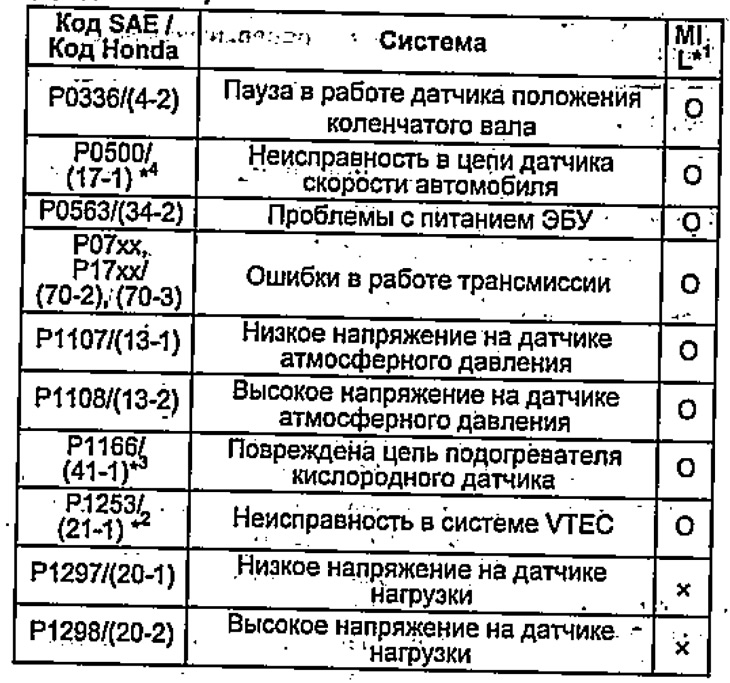
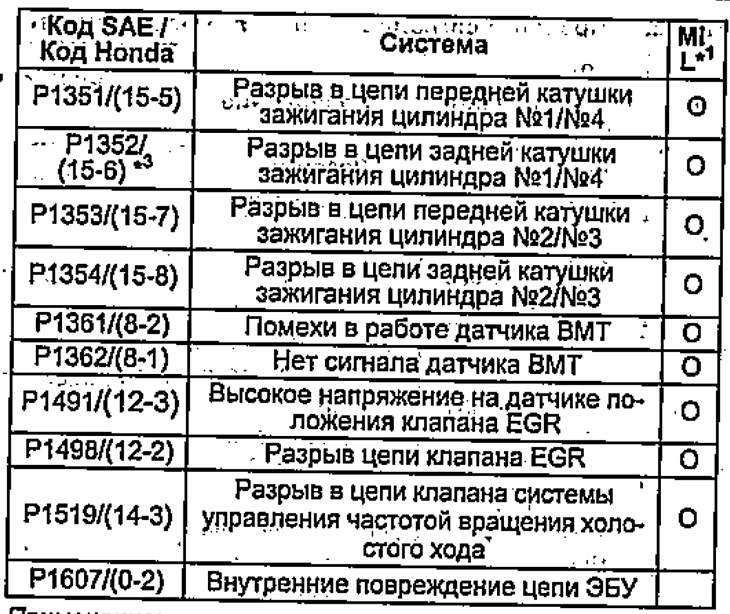
Table. Diagnostic trouble codes.
 |
 |
 |
 |
Note:
- *1 malfunction indicator lamp (or Check Engine), "0" - on, "X" - off.
- *2 l15A models from 09.2002.
- *3 models L1ZA from 06.2001.
- *4 l15A models from 06.2004.
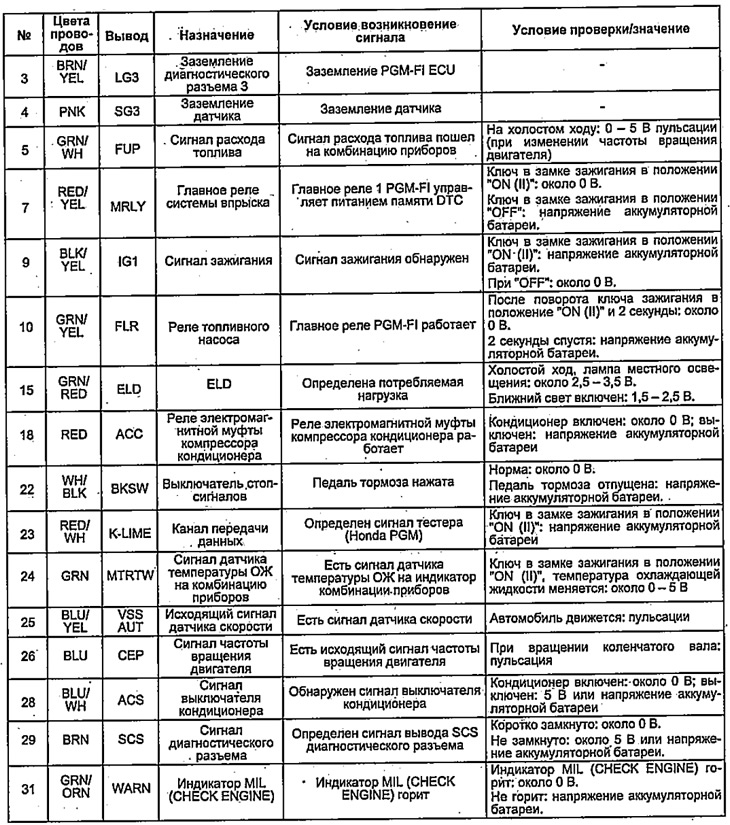
Checking signals at the terminals of the electronic control unit (L13A since 06.2001)
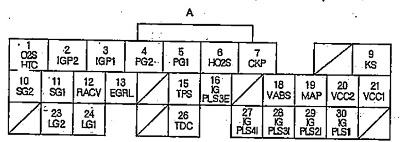
Table. Checking signals at the terminals of the electronic control unit (L13A since 06.2001).
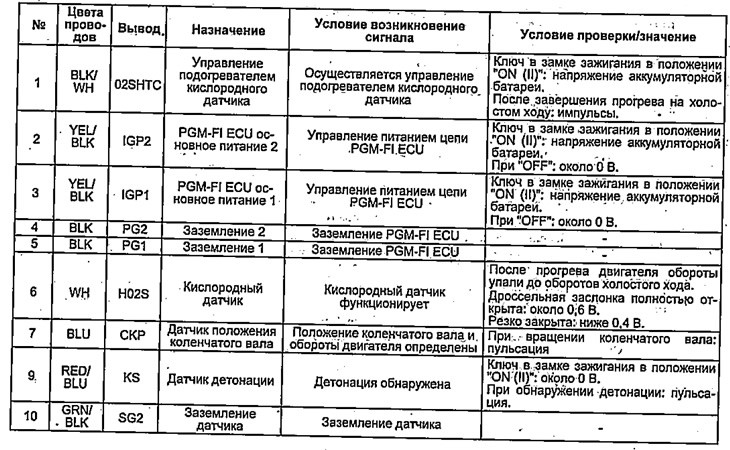
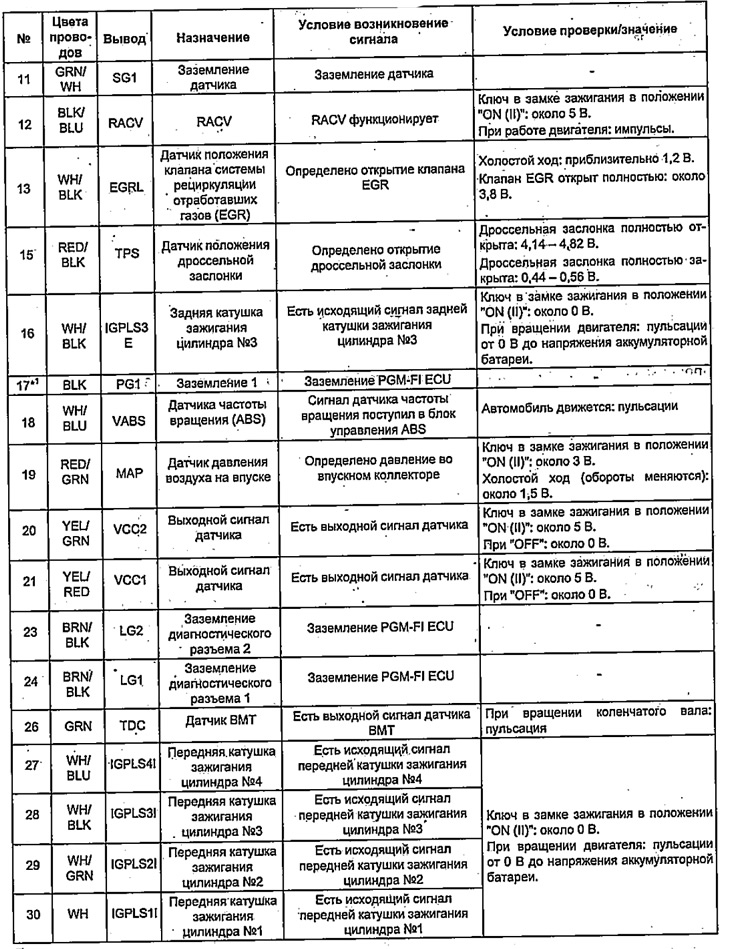
Note: *1 models from 11.2002.
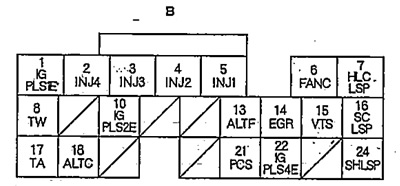
Table. Checking signals at the terminals of the electronic control unit (L13A since 06.2001).
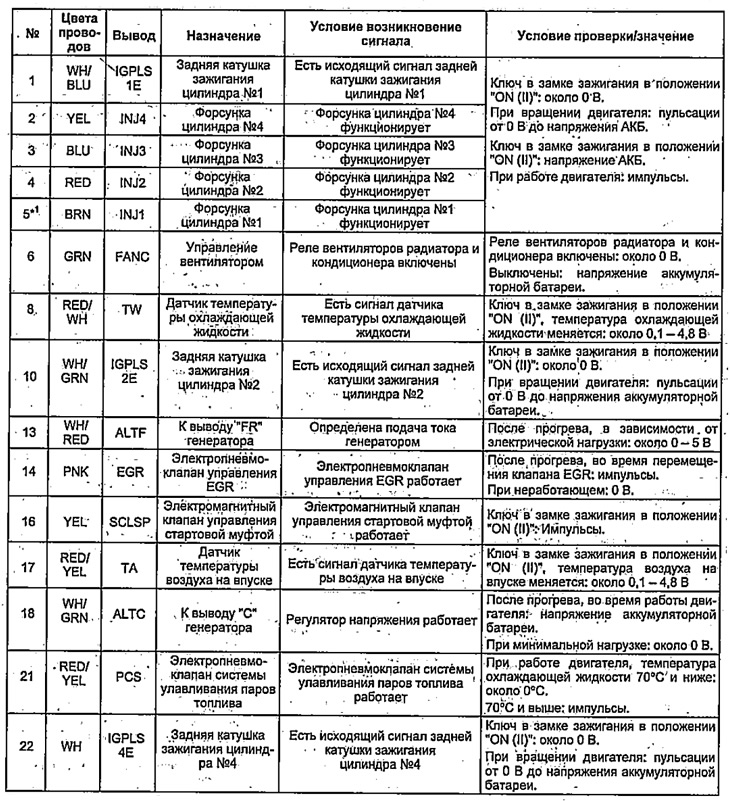
Note: *1 models before 2002.
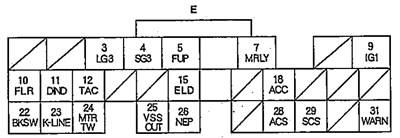
Table. Checking signals at the terminals of the electronic control unit (L13A since 06.2001).
Checking signals at the terminals of the electronic control unit (L15A since 09.2002)
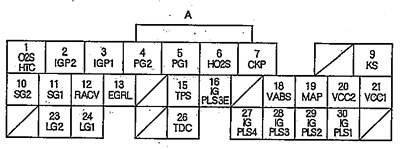
Table. Checking signals at the terminals of the electronic control unit (L15A since 09.2002).
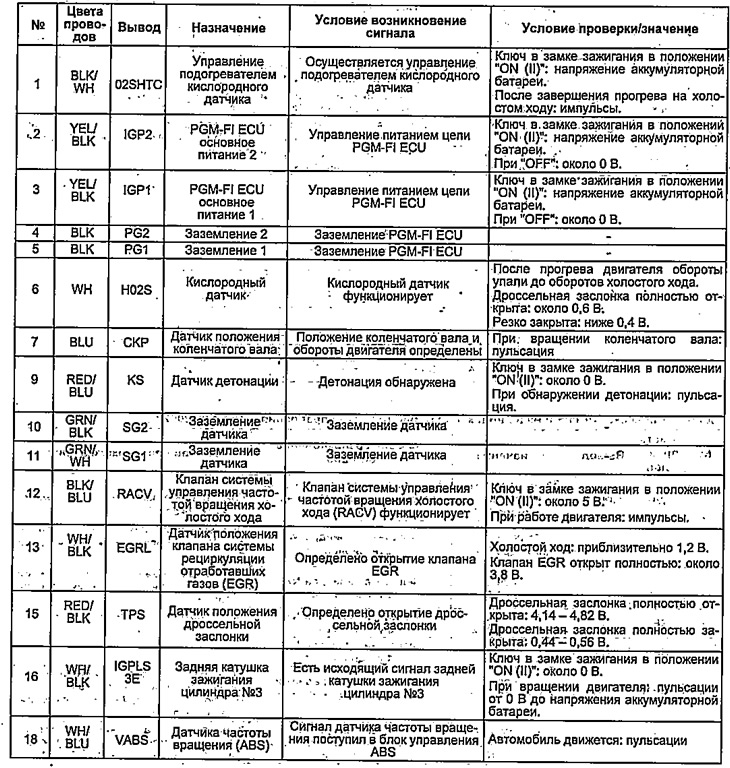
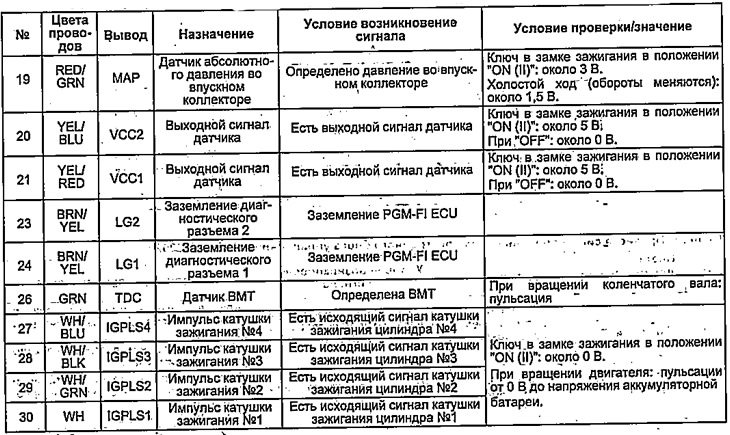
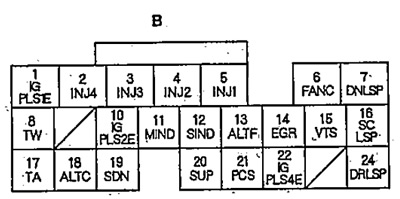
Table. Checking signals at the terminals of the electronic control unit (L15A since 09.2002).
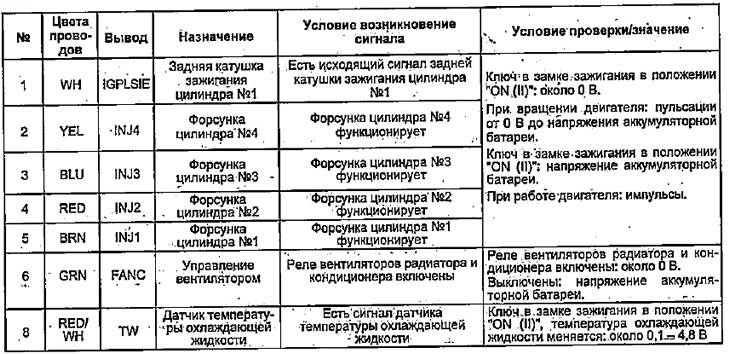
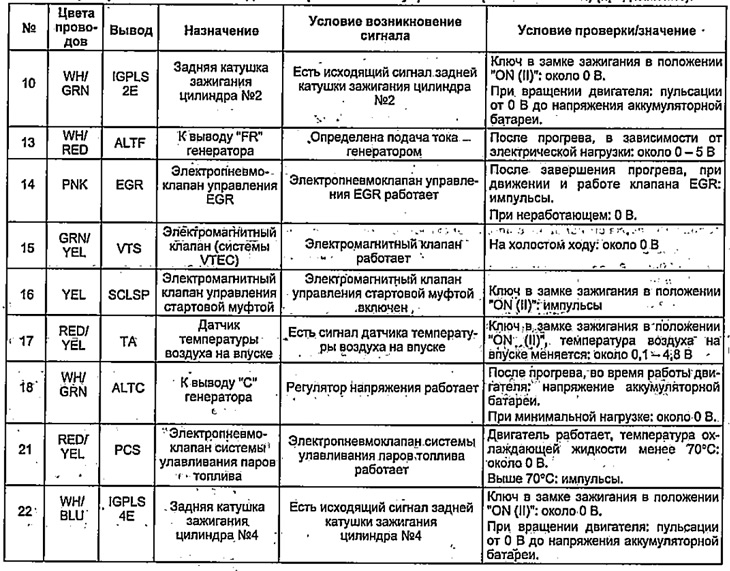
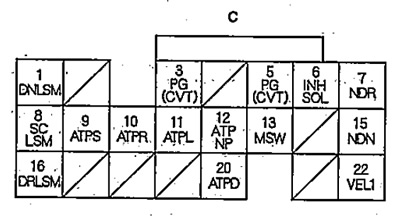
Table. Checking signals at the terminals of the electronic control unit (L15A since 09.2002).
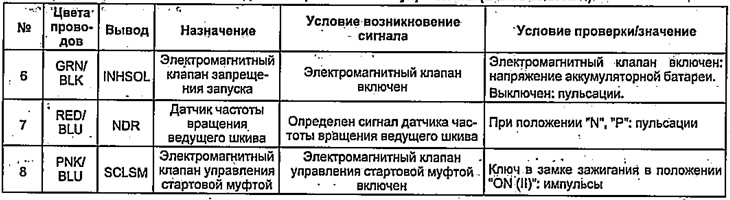
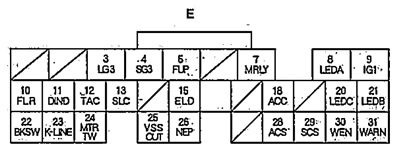
Table. Checking signals at the terminals of the electronic control unit (L45A from 09.2002)
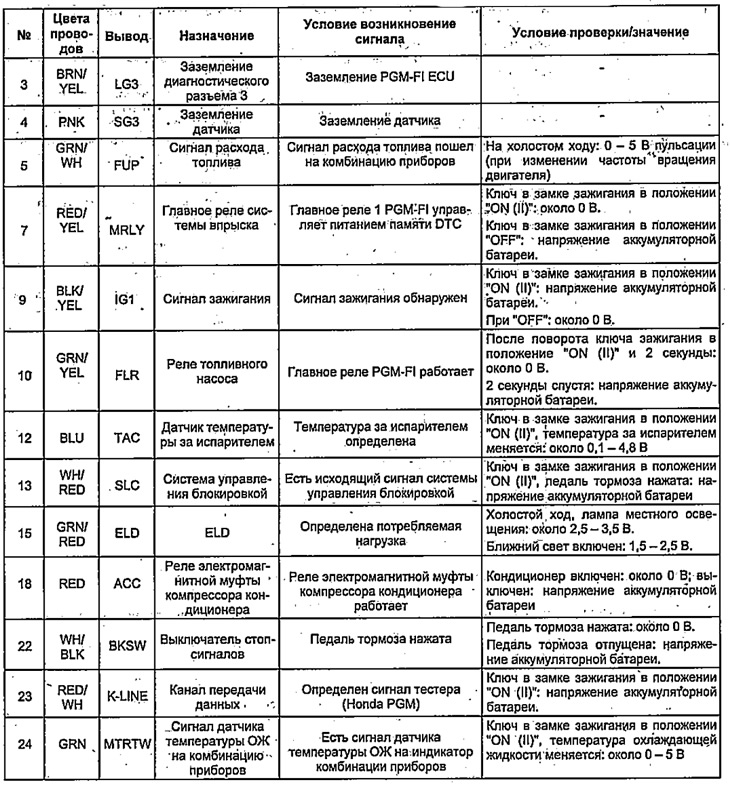
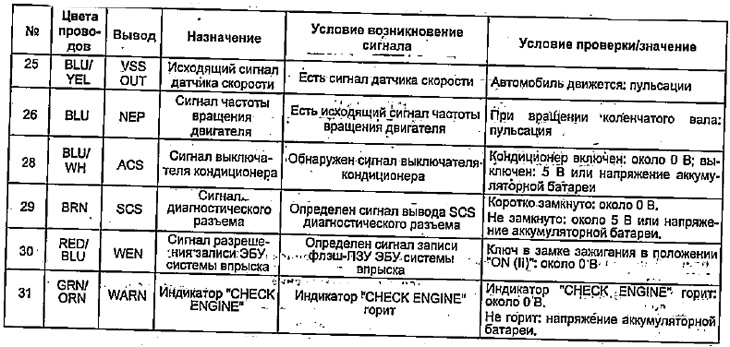
Checking signals at the terminals of the electronic control unit (L15A since 06.2004)
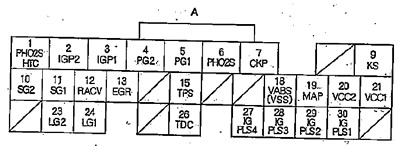
Table. Checking signals at the terminals of the electronic control unit (L15A since 06.2002).
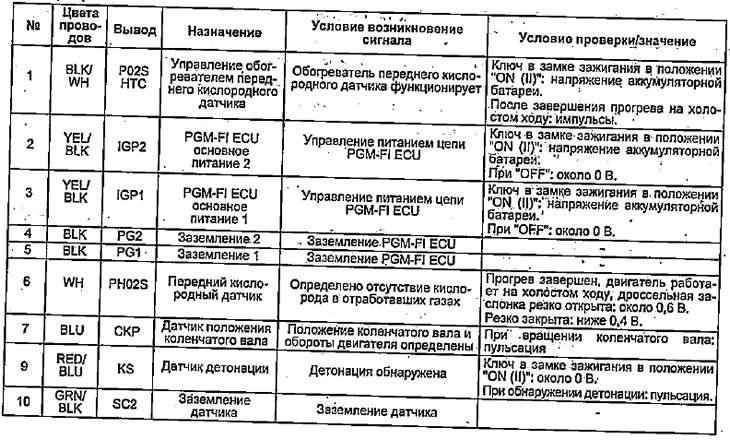
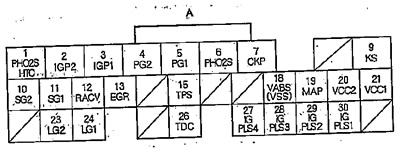
Table. Checking signals at the terminals of the electronic control unit (L15A since 06.2004).
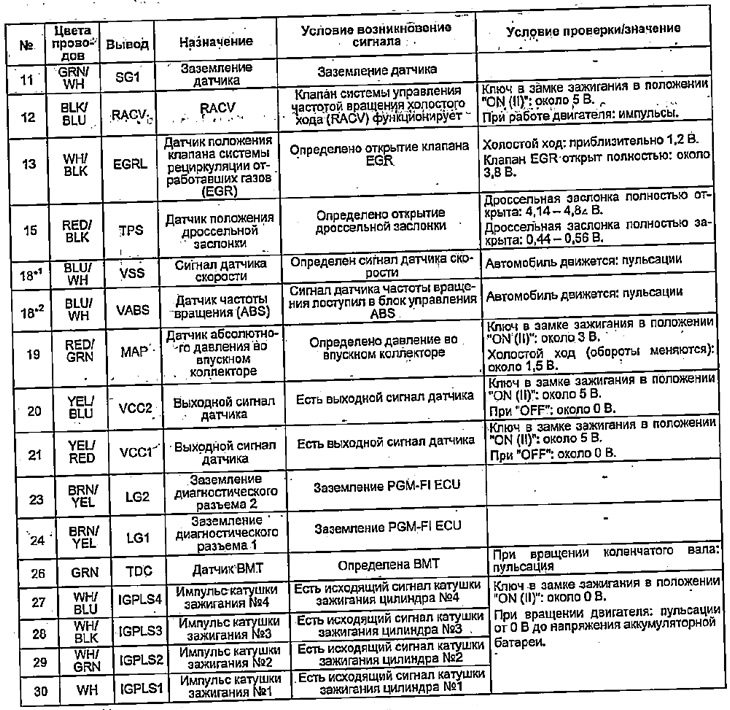
Note:
- *1 - models with manual transmission,
- *2 - models with Honda Multi Malic S+7 SPEED MODE.
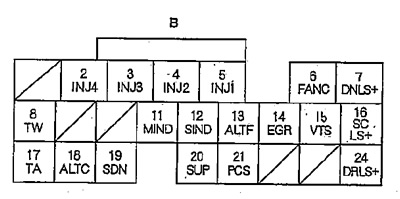
Table. Checking signals at the terminals of the electronic control unit (L15A since 06.2004).
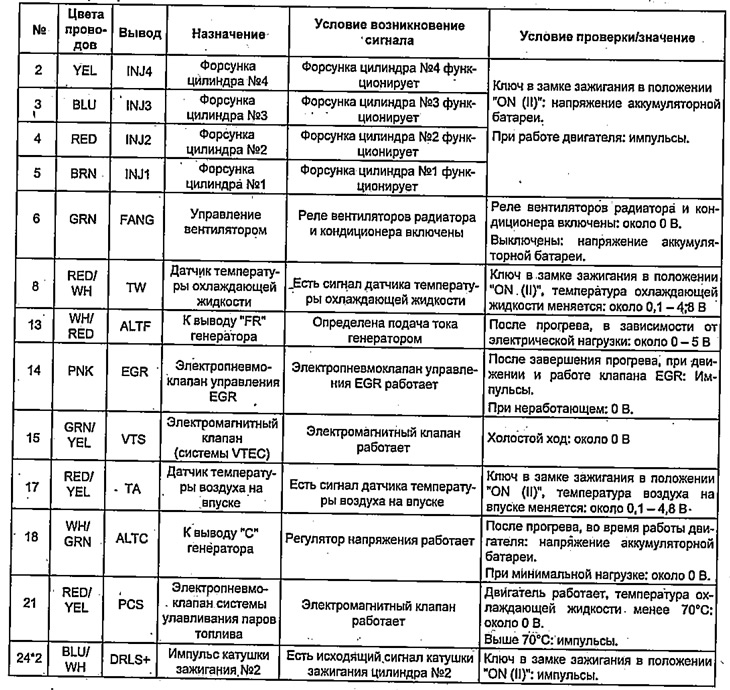
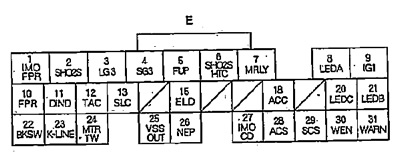
Table. Checking signals at the terminals of the electronic control unit (L15A since 06.2004).
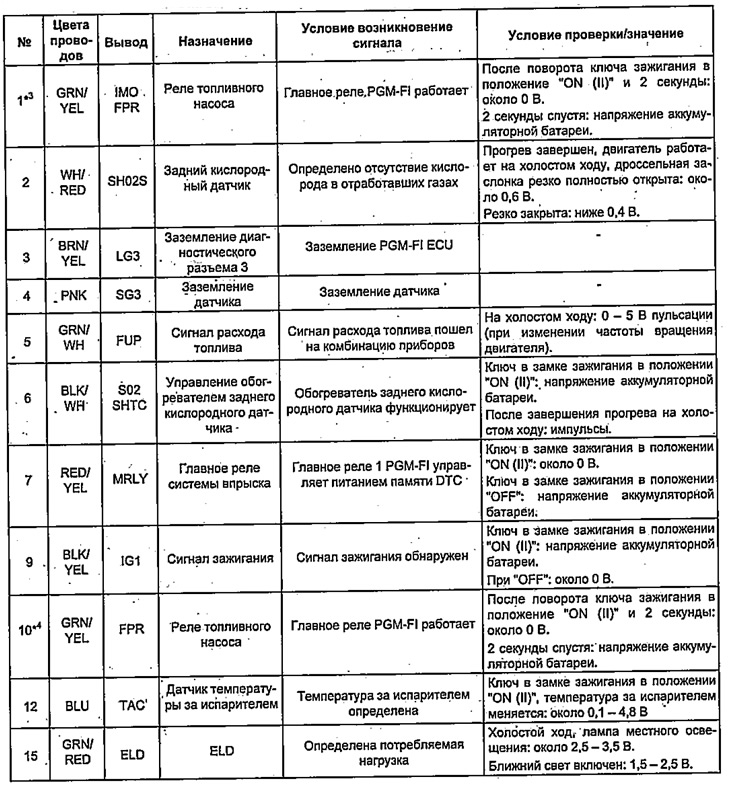
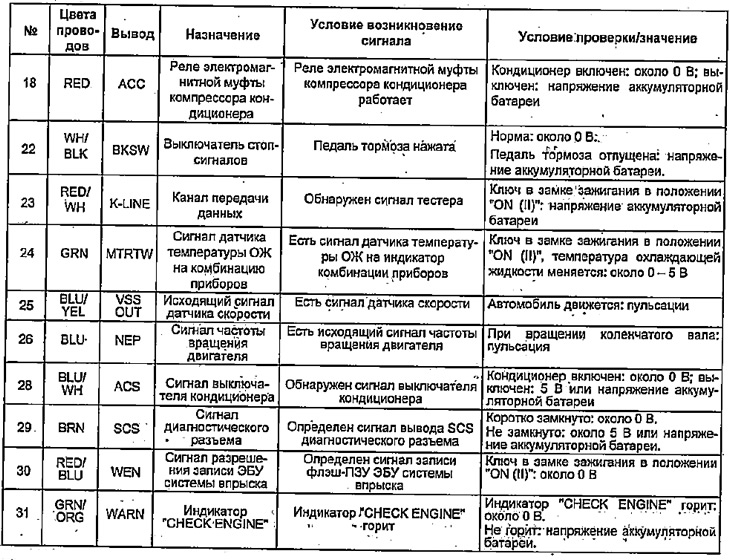
Note:
- *3 - models with immobilizer,
- *4 - models without immobilizer.