
Variator (CVT) of the car Honda Fit/Jazz 1

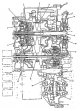
Continuously Variable Transmission (CVT) — General Description
Note: The GVT type is stamped on an aluminum plate attached to the engine compartment bulkhead, in the line "TRANS/AXLE". For the procedure for replacing the working fluid in the variator, see the chapter " Maintenance...
Note: The GVT type is stamped on an aluminum plate attached to the engine compartment bulkhead, in the line "TRANS/AXLE". For the procedure for replacing the working fluid in the variator, see the chapter " Maintenance...
Variator diagnostics
Note: Troubleshooting should begin with the simplest operations and proceed in order of increasing complexity. 1. Perform tire pressure checks and other preliminary checks. 2. Check for fault codes. 3. Check the gear...
Note: Troubleshooting should begin with the simplest operations and proceed in order of increasing complexity. 1. Perform tire pressure checks and other preliminary checks. 2. Check for fault codes. 3. Check the gear...

Self-diagnosis system
Reading fault codes 1. The self-diagnosis function is built into the electronic control unit. Using the "D" indicator, the system can warn the driver about a malfunction in the variator. Models without manual gear ratio...
Reading fault codes 1. The self-diagnosis function is built into the electronic control unit. Using the "D" indicator, the system can warn the driver about a malfunction in the variator. Models without manual gear ratio...

Checking the electrical components of the control system
1. Check the voltage at each terminal of the CVT control unit connector (see the table "CVT control unit terminals"). 2. Check the drive pulley pressure control solenoid valve. a) Remove the air filter and air duct. b)...
1. Check the voltage at each terminal of the CVT control unit connector (see the table "CVT control unit terminals"). 2. Check the drive pulley pressure control solenoid valve. a) Remove the air filter and air duct. b)...

Checking mechanical systems
Test on a fully braked vehicle* (stall test) This test checks the performance of the CVT and engine by measuring the speed at maximum load in the "D" and "R" ranges. Note. Conduct the check at the operating temperature...
Test on a fully braked vehicle* (stall test) This test checks the performance of the CVT and engine by measuring the speed at maximum load in the "D" and "R" ranges. Note. Conduct the check at the operating temperature...

Hydraulic test
Note: Conduct the check at the operating temperature of the variator working fluid (50-80°C). The duration of each check should not exceed five seconds. 1. Warm up the CVT working fluid to operating temperature...
Note: Conduct the check at the operating temperature of the variator working fluid (50-80°C). The duration of each check should not exceed five seconds. 1. Warm up the CVT working fluid to operating temperature...

Road test
Note: Before starting the test, warm up the engine to operating temperature (until the radiator fan of the cooling system turns on). 1. Apply the parking brake and place chocks under the wheels. 2. Press the brake pedal...
Note: Before starting the test, warm up the engine to operating temperature (until the radiator fan of the cooling system turns on). 1. Apply the parking brake and place chocks under the wheels. 2. Press the brake pedal...

Checking the ignition key lock solenoid valve
1. Disconnect the ignition switch connector. 2. Insert the key into the ignition switch and set it to the "ACC" position. 3. Connect the positive terminal of the battery to terminal "4" of the ignition switch connector,...
1. Disconnect the ignition switch connector. 2. Insert the key into the ignition switch and set it to the "ACC" position. 3. Connect the positive terminal of the battery to terminal "4" of the ignition switch connector,...

Selector and ignition key lock system
Checking the ignition key lock solenoid valve 1. Disconnect the ignition switch connector. 2. Insert the key into the ignition switch and set it to the "ACC" position. 3. Connect the positive terminal of the battery to...
Checking the ignition key lock solenoid valve 1. Disconnect the ignition switch connector. 2. Insert the key into the ignition switch and set it to the "ACC" position. 3. Connect the positive terminal of the battery to...

Filter replacement
Note: Install the removed parts in the reverse order of removal. Replace all removed O-rings with new ones. 1. Remove the CVT fluid tube. 2. Remove the variator filter. 3. Remove the valve block cover, guide pins and...
Note: Install the removed parts in the reverse order of removal. Replace all removed O-rings with new ones. 1. Remove the CVT fluid tube. 2. Remove the variator filter. 3. Remove the valve block cover, guide pins and...

Variator assembly — removal and installation
Note: Installation is carried out in the reverse order of removal. Tightening torques are given in the text. After installation, calibrate the starter clutch. 1. Raise the vehicle. 2. Remove the protective covers. 3....
Note: Installation is carried out in the reverse order of removal. Tightening torques are given in the text. After installation, calibrate the starter clutch. 1. Raise the vehicle. 2. Remove the protective covers. 3....
Checking the level and replacing the CVT working fluid
The procedures for checking the level and replacing the CVT working fluid are described in the chapter " Maintenance and general check and adjustment procedures ".
The procedures for checking the level and replacing the CVT working fluid are described in the chapter " Maintenance and general check and adjustment procedures ".

Transfer case — checking for play
1. Move the selector to the "N" position. 2. Apply marks (C) to the transfer case flange (A) and the propeller shaft flange (B). 3. Loosen the bolts and remove the propeller shaft. 4. Install the dial indicator as shown...
1. Move the selector to the "N" position. 2. Apply marks (C) to the transfer case flange (A) and the propeller shaft flange (B). 3. Loosen the bolts and remove the propeller shaft. 4. Install the dial indicator as shown...
This section is available on: russian, bulgarian, belarusian, ukrainian, serbian, croatian, romanian, polish, slovak, hungarian
Link in different formats to this section
TEXTHTMLBB Code
- General information
- User manual
- Maintenance
- Power unit
- Engine repair
- Cooling and lubrication system
- Injection and power system
- Control system
- Engine electrical equipment
- Transmission
- Clutch
- Mechanical gearbox
- Automatic gearbox
- Variator (CVT)
- Drive shafts and gearbox
- Chassis and running gear
- Car suspension
- Steering
- Brake system
- Body and interior
- Exterior (external elements)
- Interior (internal elements)
- Doors, locks and windows
- Heater and air conditioner
- Safety system
- Electrical equipment
- Equipment and devices
- Wiring diagrams (since 06.2001)
- Wiring diagrams (since 06.2004)