
2. Disconnect the high-voltage wires from the spark plugs.
3. Remove the spark plugs.
4. Check the spark plug electrodes.
a) Damage and wear of electrodes can be caused by:
- excessive ignition timing;
- loosening of the spark plug fastening;
- insufficient cooling;
- heat rating is too high;
b) Spark plug contamination may be caused by:
- insufficient ignition timing;
- oil in the combustion chamber;
- incorrect spark plug gap;
- heat rating too low;
- long idling or long driving at low speed;
- clogged air filter;
- a faulty ignition coil.
5. Visually inspect to ensure that there is no damage to the threads, insulator, or electrodes. Replace the spark plugs if any deviations are found.
Recommended spark plugs:
L13A (normal type):
- NGK — BKR6E-11
- DENSO — K20PR-U11
L15A ("iridium" spark plugs):
- NGK — IZFR6K13
- DENSO — SKJ20DR-M13
Make sure the center electrode is cylindrical. If the electrode is hemispherical, replace the spark plug.
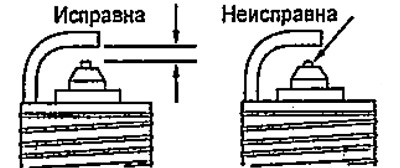
6. Check the gap between the spark plug electrodes.
Nominal clearance:
- L13A — 1.0-1.1 mm
- L15A — 1.2-1.3 mm
Editor's note: Honda recommends replacing iridium spark plugs every 100,000 km. However, given the vehicle's use and the quality of gasoline in Russia, we recommend replacing them every 80,000 km or if there are signs of their actual failure.
7. Clean the spark plugs.
a) If the electrodes: have wet traces of carbon deposits, dry them and then remove them with a suitable solvent. If the electrodes have traces of oil, remove them first with gasoline.
b) Then clean the spark plugs using a spark plug cleaner, applying air at a pressure of no more than 588 kPa (6 kg/cm²) for no more than 20 seconds.
Note ("iridium" spark plugs):
- Never use a wire brush to clean this type of spark plug.
- Never attempt to adjust the gap of a spark plug that has been in use.
8. Screw in the spark plugs.
- Tightening torque - 18 Nm
9. Connect the high voltage wires.