
2. Turn the ignition key to the "ON" position.
3. Measure the voltage between terminal No.3 of the electromagnetic clutch connector and ground.
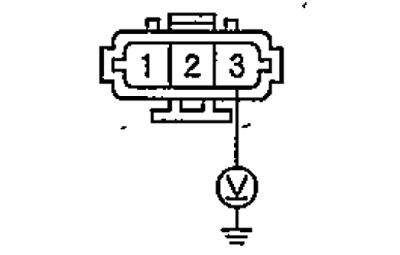
If the voltage is approximately 5 V, proceed to step #4; if the voltage is higher or lower, check the condition of the ECU connector and the integrity of the wiring harness between the air conditioning compressor and the ECU. If the ECU connector is OK and there are no breaks in the wiring harness, it may be necessary to replace the ECU.
4. Turn the ignition key to the "OFF" position.
5. Check the thermal fuse. If the thermal fuse is OK, proceed to step #6. If the thermal fuse is bad, replace it.
6. Connect the electromagnetic clutch connector.
7. Disconnect the pressure switch.
8. Turn the ignition key to the "ON" position.
9. Measure the voltage between terminal No.2 of the pressure switch connector and ground.
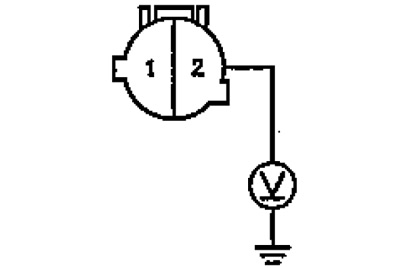
If the voltage is approximately 5 V, proceed to step #10; if the voltage is higher or lower, then the break in the drive harness between the suppression switch and the thermal fuse should be eliminated.
10. Turn the ignition key to the "OFF" position.
11. Check the continuity between terminal #1 and terminal #2 of the pressure switch connector. If there is continuity, proceed to step #12; if there is no continuity, proceed to step #34.
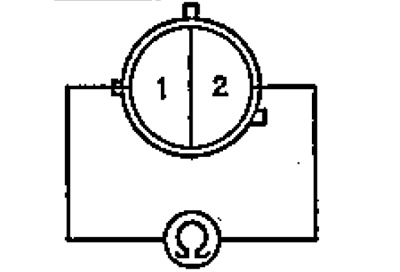
12. Connect the pressure switch connector.
13. Disconnect the air conditioner switch connector.
14. Turn the ignition key to the "ON" position.
15. Measure the voltage between terminal No.8 of the air conditioner switch connector and ground.
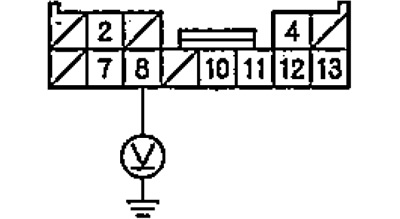
If the voltage is approximately 5 V, proceed to step #16, if the voltage is more or less, repair the open circuit in the wires between the air conditioner switch and the pressure switch.
16. Turn the ignition key to the "OFF" position.
17. Check the air conditioner switch for proper operation. If the air conditioner switch is in good condition, proceed to step #18, if not, it should be replaced.
18. Disconnect the air flow direction switch connector.
19. Turn the ignition key to the "ON" position.
20. Measure the voltage between terminal No.3 of the air flow direction switch and ground.
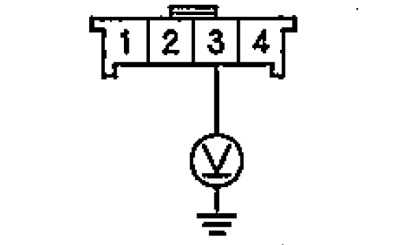
If the voltage is approximately 5 V, proceed to step #21; if the voltage is more or less, repair the open circuit in the wires between the pressure switch and the air flow direction switch.
21. Turn the ignition key to the "OFF" position.
22. Check the serviceability of the air flow direction switch, if the switch is serviceable, proceed to point No.23, if the switch is faulty, it may be necessary to replace the air conditioning and heating control panel.
23. Disconnect the heater fan speed switch connector.
24. Check the conductivity between terminal No.7 of the air conditioner switch connector and terminal No.6 of the heater fan speed switch connector.
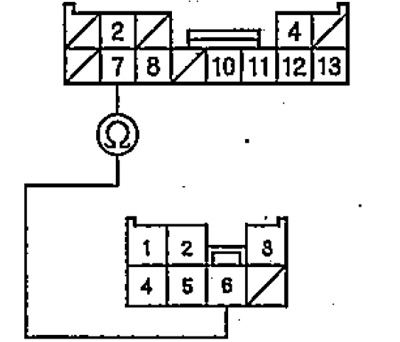
If there is continuity, proceed to step #25; if there is no continuity, repair the break in the wire circuit between the air conditioner switch and the heater fan speed switch.
25. Check the continuity between terminal No.4 of the air flow direction switch connector and terminal No.6 of the heater fan speed switch connector.
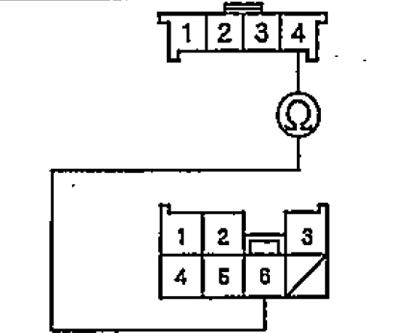
If there is conductivity, then proceed to point #26; if there is no conductivity, repair the break in the wire circuit between the switches.
26. Check the heater fan speed switch. If the switch is OK, proceed to step #27; if the switch is faulty, it should be replaced.
27. Check the continuity between Terminal No.3 of the heater fan speed switch and ground.
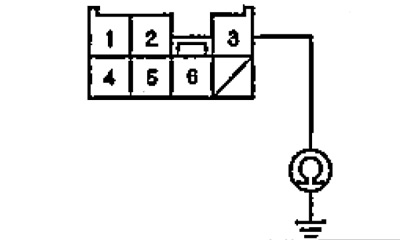
If there is continuity, then proceed to point #28; if there is no continuity, eliminate the possible break in the circuit between the heater fan speed switch and ground; check the ground wire G402.
28. Disconnect the temperature sensor connector behind the evaporator.
29. Measure the resistance between the terminals of the temperature sensor connector behind the evaporator.
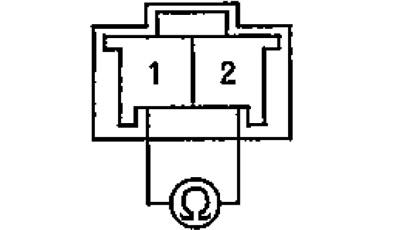
Make sure that as the temperature changes, the resistance between the terminals changes according to the graph.
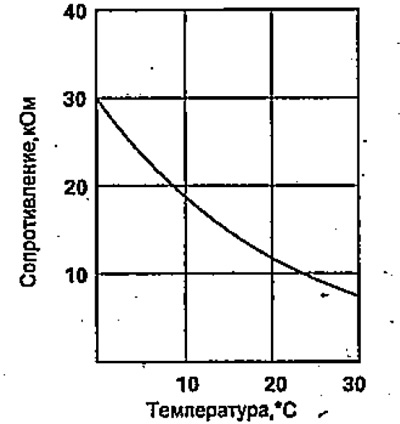
If the resistance corresponds to the graph, then proceed to point No.30; if it does not correspond, then the temperature sensor behind the evaporator should be replaced.
30. Disconnect the SCS line using a tester.
31. Disconnect the connector of the electronic control unit of the injection system.
32. Check the conductivity between the terminals of the evaporator temperature sensor connector and the terminals of the electronic injection system control unit connector, as shown in the figure.
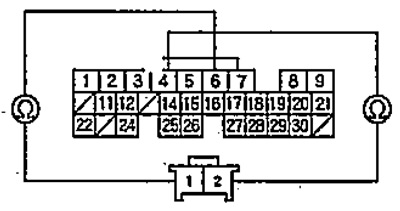
If there is conductivity, proceed to step #33; if there is none, repair the open circuit between the temperature sensor behind the evaporator and the electronic control unit of the injection system.
33. Check the conductivity between the terminal of the electronic fuel injection control unit connector and ground.
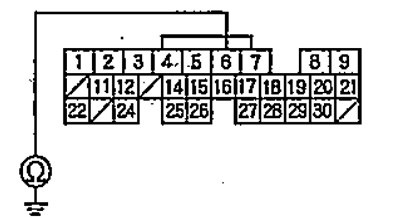
If there is continuity, eliminate the short circuit to ground in the circuit between the temperature sensor - behind the evaporator and the electronic control unit of the injection system. If there is no continuity, check the reliability of the connectors of the electronic control unit of the injection system, the temperature sensor behind the evaporator, the suppression switch, the air conditioner switch. If all connectors are in good condition, replace the electronic control unit of the injection system with a good one and perform the check again. If after replacement the signs of malfunctions disappear, the electronic control unit of the injection system should be replaced.
34. Make sure that the system pressure is within the tolerance. If the pressure is normal, replace the pressure switch, if the pressure is higher or lower than normal, the cause of the pressure deterioration should be eliminated.
(The original is located on the website «www.HondaBook.ru»)