
Contents: Checking the solenoid valve "A" ⇊ Replacing the solenoid valve "A" ⇊ Checking solenoid valves "B" and "C" ⇊ Replacing solenoid valves "B" and "C" ⇊
Checking the solenoid valve "A"
1. Connect the scan tool to the DLC (Diagnostic Link Connector) (A).
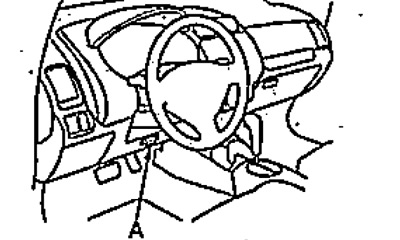
2. Select "Clutch Pressure Control (Linear) Solenoid A" from the "Miscellaneous" menu of the instrument.
3. Conduct a check.
If necessary, check the resistance of electromagnetic valve "A".
4. Checking the resistance of electromagnetic valve "A".
a) Remove the air filter housing (see chapter "Maintenance and general check and adjustment procedures").
b) Disconnect the connector of the solenoid valve "A" of the pressure control.
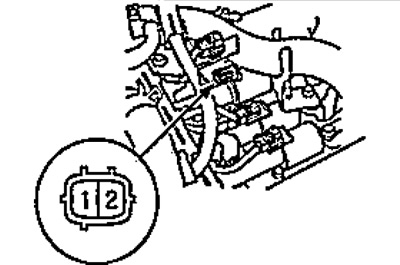
c) Measure the resistance between the terminals of the solenoid valve.
- Resistance - 3-10 Ohm
If the resistance is not within the norm, replace the solenoid valve. If the resistance is within the norm, check the functionality of the solenoid valve.
d) Check the functionality of the electromagnetic valve.
(1) Check on the vehicle.
Connect terminal "2" of the solenoid valve to the negative terminal of the battery, and terminal "1" to the positive terminal and make sure that the sound of the valve operation is heard. If the sound of operation is not heard, remove the solenoid valve and check its functionality.
(2) Checking the solenoid valve removed from the vehicle.
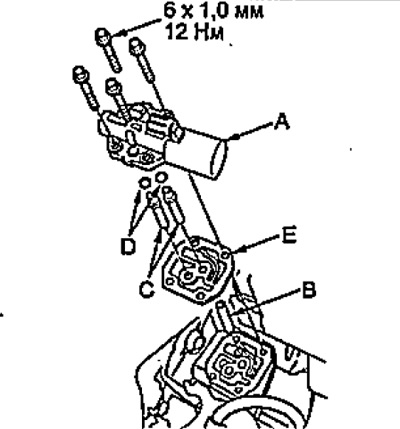
- Loosen the bolts and remove the solenoid valve "A".
- Remove the tubes (B and C), O-rings (D) and gasket (E).
- Make sure that the solenoid valve channels are not contaminated.
- Connect terminal "2" of the solenoid valve to the negative terminal of the battery, and terminal "1" to the positive terminal and make sure that the solenoid valve moves.
 |
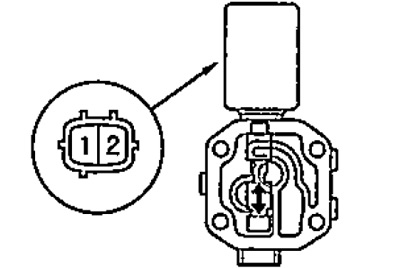 |
- Disconnect the wire from one of the terminals and connect it to the valve body. Make sure the solenoid valve moves. If the solenoid valve moves with sticking or does not move at all, replace the solenoid valve.
- Clean the valve contact surface and install the valve, O-rings, gasket and tubes.
d) Make sure that there is no rust, dirt or oil on the solenoid valve connector and connect the solenoid valve connector "A".
e) Install the air filter housing (see chapter "Maintenance and general inspection and adjustment procedures").
Replacing the solenoid valve "A"
1. Remove the air filter housing (see chapter "Maintenance and general check and adjustment procedures").
2. Disconnect the connector of the solenoid valve "A" of the pressure control.
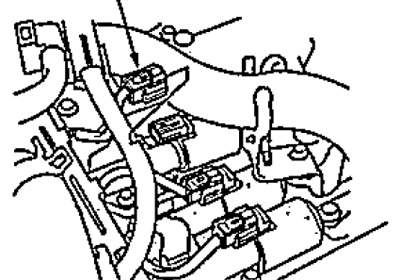
3. Loosen the bolts and remove the solenoid valve "A" of the pressure control.
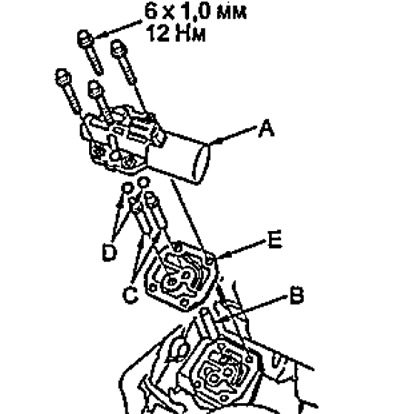
4. Remove the tubes (B and C), O-rings (O) and gasket (E)
Note:
- Installation is carried out in the reverse order of removal.
- When installing, use only new O-rings and gaskets.
Checking solenoid valves "B" and "C"
1. Connect the scan tool to the DLC (Diagnostic Link Connector) (A).
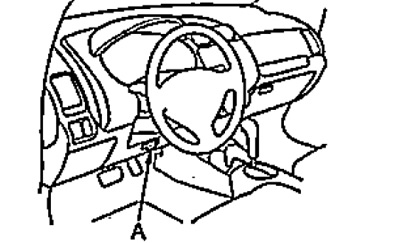
2. Select "Clutch Pressure Control (Linear) Solenoid B" or "Clutch Pressure Control (Linear) Solenoid C" from the "Miscellaneous" menu of the instrument.
3. Conduct a check.
If necessary, check the resistance of the solenoid valve.
4. Checking the resistance of the electromagnetic valve.
a) Remove the air filter housing (see chapter "Maintenance and general check and adjustment procedures").
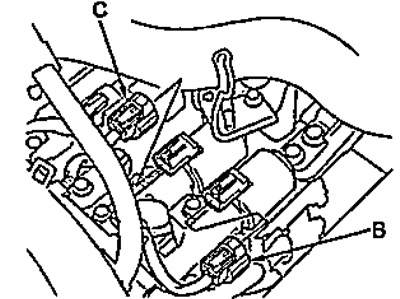
b) Disconnect the pressure control solenoid valve connector.
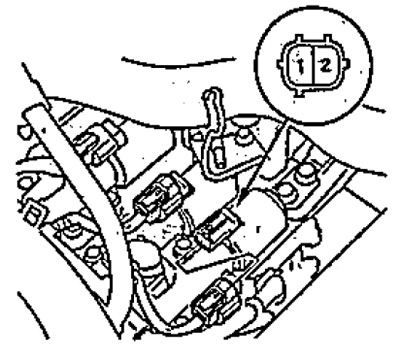
Connector of electromagnetic valve "B"
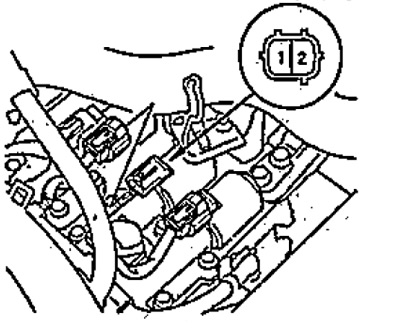
Solenoid valve connector "C"
c) Measure the resistance between the terminals of the solenoid valve.
- Resistance - 3-10 Ohm
If the resistance is not within the norm, replace the solenoid valve. If the resistance is within the norm, check the functionality of the solenoid valve.
d) Check the functionality of the electromagnetic valve.
(1) Check on the vehicle.
Connect terminal "2" of the solenoid valve to the negative terminal of the battery, and terminal "1" to the positive terminal and make sure that the sound of the valve operation is heard. If the sound of operation is not heard, remove the solenoid valve and check its functionality.
(2) Checking the solenoid valve removed from 1 vehicle.
- Loosen the bolt and remove the bracket (A).
- Unscrew the bolts and remove the solenoid valves "B" and "C".
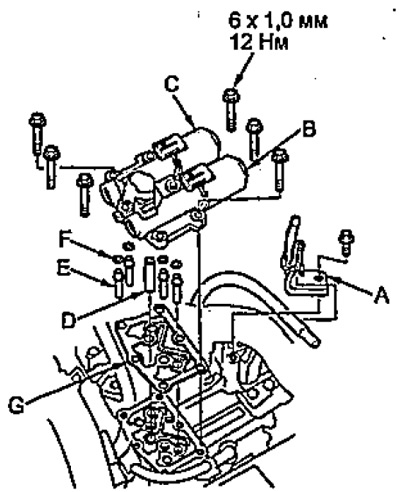
- Remove the tubes (D and E), O-rings (F) and gasket (G).
- Make sure that the solenoid valve channels are not contaminated.
- Connect terminal "2" of the solenoid valve to the negative terminal of the battery, and terminal "1" to the positive terminal and make sure that the solenoid valve moves.
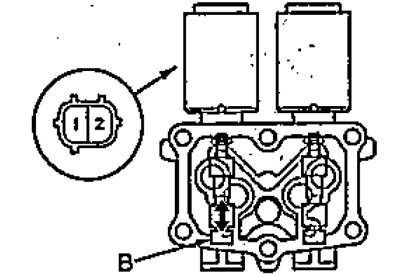
Solenoid valve "B"
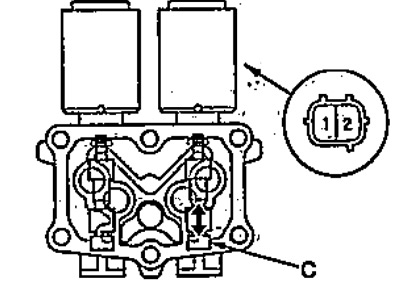
Solenoid valve "C"
- Disconnect the wire from one of the terminals and connect it to the valve body. Make sure the solenoid valve moves. If the solenoid valve moves with sticking or does not move at all, replace the solenoid valve.
- Clean the valve contact surface and install the valve, O-rings, gasket and tubes.
d) Make sure that there is no rust, dirt or oil on the solenoid valve connector and connect the solenoid valve connector.
e) Install the air filter housing (see chapter "Maintenance and General "Checking and Adjustment Procedures").
Replacing solenoid valves "B" and "C"
1. Remove the air filter housing (see chapter "Maintenance and general check and adjustment procedures").
2. Disconnect the connectors of the solenoid valves "B" and "C" for pressure control.
3. Loosen the bolt and remove bracket "A".
4. Loosen the bolts and remove the solenoid valves "B" and "C" for pressure control.
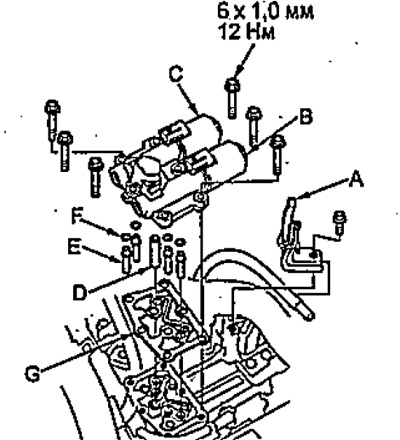
5. Remove the tubes (D and E), O-rings (F) and gasket (G).
Note:
- Installation is carried out in the reverse order of removal.
- When installing, use only new O-rings and gaskets.
(The article was taken from the website: hondabook.ru)