
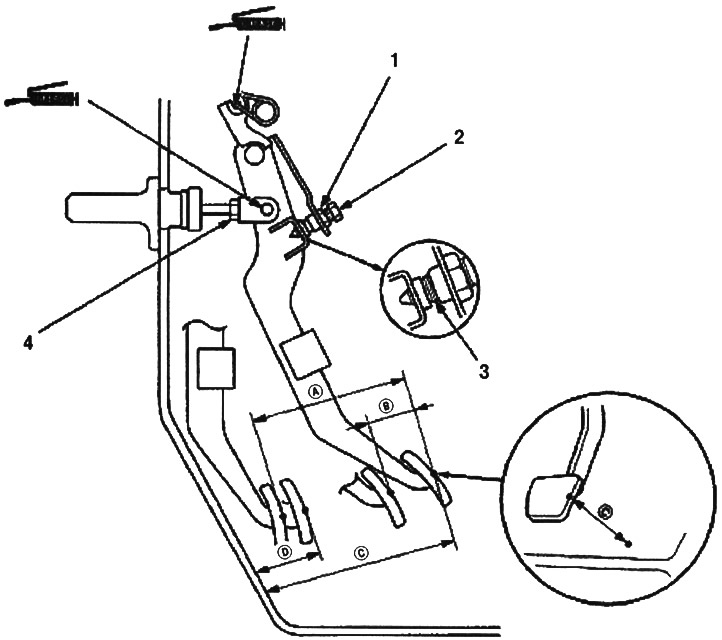
1. LOCK NUT A, 9.8 Nm (1.0 kgf/m)
2. ADJUSTING BOLT
3. THE PEDAL CONTACTS THE SWITCH
4. LOCKNUT B, 18 Nm (1.8 kgf/m)
A. (PEDAL TRAVEL): 130-140 mm
B. (TOTAL FREE PEDAL PLAY): 8-18 mm, including pedal play of 1.0-9.0 mm
C. (CLUTCH PEDAL HEIGHT):
left hand drive: 179 mm from the floor
right hand drive: 183 mm from the floor
D. (CLUTCH PEDAL HEIGHT IN FULLY DEPRESSED POSITION):
left-hand drive: not less than 87 mm from the floor
right hand drive: not less than 74 mm from the floor
Note:
- For information on checking the clutch switch, see the chapter "Body electrical equipment".
- The clutch self-adjusts as it wears.
Caution: If there is no clearance between the clutch master cylinder piston and the pressure rod, the release bearing will be pressed against the diaphragm spring, which can cause clutch slippage and other problems.
1. Loosen lock nut A and unscrew the clutch switch (or adjusting bolt) until it no longer contacts the clutch pedal.
2. Loosen lock nut B and turn the push rod in or out until the required clutch pedal travel (A) and height (C) are achieved.
3. Tighten lock nut B.
4. Turn the clutch switch (or adjusting bolt) until it contacts the clutch pedal.
5. Tighten the clutch switch (or adjusting bolt) 3/4-1 turn.
6. Tighten lock nut A.