
Examination
1. Access to the sensor-switch wiring connector is possible from the engine compartment.
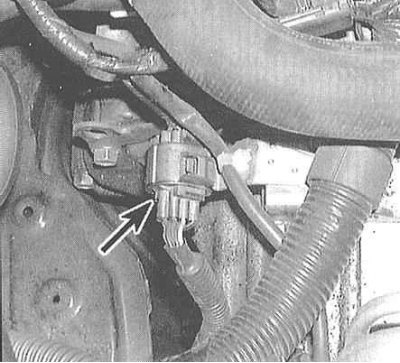
2. Disconnect the 10-pin transmission position sensor switch connector.
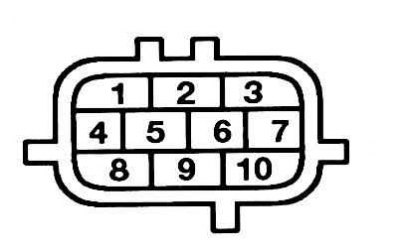
3. Check the connector for compliance of the sensor-switch states with the conductivity map. Move the selector lever alternately to each of the positions.
4. If the test results are negative, adjust the sensor switch. If the sensor switch cannot be adjusted, replace it.
Adjustment
1. Move the selector lever to the "N" position and loosen the sensor-switch mounting nuts.
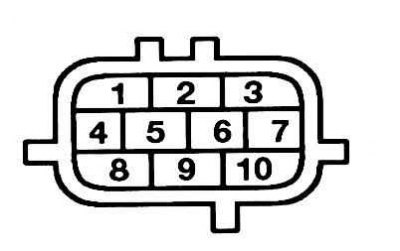
2. Disconnect the 10-pin connector and connect an ohmmeter to terminals 1 and 3.
3. Remove the cover and slightly loosen the sensor-switch mounting bolts. Turn the sensor-switch to the "N" position - a click should be heard, and the ohmmeter will record the appearance of conductivity.
4. Tighten the mounting bolts, replace the cover and connect the connector.
Replacement
1. Jack up the car and place it on supports.
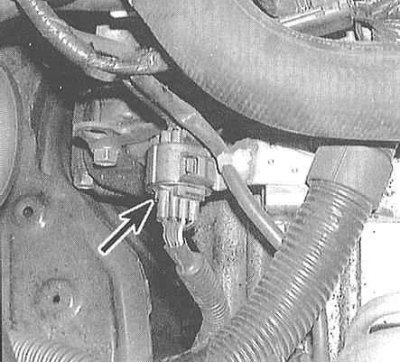
2. Disconnect the 10-pin connector. Remove the wiring harness retainer bolt.
3. Move the selector lever to the "N" position.
4. Remove the cover of the AT position sensor-switch, then unscrew the bolts securing the sensor-switch.
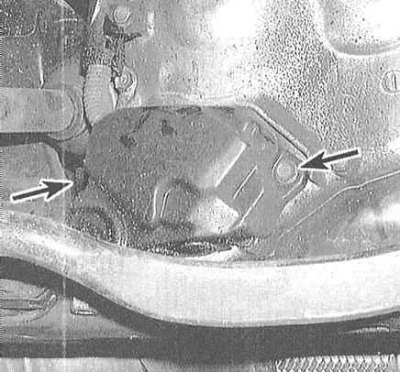 |
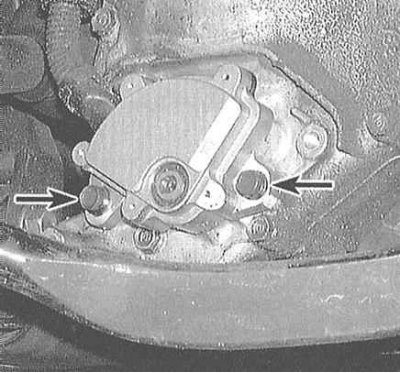 |
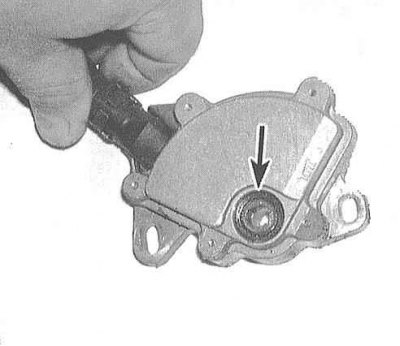
5. Move the new switch to the position corresponding to the "N" position, make sure that the selector lever is also in the "N" position.
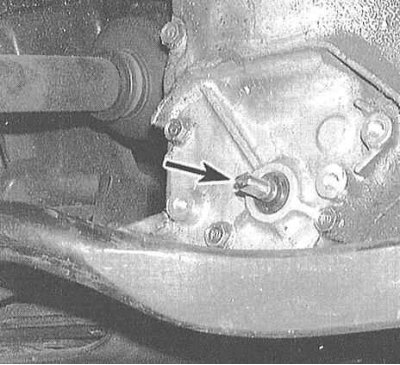
6. Place the switch sensor on the control shaft and, making sure it remains in the "N" position, tighten the mounting bolts.
7. Connect the wiring, secure the harness and replace the cover.
8. Make sure that the engine starts only in the "N" and "P" positions of the selector lever.