
Type of fuel used
For KY modifications:
The vehicle's engine is designed to operate on leaded gasoline with an octane rating of 92 or higher. The use of unleaded gasoline with an octane rating of 92 or higher is also acceptable.
For all modifications except KY:
Cars with 1.6, 1.8 and 2.0 l engines must be operated on unleaded petrol with an octane rating of at least 95 (research method - AI).
To refuel cars with a 2.2 liter engine, use unleaded fuel with an octane rating of at least 98 (AI). There may be situations when gasoline with the required octane rating is not available at the gas station. In these cases, gasoline with an octane rating of 95 can be used. The engine management system adapts it to the gasoline used, but some reduction in the developed power as a result of such a replacement becomes inevitable.
Operating a car on leaded gasoline can lead to failure of the catalytic converter and the engine itself. The environmental pollution factor should not be forgotten either.
Filling the fuel tank
Gasoline is highly flammable and explosive. Careless handling of gasoline may result in burns or other serious injuries. When filling the fuel tank, turn off the engine, do not bring hot or sparking objects close to the open neck of the fuel tank, do not smoke on the territory of the gas station. All maintenance operations on the fuel system should be performed only outdoors. If gasoline splashes onto exposed areas of skin or onto the paintwork of body elements, immediately wipe them with a dry rag.
The fuel filler neck is located on the left side of the car, so you should approach the fuel dispenser at the gas station from the left side.
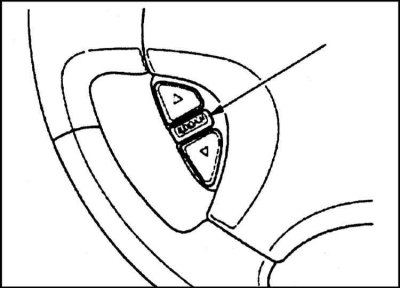
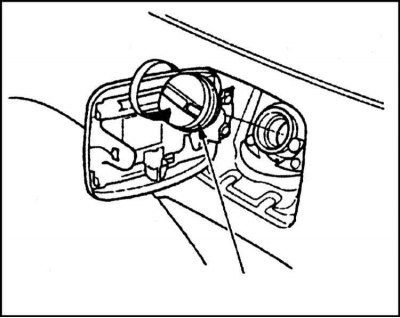
Open the fuel filler flap by pulling the handle located next to the driver's seat, to the left of it. Slowly turn it to remove the cap from the filler neck.
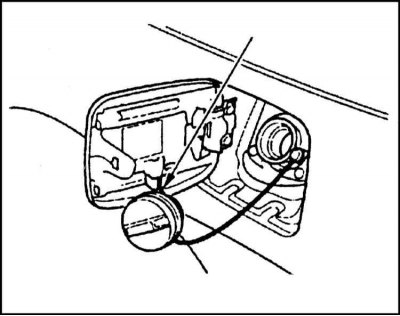
Unscrewing the cap may be accompanied by a characteristic hissing sound, which occurs when fuel vapors leave the tank. Some models are equipped with a special holder, which is located on the inside of the hatch and is designed to temporarily secure the fuel filler cap while refueling the car.
 |
 |
Refueling should be stopped as soon as the fuel pump of the fuel dispenser has automatically switched off. Do not try to fill the tank over the norm - leave free space for the fuel to expand when heated.
Screw the cap onto the fuel filler neck and tighten it properly - you should hear at least two clicks from the cap lock.
Close the hatch and press it to engage the lock catch.
Emergency fuel shut-off valve
A gasoline leak can cause a fire or explosion, resulting in serious injury or death to the driver and passengers. Before turning on the fuel valve, it is necessary to make sure that there are no signs of gasoline leakage.
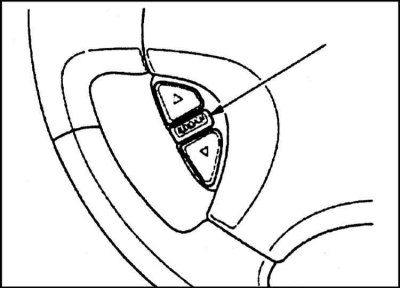
Some models are equipped with a fuel shut-off valve, which is located on the right behind the central console of the instrument panel. The valve is designed to ensure fire safety in the event of a traffic accident. In the event of a collision, the valve automatically shuts off the fuel supply to the engine. The triggered valve must be manually restored to working condition, press the valve control button. After this procedure, the engine can be started.
(The original text of the article is located on the website www.hondabook.ru)