Checking the oil clearance of the connecting rod bearings
1. Clean the crankshaft journal and connecting rod bearing shells.
2. Place plastic gauges on the crankpins.
3. Install the connecting rod lower head caps.
Tightening torque:
- Stage 1 - 10 Nm
- Stage 2 - 90°
Note: Do not rotate the crankshaft.
4. Remove the connecting rod caps with the bearings. Measure the thickness of the gauge at the widest part.
Clearance between connecting rod bearing shell and crankshaft journal:
- nominal - 0.020 - 0.038 mm
- maximum - 0.050 mm
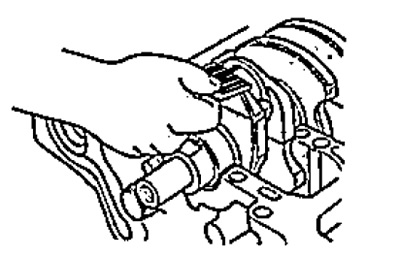
If the clearance is not within specification, install a new set of bearing shells with the same color mark and recheck the clearance.
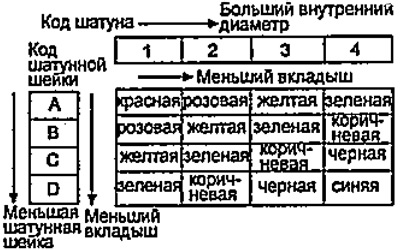
If the clearance is still not within specification, replace the bearings with larger or smaller bearings (color codes below). Check the oil clearance. If the clearance is still not within specification, replace the crankshaft and check the clearance again.
Selection of connecting rod bearing liners
1. Check all connecting rods for chips and signs of burning.
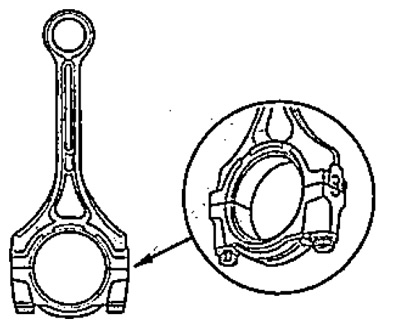
2. Connecting rods come in four size groups (nominal diameter increase from 0 to 0.024 mm with a step of 0.006 mm). The number (1, 2, 3 or 4) of the size group is stamped on the end of the connecting rod bearing caps. You can find different combinations of size groups on different engines.
If you cannot read the code due to deposits, do not clean the marks with a wire brush, use a solvent.
- Nominal internal diameter - 43 mm
3. The code for the connecting rod journal size group is stamped on the crankshaft.
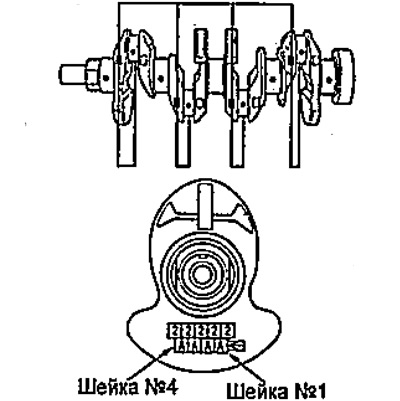
4. Using the connecting rod and crankpin code, select the required connecting rod bearing shells using the table.