
Checking the steering wheel play
With the vehicle stationary and the wheels set to the straight-ahead position, rock the steering wheel from side to side with a little effort. If the play does not meet the established standards, repair it.
- Steering wheel play - 0-10 mm
Note: Large total play indicates wear of the joints or large play in the steering mechanism. Eliminate any faults found.
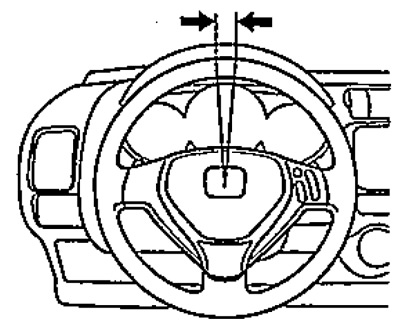
Left-hand drive models.
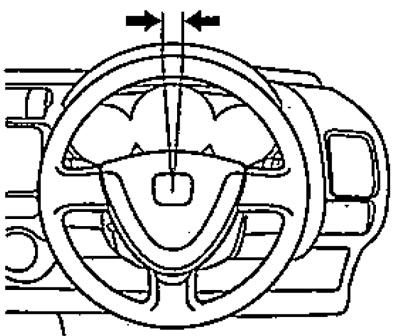
Right hand drive models.
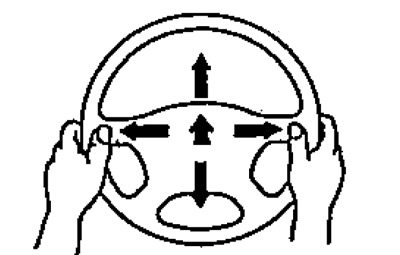
2. Pull the steering wheel in all directions as shown in the figure to detect wear of the steering column bearing, play in the steering shaft connection, and looseness of the steering wheel and steering column.
Checking the steering wheel effort
1. Check the tire type and tire pressure (see chapter "Suspension").
2. With the vehicle parked on a firm, level surface, set the front wheels to the straight-ahead position.
3. Start the engine and warm up the power steering fluid to 68-72°C.
4. Using a torque wrench, measure the force on the steering wheel.
Note: The steering force changes according to the following conditions:
- road conditions - wet or dry surface, asphalt or dirt surface;
- tire type and wear, as well as tire pressure.
Steering wheel effort:
- Models with spruce steering wheel - 34 Nm
- Right hand drive models - 29 Nm
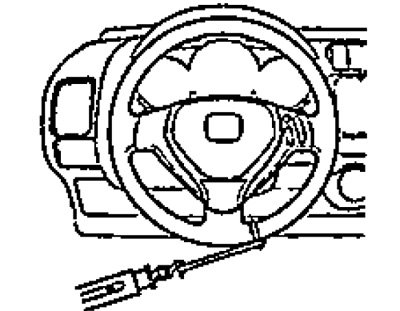
Left-hand drive models.
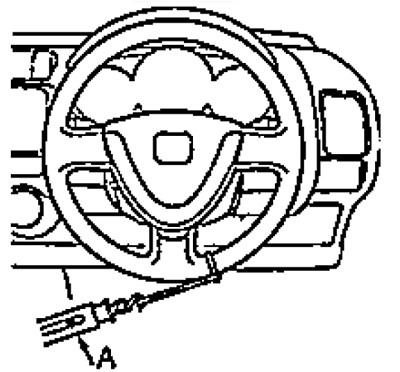
Right hand drive models.
If the force is not within the norm, replace the steering gear.