
- Tightening torque - 29 Nm
Note: Apply engine oil to threads and under bolt heads.
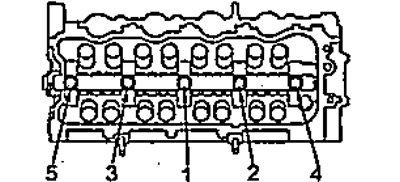
2. Install the camshaft by pressing it back and forth into the cylinder head.
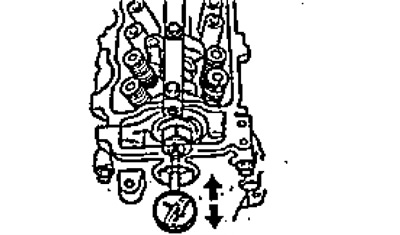
3. Install the indicator on the end of the camshaft and reset its readings. By moving the camshaft back and forth, determine the axial clearance.
If the clearance is greater than maximum, replace the camshaft cover and recheck the clearance. If the clearance still exceeds maximum, replace the camshaft.
Camshaft axial clearance:
- nominal - 0.05-0.25 mm
- maximum - 0.50 mm
4. Clean the camshaft. Replace the camshaft if any cam shows signs of chipping or severe wear.
5. Measure the diameter of each camshaft journal.
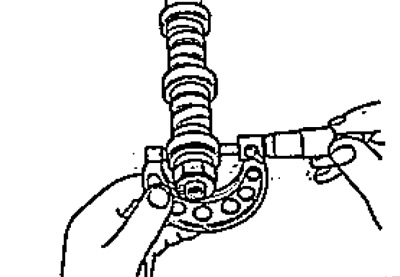
6. Zero the indicator on the journal diameter reading.
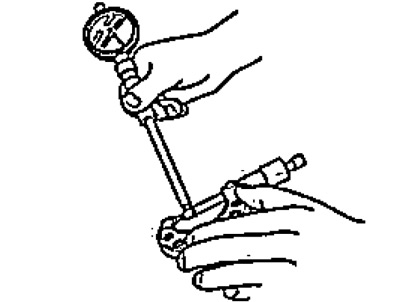
7. Clean the surface of the bearing shells in the cylinder head. Measure the inside diameter of each shell and check it for out-of-roundness.
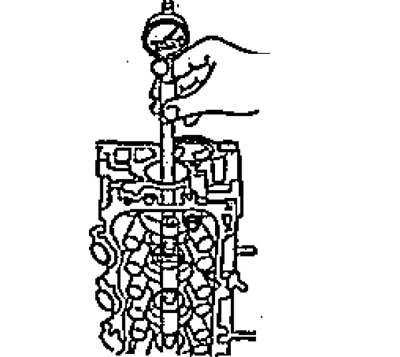
If the clearance between the camshaft and the main bearing does not exceed the maximum, then proceed to step 9.
If the clearance exceeds the maximum, with a new camshaft, replace the cylinder head.
- Nominal clearance - 0.045 - 0.084 mm
- Maximum gap - 0.100 mm
8. Check the camshaft runout by placing it in V-shaped prisms.
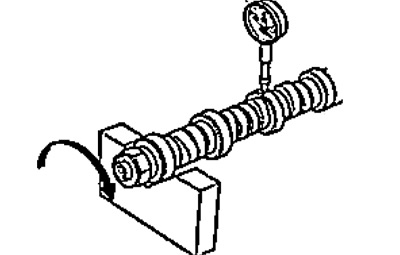
- Nominal runout - 0.03 mm
- Maximum runout - 0.04 mm
9. Check the height of the camshaft lobes.
Height of cams (L15A)
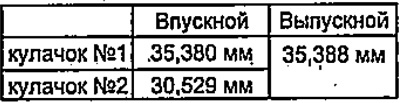
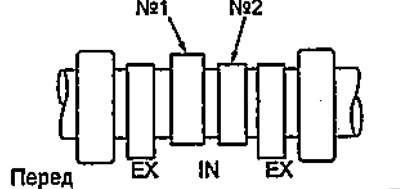
L15A
Height of cams (L13A)
