
2. Press the "AUTO" switch and, without releasing it, press the "OFF" switch on the air conditioning and heating control panel.
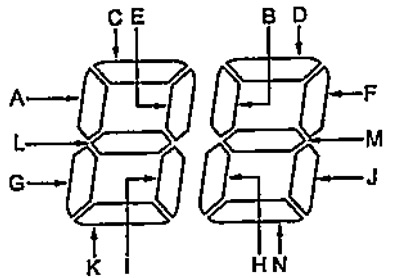
3. Determine the malfunction by turning on the temperature indicator sectors.
Note:
- If there are no faults, the temperature indicator will not turn on.
- In case of malfunctions, all sectors of the temperature indicator and sectors indicating malfunctions will light up alternately (at intervals of 1 second).
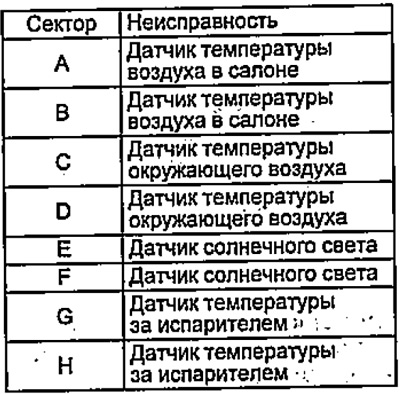
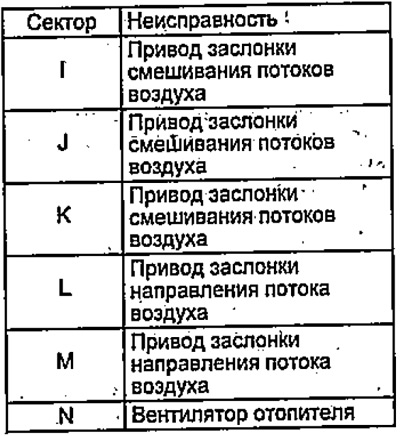
- The simultaneous presence of faults "A", "C", "E", "G", "I", "L" may indicate a break in the common ground circuit of the sensors (see the table "Faults in the air conditioning system").
4. To complete the test, turn off the ignition.
5. After repairing or replacing faulty components, repeat the test.
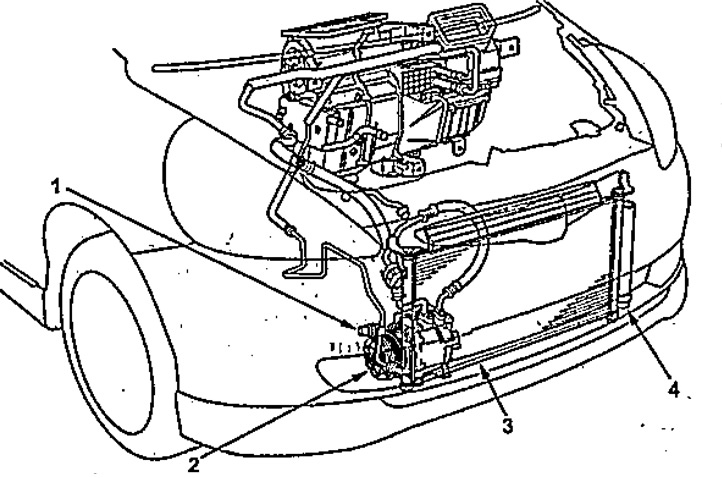
Component arrangement.
1 - pressure switch,
2 - compressor assembly,
3 - capacitor,
4 - dehumidifier.
Table. Air conditioning system malfunctions.
 |
 |
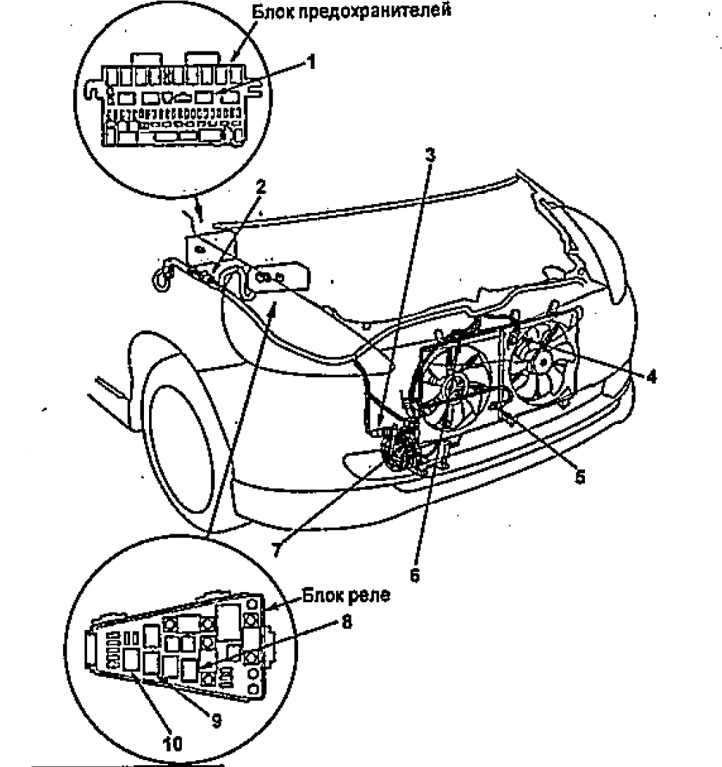
Component Locations (continued).
1 - heater fan motor relay,
2 - noise suppressor,
3 - pressure switch,
4 - cooling system fan motor connector,
5 - ambient air temperature sensor,
6 - condenser fan motor connector;
7 - connector of the electromagnetic clutch of the air conditioning compressor,
8 - cooling system fan motor relay,
9 - condenser fan motor relay,
10 - air conditioning compressor electromagnetic clutch relay.
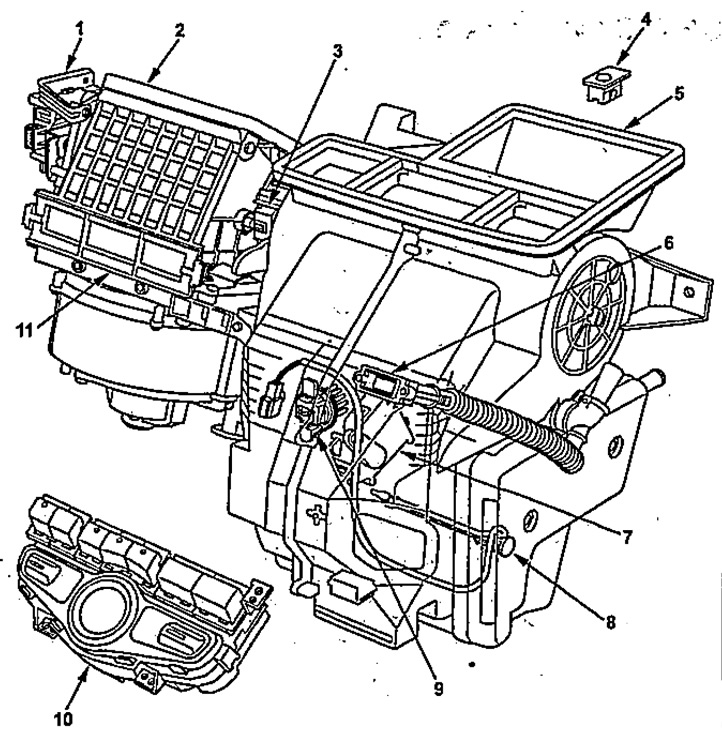
Component Locations (continued).
1 - air intake flap drive,
2 - heater fan unit,
3 - air flow direction flap drive,
4 - sunlight sensor,
5 - heater and air conditioner unit,
6 - cabin air temperature sensor,
7 - air flow mixing flap drive,
8 - temperature sensor behind the evaporator,
9 - power transistor,
10 - air conditioning and heating control panel.
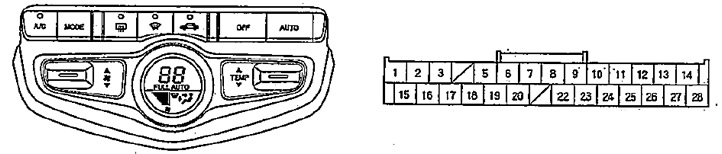
Air conditioning and heating control panel.