
Safety recommendations for operating models equipped with ABS
ABS does not reduce the braking distance of the car and can only ensure that the car remains under control during braking. In view of the above, it is necessary to constantly maintain a safe distance from the vehicle in front, based on the speed of the car and specific traffic conditions.
ABS does not prevent lateral skidding when the vehicle changes direction abruptly. For example, the vehicle may skid when taking a turn at too high a speed or when the steering wheel is jerked when changing lanes. Always maintain a safe vehicle speed, taking into account the road surface and traffic conditions.
ABS does not prevent the vehicle from losing directional stability. Avoid sharp jerks of the steering wheel during emergency braking.
The braking distance of a car equipped with ABS may be slightly longer than that of a model with a conventional braking system. This is especially noticeable when driving on unstable and uneven road surfaces (gravel, snow). When driving in such road conditions, reduce speed and increase the distance to the vehicle in front.
ABS malfunction indicator light
The anti-lock system includes a self-diagnostic unit. Externally, the self-diagnostic procedure of the system is manifested by small pulsations of the foot brake immediately after starting the engine. ABS failure diagnostics are also performed each time the car is braked.
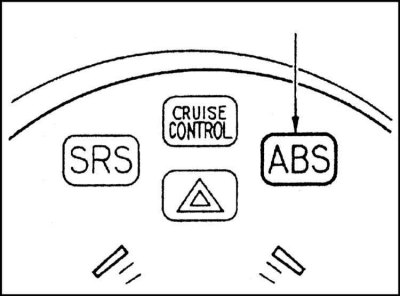
If the system detects any fault, the corresponding indicator lamp lights up on the instrument panel. When the indicator lamp lights up, it means that the ABS is disabled. The service brake system remains fully functional, except for the automatic brake force regulation function performed by the ABS. If the ABS indicator lamp does not go out after starting the engine or lights up while driving, you should contact your nearest service station as soon as possible.
When the ABS and brake system failure/parking brake warning lights come on together, the brake force regulation function is also disabled, indicating that there is a fault in both the ABS and the brake system. The vehicle's brake system will continue to provide adequate braking, but avoid abruptly depressing the foot brake pedal. Contact your nearest service station without delay.
[Original published on this resource: hondabook]